










SpeedCurve is a web performance monitoring tool focused on frontend performance, using synthetic testing and real user monitoring to track Core Web Vitals. However, as usage scales, costs can increase, and the platform can take time to learn and configure effectively.
CubeAPM is the best alternative to SpeedCurve, offering unified full-stack observability with OpenTelemetry-native support and more predictable pricing. It scales across both frontend and backend monitoring without the cost and operational complexity that come with usage-based web performance tools.
In this article, we compare the top SpeedCurve alternatives, including CubeAPM, New Relic, and more, highlighting their features and pricing, to help you choose the right APM solution.
Top 7 SpeedCurve Alternatives
- CubeAPM
- New Relic
- Better Stack
- Dynatrace
- Datadog
- Grafana
- Coralogix
Why Look for SpeedCurve Alternatives?
1. Rising Costs At Scale
As monitoring expands to more pages, regions, and real user traffic, SpeedCurve’s usage-based pricing can become expensive for growing teams.
2. Steep Learning Curve
Interpreting detailed performance metrics and configuring synthetic tests and budgets can take time, especially for teams without dedicated performance specialists.
Criteria for Suggesting SpeedCurve Alternatives
1. Full-Stack Observability
The alternative must support APM, RUM, logs, metrics, traces, and error tracking—allowing teams to monitor both front-end and backend in a unified interface.
2. OpenTelemetry Support
OTEL-native tools are prioritized to avoid vendor lock-in, improve data portability, and enable integration with existing pipelines.
3. Smart Sampling & Data Retention
Advanced sampling methods (like CubeAPM’s context-aware smart sampling) help retain critical traces while reducing storage costs. Longer data retention without exorbitant archival fees is a key advantage.
SpeedCurve Overview
Known For
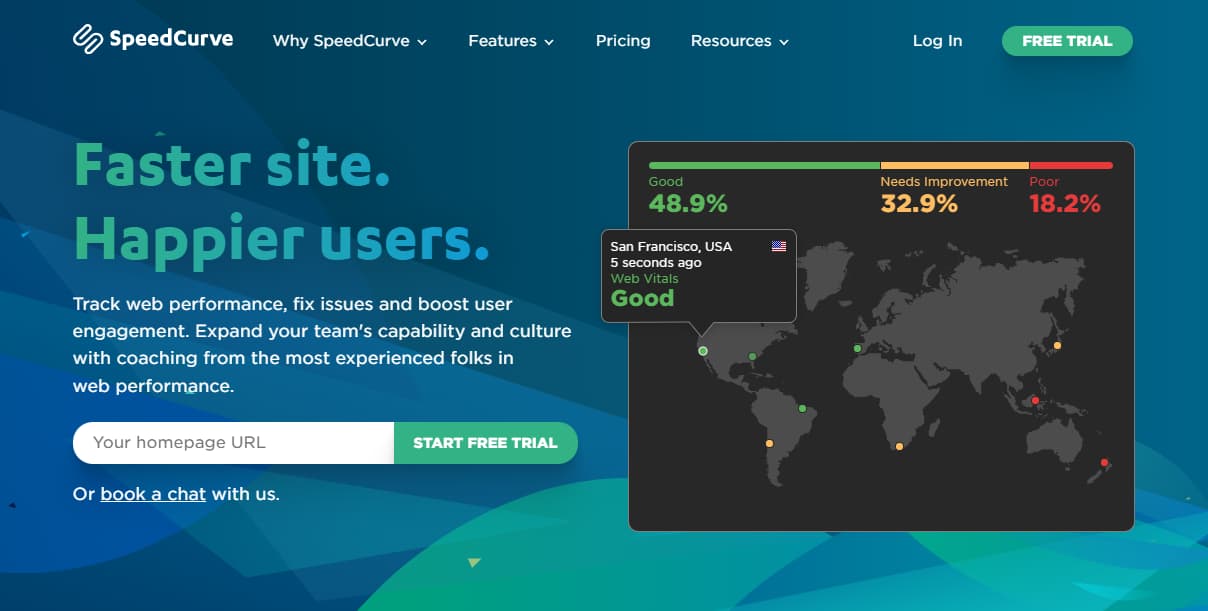
SpeedCurve is known for front-end performance monitoring, specializing in Real User Monitoring (RUM) and Synthetic Monitoring to measure and improve Core Web Vitals, page load times, and visual performance metrics.
Standout Features
- Core Web Vitals Tracking: Monitors Google’s key performance indicators like LCP, FID, and CLS.
- Filmstrips & Visualizations: Provides side-by-side visual comparisons of page load sequences.
- Synthetic & RUM Blend: Combines lab-based synthetic tests with real user data for a fuller picture.
- Performance Budgets: Allows teams to set and enforce limits for load times, size, and requests.
Key Features
- Real User Monitoring (RUM): JavaScript snippet (lux.js) to collect real-time user performance metrics.
- Synthetic Monitoring: Scheduled tests from multiple regions and browsers to detect regressions.
- Core Web Vitals Reporting: Direct tracking and trend analysis for LCP, FID, and CLS.
- Performance Budget Alerts: Notifications when performance metrics exceed thresholds.
- Third-party Impact Analysis: Measures the effect of third-party scripts on performance.
- Deploy-triggered Tests: Automatic synthetic tests triggered during deployment.
Pros
- Strong focus on front-end and user experience metrics
- Clear visualizations like filmstrips and waterfalls for performance debugging
- Combines synthetic and real-user data for better context
- Easy setup with a single JavaScript snippet for RUM
- Flexible test scheduling and regional targeting
Cons
- Pricing scales quickly with data volume and advanced feature needs
- Steep learning curve for new users
Best For
Teams focused exclusively on front-end performance optimization who do not require backend monitoring or full-stack observability, such as web performance engineers, UX specialists, and SEO optimization teams.
Pricing & Customer Reviews
- Starter Plan: From $90/month – includes unlimited teams, RUM, and synthetic monitoring
- Growth Plan: From $576/month – adds 13 months retention, high-priority support, and synthetic priority testing
- Enterprise Plan: From $1,680/month – adds SSO, private agents, check-ins, and consulting
- G2 Rating: 5/5 – Users praise its clear visualizations and ease of use, but note high costs.
Top 7 SpeedCurve Alternatives
1. CubeAPM

Known For
Full-stack observability and APM with a focus on cost efficiency, data compliance, and OpenTelemetry-native support.
Key Features
- Application Performance Monitoring (APM): Distributed tracing with deep transaction insights.
- Real User Monitoring (RUM): Browser-level performance metrics with Core Web Vitals tracking.
- Log Monitoring: Centralized log management with powerful search and filtering.
- Infrastructure Monitoring: Server, container, and Kubernetes resource metrics.
- Synthetic Monitoring: Unlimited tests for uptime, availability, and latency.
- Error Tracking: Real-time error detection and correlation with trace data.
Standout Features
- Smart Sampling: Context-aware sampling that prioritizes high-latency, error-heavy traces while reducing cost.
- Self-Hosting: Option to store all telemetry in your own cloud for compliance and reduced egress costs.
- Flat-Rate Pricing: $0.15/GB ingestion, significantly cheaper than most legacy vendors.
- High Compatibility: Works with Datadog, New Relic, Prometheus, and Elastic agents out of the box.
Pros
- 60–80% cheaper than major vendors
- Full MELT coverage (Metrics, Events, Logs, Traces)
- Native OTEL and Prometheus support
- Fast support via Slack/WhatsApp with core developers
- Compliant with data localization laws
Cons
- Not suited for teams looking for off-prem solutions
- Strictly an observability platform and does not support cloud security management
Best For
Organizations seeking full-stack observability at predictable, low cost with strong compliance capabilities, especially in regulated sectors like finance, healthcare, and government.
Pricing & Customer Reviews:
- Pricing: flat pricing of $0.15/GB ingestion
- G2 Rating: 5/5
CubeAPM vs SpeedCurve
2. New Relic
Known For
New Relic is a full-stack observability covering APM, infrastructure monitoring, logs, and RUM with a SaaS-first deployment model.
Key Features
- APM: Distributed tracing, service maps, and transaction performance analytics.
- RUM: Core Web Vitals tracking and end-user performance insights.
- Infrastructure Monitoring: Server and container metrics.
- Log Management: Centralized logs with search and analytics.
- Synthetic Monitoring: Simulated transactions and uptime testing.
- Errors Inbox: Error aggregation and alerting.
Standout Features
- Unified Telemetry Platform: Combines metrics, events, logs, and traces in one interface.
- AI-assisted Insights: Automatic anomaly detection and root cause analysis.
- Wide Agent Support: Multiple languages and environments supported.
Pros
- Broad observability coverage
- Long-standing vendor with mature integrations
- Rich visualization and reporting tools
- AI-driven detection and insights
Cons
- It can get prohibitively expensive for growing teams.
- Challenging learning curve
- Initial setup is complex, requiring significant knowledge
- Overwhelming UI for beginners
Best For
Large enterprises seeking a feature-rich SaaS observability platform with extensive ecosystem integrations.
Pricing & Customer Reviews
- Free: 100GB/month ingested
- Data ingested: $0.40/GB beyond the free 100 GB
- Full Platform User: $418.80/user(for monthly pay as you go)
- G2 Rating: 4.4/5 – Praised for rich feature set, criticized for complex pricing and costs at scale.
New Relic vs SpeedCurve
SpeedCurve is focused on frontend web performance and Core Web Vitals, making it well-suited for teams optimizing page speed and user experience; in contrast, New Relic provides broader full-stack observability, making it a better fit for teams that need end-to-end visibility across applications and infrastructure.
3. Better Stack

Known For
Modern log management and uptime monitoring with a strong focus on developer experience.
Key Features
- Log Management: Structured log storage with SQL-like querying.
- Uptime Monitoring: Global endpoint checks and incident alerts.
- Status Pages: Customizable, public-facing service status dashboards.
- Integrations: Slack, PagerDuty, and GitHub integration for alerts.
- Metrics Dashboards: Real-time visualization of system health.
Standout Features
- SQL for Logs: Query logs using familiar SQL syntax.
- Beautiful Dashboards: Developer-friendly, visually polished UI.
- Fast Setup: Minimal overhead for onboarding and integrations.
Pros
- Quick to set up and use
- Affordable log management
- Strong alerting and status page features
Cons
- Users find it expensive, particularly for startups
- Users have reported missing features, such as outgoing webhooks
- The limited features are restrictive, especially for advanced needs
Best For
Startups and mid-size teams looking for clean log management, status pages, and uptime monitoring without heavy APM needs.
Pricing & Customer Reviews
- Free tier available for personal projects
- Logs: $0.15/GB
- Metrics: $7.50, 2TB included
- Errors: $0.000075/exception
- G2 Rating: 4.8/5 – Users love the ease of use and visual design, but want deeper backend observability features.
Better Stack vs SpeedCurve
SpeedCurve is focused on frontend web performance and Core Web Vitals, ideal for teams optimizing page speed; in contrast, Better Stack offers broader full-stack monitoring and incident management, making it better suited for teams that need unified observability and reliability across services.
4. Dynatrace
Known For
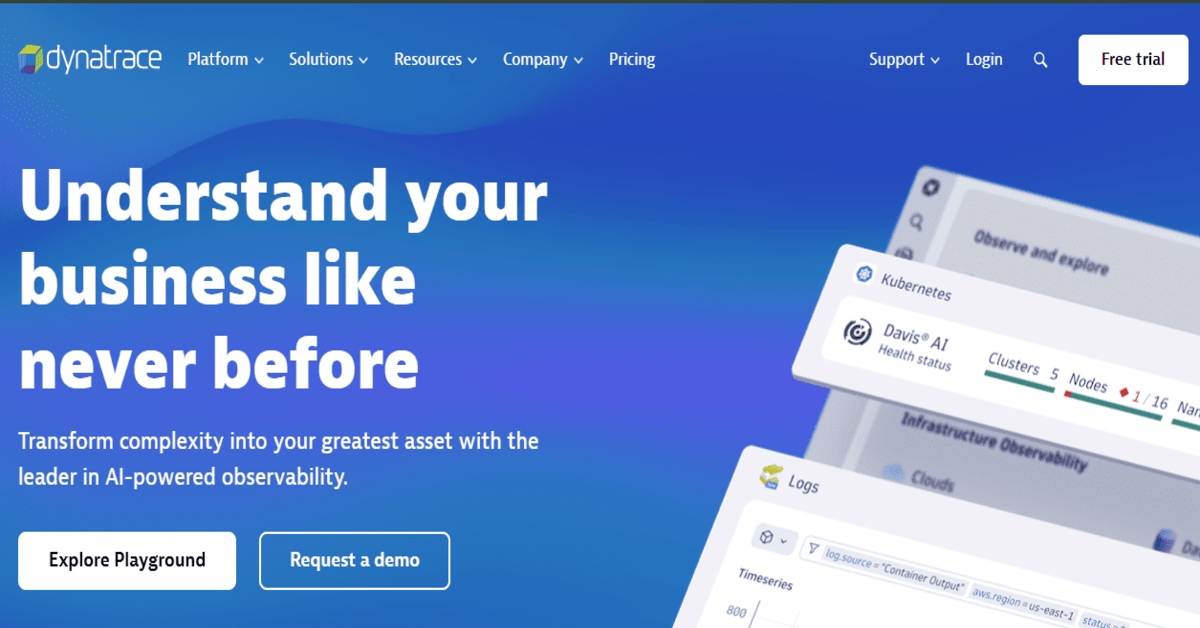
Dynatrace is an enterprise-grade, AI-powered observability platform with strong automation and auto-discovery capabilities.
Key Features
- APM: Distributed tracing, code-level diagnostics, and service flow mapping.
- Infrastructure Monitoring: Automated topology discovery and dependency mapping.
- Digital Experience Monitoring: RUM and synthetic tests for web and mobile.
- Logs & Events: Ingest, search, and analyze logs alongside metrics.
- AI Engine (Davis): Automated anomaly detection and root cause analysis.
Standout Features
- Automatic Instrumentation: Zero-config setup for supported environments.
- AI-Driven Analytics: Reduces noise and speeds up incident response.
- Enterprise Scalability: Designed for massive, complex environments.
Pros
- All-in-one enterprise observability
- Strong automation and AI capabilities
- Comprehensive data correlation across MELT
Cons
- High cost as usage grows
- Steep learning curve and heavy setup requirements
- UI and feature depth can feel overwhelming
Best For
Large enterprises needing high automation, scalability, and AI-driven incident management.
Pricing & Customer Reviews
- Full-Stack Monitoring: $58 /month/8 GiB host
- Infra Monitoring: $29/month/8 GiB host
- G2 Rating: 4.5/5 – Praised for automation, criticized for complexity and pricing.
Dynatrace vs SpeedCurve
SpeedCurve focuses on frontend web performance and Core Web Vitals, helping teams track page speed and user experience; in contrast, Dynatrace offers full-stack observability with AI-driven insights across applications and infrastructure, making it a stronger choice for teams needing end-to-end performance monitoring and automated problem detection.
5. Datadog
Known For
Datadog is a comprehensive observability platform with APM, logs, infrastructure monitoring, and security features.
Key Features
- APM & Tracing: Detailed service performance monitoring.
- Logs: Centralized logging with analytics and archiving.
- Infrastructure Monitoring: Metrics for servers, containers, and cloud resources.
- RUM & Synthetics: End-user monitoring and API checks.
- Security Monitoring: Threat detection and compliance dashboards.
Standout Features
- Wide Integration Ecosystem: 900+ built-in integrations.
- Custom Dashboards: Flexible visualization and monitoring.
- Multi-Product Bundling: Security, APM, logs, and infra in one interface.
Pros
- Extensive integrations and ecosystem
- Unified platform for multiple observability needs
- Mature product with a large community
Cons
- High Cost at Scale: Charges separately for APM, infra, logs, costs can skyrocket with usage
- Steep learning curve and complexity for newcomers
- Interface and configuration overload — can be overwhelming
Best For
Teams seeking a wide integration ecosystem with centralized monitoring across APM, logs, and infra.
Pricing & Customer Reviews
- APM (Pro Plan): $31/host/month
- Infra Monitoring(Pro Plan): $15/host/month
- Infra Cost: starting at $15/host/month
- G2 Rating: 4.4/5 – Praised for integrations and UI, criticized for cost predictability.
Datadog vs SpeedCurve
SpeedCurve focuses on frontend web performance and Core Web Vitals to help teams monitor page speed and user experience; in contrast, Datadog offers full-stack observability across applications, infrastructure, and logs with advanced analytics, making it better suited for teams needing comprehensive, end-to-end performance monitoring.
6. Grafana
Known For
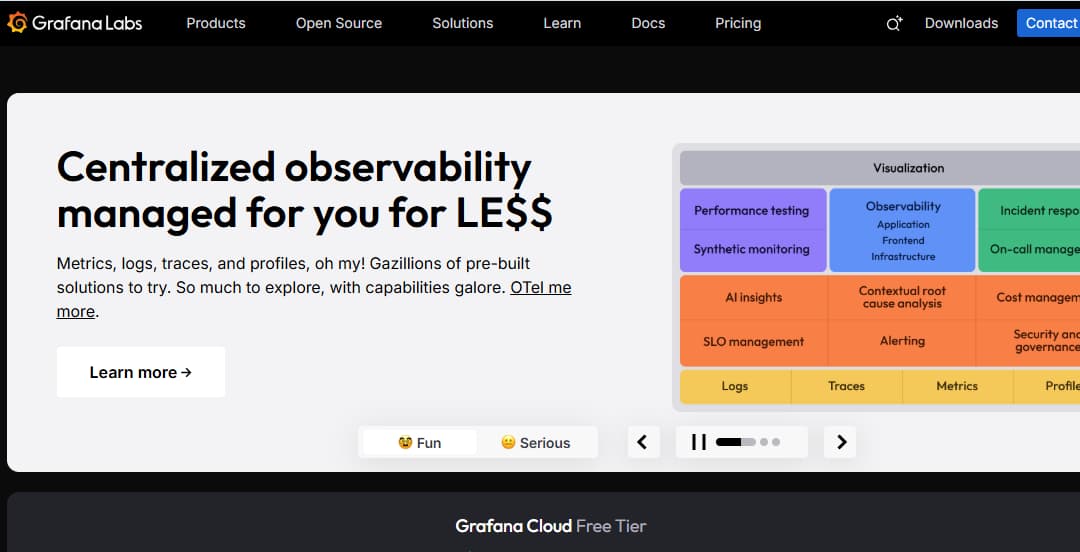
Grafana is an open-source visualization platform with strong metrics and dashboarding capabilities.
Key Features
- Metrics Visualization: Custom dashboards for Prometheus, Graphite, InfluxDB, etc.
- Alerting: Flexible rules and notification channels.
- Plugins: Community and enterprise plugin ecosystem.
- Data Source Integrations: Connects to multiple backends.
Standout Features
- Highly Customizable Dashboards: Rich visualization options.
- Open-Source Core: Free to use, with Grafana Cloud and Enterprise options.
Pros
- Free open-source version
- Wide integration with data sources
- Strong community support
Cons
- Steep learning curve
- Complex setup requirements
- Overwhelming UI
Best For
Teams that want rich visualization and have an existing observability backend.
Pricing & Customer Reviews
- Grafana OSS: Free
- Pro plan: $19/month
- Metrics: $6.50/ 1k series
- Logs: $0.50/GB ingested
- Traces: $0.50/GB ingested
- G2 Rating: 4.5/5 – Praised for flexibility, criticized for initial setup complexity.
Grafana vs SpeedCurve
SpeedCurve is a dedicated web performance monitoring tool focused on frontend metrics and Core Web Vitals to help teams track and improve site speed and user experience. In contrast, Grafana is an open-source data visualization and observability platform that lets teams build custom dashboards and monitor metrics, logs, and traces from many data sources rather than providing turnkey web performance insights.
7. Coralogix
Known For
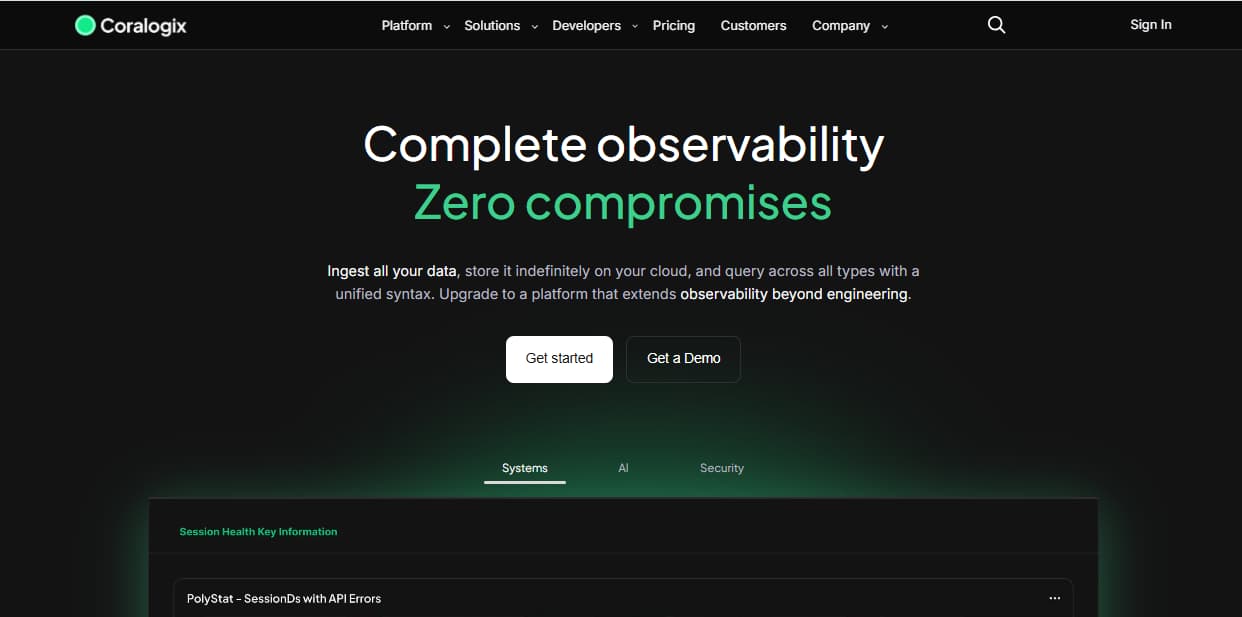
A full-stack observability platform optimized for cost efficiency through real-time stream processing, smart routing, and modular indexing. Popular with DevSecOps teams needing high log throughput, flexible pipelines, and security integration.
Key Features
- Log Management: Structured and unstructured log ingestion.
- Metrics & Traces: Full observability data support.
- Data Tiers: Live, Warm, and Archived data separation for cost optimization.
- Real-Time Alerting: Instant notifications on anomalies and threshold breaches.
- Security & Compliance: Features for regulated industries.
Standout Features
- Archived Telemetry in Customer Cloud: Reduces storage costs by storing archived data in the customer’s own cloud.
- Flexible Data Retention Policies: Offers Infinite retention
- Integrated Observability Suite: Combines logs, metrics, traces, and security analytics.
Pros
- Cost savings on archived data storage
- Full observability stack with integrated security
- Flexible retention and tiered storage options
Cons
- Steep learning curve/complexity for advanced usage
- Complicated UI for newcomers/beginners
- Pricing complexity, while Coralogix optimizes costs, understanding its pricing model can be tricky.
Best For
Organizations needing robust log management and observability with long-term archival cost optimization.
Pricing & Customer Reviews
- Logs: $0.52/GB, infinite retention
- Traces: $0.44/GB, infinite retention
- Metrics:$0.05/GB, infinite retention
- AI: 1.5 per 1M tokens
- G2 Rating: 4.6/5 – Praised for cost-saving model and flexible data management, with some concerns about egress costs and compliance.
Coralogix vs SpeedCurve
SpeedCurve is focused on frontend web performance and Core Web Vitals to help teams monitor page speed and user experience. In contrast, Coralogix provides a full observability platform that ingests logs, metrics, traces, and real user performance data with deep correlation across the stack, giving teams broader insight into backend systems as well as frontend metrics like Core Web Vitals.
Conclusion
While SpeedCurve is a strong choice for front-end performance monitoring, it falls short in delivering full-stack observability, lacking backend APM, logs, infrastructure monitoring, and OpenTelemetry support. The alternatives discussed offer broader capabilities, flexible deployment options, and more predictable pricing, making them better suited for organizations that need end-to-end visibility and scalability.
CubeAPM stands out as the best alternative, delivering complete MELT coverage—APM, RUM, logs, infrastructure, synthetics, and error tracking—in one cost-efficient, OTEL-native platform. With flat $0.15/GB pricing, smart sampling, and self-hosting for compliance, CubeAPM eliminates the need for multiple tools while cutting monitoring costs by up to 80%.
Disclaimer: The information in this article reflects the latest details available at the time of publication and may change as technologies and products evolve.