










The main difference between Coralogix, Uptrace, and CubeAPM lies in how they balance control, scalability, and cost.
Coralogix is a SaaS-based full-stack observability platform with log intelligence and AI-driven analytics, best suited for cloud-first teams that prefer managed infrastructure. Uptrace is an open-source tracing and metrics tool designed for developers and startups looking for lightweight, flexible monitoring without enterprise overhead.
CubeAPM offers full-stack observability across logs, metrics, traces, synthetics, and RUM, combining self-hosted or vendor-managed deployment, smart sampling with 95 % compression, and predictable $0.15/GB ingestion pricing, making it up to 70 % more cost-efficient than SaaS competitors.
In this Coralogix vs Uptrace vs CubeAPM comparison, we’ll break down their differences in features, pricing, deployment, sampling strategy, data retention, and support to help you identify the best observability platform that best fits your scale, compliance, and performance goals.
| Features | CubeAPM | Coralogix | Uptrace |
| Multi-Agent Support | Yes (OTel, New Relic, Datadog, Elastic) | Yes (OTel, Prometheus) | Yes (native OTel, integrations for Prometheus, Vector, and Fluent Bit) |
| MELT Support (Metrics, Events, Logs, Traces) | Full MELT coverage | Full MELT coverage | Full MELT coverage |
| Deployment (Self-Host, Setup) | Self-hosted but vendor-managed | Mostly SaaS-based | Free self-hosted Community edition; fully-managed Cloud, optional on-prem enterprise install |
| Pricing | Ingestion-based pricing of $0.15/GB | Logs: $0.42/GB, Traces: $0.16/GB, Metrics:$0.05/GB, AI: 1.5 per 1M tokens | Cloud edition starts $0.08/GB (1.22 TB), $0.025/GB (100 TB) |
| Sampling Strategy | Smart sampling – fully automated, context-aware | Multiple, including streama-based control, tail-based sampling, and Conditional error sampling | Head-based, tail-based, and rate-limiting sampling |
| Data Retention | Infinite Retention (no extra cost) | Infinite retention | 14-day free data retention; paid for up to 100 weeks on Cloud plans |
| Support Channel / TAT / Pricing | Slack, WhatsApp; response in minutes | 24/7 chat, Email; response in minutes | Community support, email, Slack; response in hours to minutes |
| Known For | Unified MELT + self-hosting+ OpenTelemetry-native + cost predictability | Log analytics + archival flexibility | Open-source, developer-friendly observability for traces, metrics, and logs at low cost |
Coralogix vs Uptrace vs CubeAPM: Feature-by-Feature Comparison
Each observability platform approaches data collection and instrumentation differently. Here’s how Coralogix, Uptrace, and CubeAPM handle multi-agent support, which determines how easily teams can integrate existing telemetry without major rework.
Multi-Agent Support
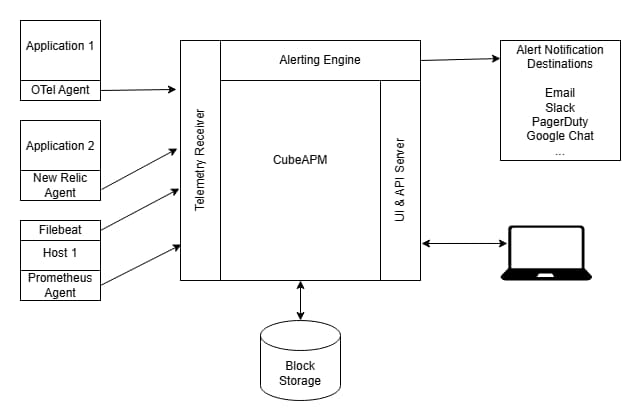
Coralogix: Coralogix offers multi-agent support with OpenTelemetry and Prometheus agents. It also has an extensive integration options with over 300 pre-built data sources and full OpenTelemetry support. It connects with AWS, GCP, and Azure, plus popular shippers like Fluentd, Filebeat, and Logstash. Designed for plug-and-play SaaS setups, it’s ideal for teams running multi-cloud workloads that need quick, low-code data ingestion.
Uptrace: Uptrace is fully OpenTelemetry-first, supporting OTLP protocol natively along with Prometheus, Vector, and Fluent Bit inputs. It integrates easily with cloud exporters such as CloudWatch and GCP Monitoring, letting developers push metrics, logs, and traces through a single standardized pipeline. Its setup is lightweight, making it ideal for OTEL-instrumented microservices.
CubeAPM: CubeAPM supports multiple agents, such as OpenTelemetry, Prometheus, Datadog, Elastic, and New Relic agents, offering unmatched migration flexibility. Its agent-agnostic design allows reuse of existing instrumentation, combining OTEL traces with legacy metrics or logs. Built for hybrid observability, it fits both self-hosted and enterprise-managed environments.
MELT Support (Metrics, Events, Logs, Traces)
Coralogix: Coralogix offers full MELT support and unifies logs, metrics, and traces through its Streama and DataPrime engines, supporting OpenTelemetry for all major data types. It offers real-time correlation between logs and metrics for faster root cause detection, with ML-based anomaly detection that makes it strong for log-heavy environments.
Uptrace: Uptrace is an OpenTelemetry-native platform that collects traces, metrics, and logs through a single OTLP pipeline. It automatically correlates spans and metrics for end-to-end visibility and is lightweight, making it ideal for microservice-based and developer-led observability setups.
CubeAPM: CubeAPM delivers complete MELT visibility across metrics, events, logs, and traces — plus synthetic and real user monitoring for full-stack coverage. It provides unified dashboards, automatic correlation, and smart sampling for optimized data collection without losing key insights.
Deployment (Self-Host, Setup)
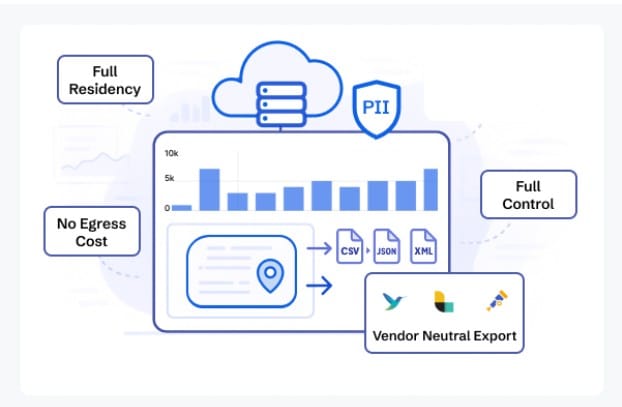
Coralogix: Coralogix is a cloud-native SaaS platform where all telemetry data is ingested into Coralogix’s managed infrastructure. Users can optionally archive processed data into their own cloud storage for cost savings, but the primary ingest and processing still happen in Coralogix’s cloud. This makes setup simple and fast, but less suited for teams that require strict data localization or full control over storage and compute.
Uptrace: Uptrace offers both Community (self-hosted) and Cloud (fully managed) editions. The open-source edition can be deployed on-premises or within private clouds using Docker or Kubernetes, while the Cloud version removes maintenance overhead. It also supports on-prem enterprise installation for compliance-driven organizations, giving flexibility to choose between managed convenience and full control.
CubeAPM: CubeAPM supports self-hosted, vendor-managed, and hybrid deployments, all installable in under an hour via Helm or Docker. It’s designed for on-prem and private cloud environments, ensuring compliance with data localization laws. Teams can host CubeAPM fully within their infrastructure while retaining the option for CubeAPM-managed updates and scaling support.
Pricing for Small, Medium, & Large Teams
Pricing directly impacts scalability and data management decisions, especially for teams ingesting large volumes of logs, metrics, or traces daily.
Here’s the cost calculation for small, medium, and large teams using CubeAPM, Uptrace, and Coralogix:
*All pricing comparisons are calculated using standardized Small/Medium/Large team profiles defined in our internal benchmarking sheet, based on fixed log, metrics, trace, and retention assumptions. Actual pricing may vary by usage, region, and plan structure. Please confirm current pricing with each vendor.
Cost for Small Teams (~30):
- CubeAPM: $2,080
- Coralogix: $4,090
- Uptrace: $1,695
Cost for Mid-Sized Teams (~125):
- CubeAPM: $7,200,
- Coralogix: $13,200
- Uptrace: $5,600
Cost for Large Teams (~250):
- CubeAPM: $15,200
- Coralogix: $29,000
- Uptrace: $12,500
CubeAPM Costs: Detailed Calculation
CubeAPM costs $0.15/GB for full-stack data ingestion (logs, metrics, traces, RUM, synthetics) with no per-user or per-feature surcharges. Here’s how it costs for teams of different sizes:
- Small teams (~ 30): $2,080
- Mid-sized teams (~ 125): $7,200
- Large teams (~250): $15,200
Coralogix Costs: Detailed Calculation
Coralogix uses a purely usage-based model—logs are priced at $0.42/GB, traces at $0.16/GB, metrics at $0.05/GB, and AI features at ~$1.50 per million tokens. Based on this, here’s what the cost looks like for different teams:
- Small teams: $4,090
- Mid-size teams: $13,200
- Large teams: $29,000
Uptrace Costs: Detailed Calculation
Uptrace offers a tiered ingestion-based pricing model: e.g., $0.08/GB for 1.22 TB and $0.025/GB for 100 TB; the self-hosted Community edition is free, and the on-prem enterprise costs differently. Let’s see the costs for different teams based on ingested data volumes:
- Small teams: $1,695
- Mid-size teams: $5,600
- Large teams: $12,500
Bottom line: If you want predictable costs for high ingestion volumes, CubeAPM offers the simplest flat-rate model. Uptrace gives the lowest cost at a very high scale, but the tiers vary. Coralogix offers flexible pricing, but multiple charge dimensions mean cost modeling is more complex.
Sampling Strategy

Coralogix: Coralogix uses its proprietary Streama-based control to manage data flow. Data is streamed continuously into its SaaS pipeline, where compression and indexing optimise storage efficiency. It also supports other sampling strategies, such as tail-based sampling via OTel and conditional error sampling for RUM.
Uptrace: Uptrace supports head-based and ratio sampling, allowing teams to define the percentage of traces or spans to retain directly within OpenTelemetry configurations. These settings help manage ingestion volume and cost without compromising observability quality. Users can combine sampling with flexible retention policies, making Uptrace well-suited for developers who want fine-grained, code-level control over telemetry data.
CubeAPM: CubeAPM applies smart, context-aware sampling that automatically prioritizes spans linked to high latency, errors, or anomalies. This selective approach achieves up to 95% data compression, retaining critical diagnostic data while minimizing storage and transfer costs. Designed for enterprise-scale observability, CubeAPM’s adaptive sampling significantly reduces data volume without affecting visibility across distributed systems.
Data Retention

Coralogix: Coralogix offers infinite data retention. It manages retention through a multi-tier storage lifecycle. Incoming telemetry data first passes through its Streama pipeline, which processes and indexes logs for real-time analysis. After a configurable active period, older data can be archived to the customer’s own cloud storage (AWS S3, GCP, or Azure Blob), reducing long-term costs. However, because data must first traverse Coralogix’s managed infrastructure before archival, organizations still incur egress costs and may face compliance limitations for sensitive workloads.
Uptrace: Uptrace offers flexible retention policies that depend on the chosen edition. The Community (self-hosted) version allows teams to set custom data retention periods, constrained only by their infrastructure. The Cloud edition provides tiered retention durations by plan — typically starting at 14 days by default, with options to extend for higher-tier customers. This lets users balance storage costs and performance while maintaining full control over how long telemetry is stored.
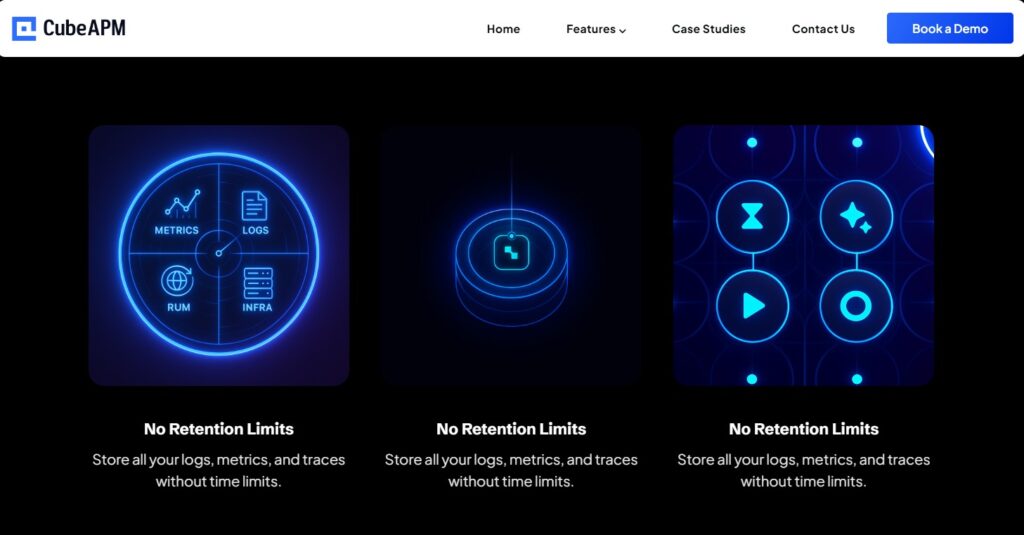
CubeAPM: CubeAPM provides unlimited log retention at no extra cost for both self-hosted and managed deployments. Since all data resides within the user’s infrastructure, retention policies can be fully customized without vendor restrictions. Combined with 95 % compression and smart sampling, CubeAPM achieves long-term data durability while keeping storage predictable and compliant with localization frameworks.
Support Channel & Response Time
Coralogix: Coralogix offers 24×7 customer support via email or ticket-based support. It claims 17-second median response time for all support requests, but the actual response time could vary.
Uptrace: Uptrace offers community-based support for its free, self-hosted edition via GitHub and Discord, ensuring developers can share fixes and configurations. For enterprises, its Premium plan ($200/month) and Managed plan ($1,000/month) include guaranteed SLAs, priority email support, and dedicated onboarding assistance. This tiered system allows teams to scale support quality as their deployment grows.
CubeAPM: CubeAPM stands out with direct Slack and WhatsApp access to its core engineering team, ensuring turnaround times measured in minutes rather than days. Support is included at no extra cost across all plans. Beyond reactive help, CubeAPM also provides real-time onboarding and deployment guidance, making it ideal for enterprises that value rapid problem resolution and hands-on assistance.
Known For
Coralogix: Coralogix is best known for its AI-driven log analytics and real-time Streama engine that processes telemetry at scale. It excels in anomaly detection and log-based insights, making it ideal for cloud-native teams focused on analytics and security.
Uptrace: Uptrace stands out as an open-source, OpenTelemetry-native observability tool offering unified traces, metrics, and logs. It’s lightweight, developer-friendly, and affordable—perfect for teams adopting open standards and self-hosted observability.
CubeAPM: CubeAPM is known for enterprise-grade, full-stack observability with predictable $0.15/GB pricing and smart sampling (95% compression). It provides unified MELT coverage, strong compliance, and hybrid deployment options, reducing costs by up to 70%.
Which Tool Is Best for You? Why Brands Choose CubeAPM
Choosing the right observability platform depends on your scale, data control needs, and cost structure.
Coralogix is more suitable for teams focused on AI-powered log analytics in a SaaS setup, while Uptrace suits developer-led teams who want an open-source, OTEL-native stack with full self-hosting control. Both are great for smaller or mid-sized workloads, but they come with scaling or compliance trade-offs.
CubeAPM is best for enterprises, DevOps, and SRE teams that want predictable full-stack observability, end-to-end MELT coverage, and total data sovereignty. It’s designed for compliance-driven industries, large ingestion volumes, and teams looking to consolidate tools without unpredictable costs.
Benefits of Choosing CubeAPM
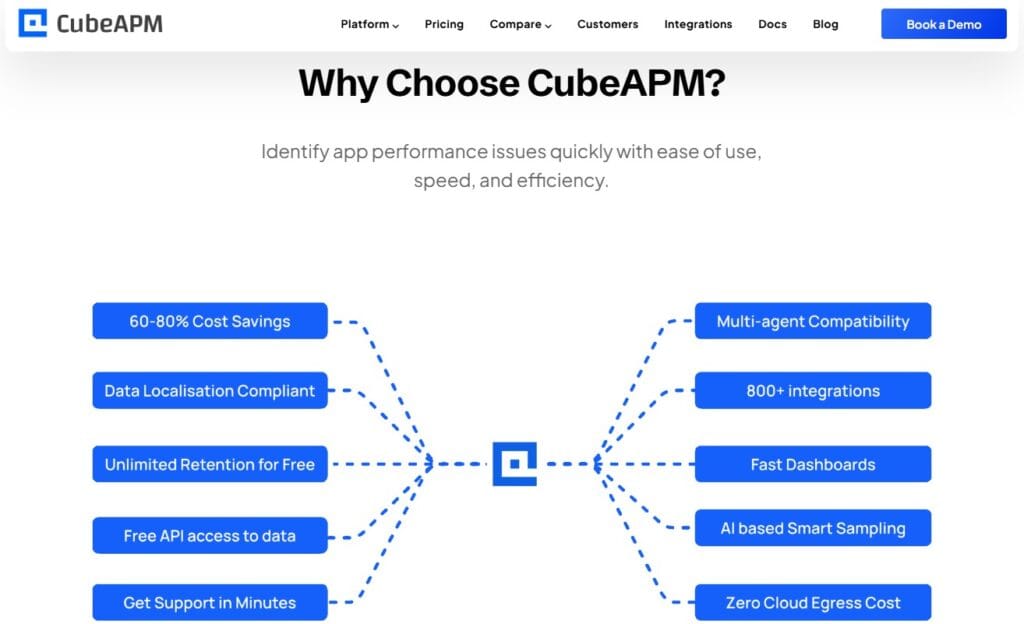
- Predictable Pricing: $0.15/GB of ingested data, covers logs, metrics, traces, synthetics, and RUM — no hidden add-ons or user fees.
- Full-Stack MELT Visibility: Unified platform for metrics, events, logs, and traces enables real-time correlation and root-cause analysis.
- Data Localization & Compliance: Self-host in your cloud or on-prem to meet compliance mandates without egress costs.
- Smart Sampling & 95% Compression: Retains only the most valuable telemetry, cutting storage and transfer expenses by up to 70%.
- Instant Engineering Support: Direct Slack/WhatsApp access to CubeAPM engineers ensures resolution within minutes, not days.
Coralogix vs Uptrace vs CubeAPM: Use Cases
Selecting the right observability tool often depends on your team size, deployment model, and compliance priorities. Here’s when each platform makes the most sense based on official documentation, demo data, and verified pricing research:
Choose Coralogix if:
Coralogix is suited for teams that value SaaS simplicity and advanced log intelligence without managing infrastructure or on-prem complexity.
- For AI-driven analytics: Leverage Streama and ML-based pattern recognition to detect anomalies in real time.
- For cloud-first startups: Onboard fast with prebuilt integrations for AWS, GCP, and Azure services.
- For log-heavy environments: Get deep contextual insights into logs and traces without manual correlation.
- For teams prioritizing simplicity: Focus on analysis instead of managing clusters, storage, or scaling.
Choose Uptrace if:
Uptrace is designed for developer-centric and engineering-led teams that prefer open-source observability with flexible self-hosting and low entry costs.
- For OpenTelemetry-native stacks: Easily ingest traces, metrics, and logs through standard OTLP exporters.
- For cost-conscious startups: Use the free self-hosted edition or affordable cloud plan (starting at $0.08/GB, based on their pricing page).
- For Kubernetes microservices: Simplify end-to-end tracing and reduce MTTR using integrated dashboards.
- For open-source advocates: Customize deployments and retention policies without vendor lock-in.
Choose CubeAPM if:
CubeAPM is purpose-built for enterprises and DevOps/SRE teams seeking predictable full-stack observability, unlimited retention, and compliance-grade self-hosting.
- For predictable costs: $0.15/GB ingestion covers logs, metrics, traces, synthetics, and RUM with no hidden add-ons.
- For compliance and data residency: Self-host or deploy in private cloud environments compliant with data privacy regulations.
- For full-stack observability: Get unified MELT visibility with automatic correlation and 95% compression to reduce data overhead.
- For enterprise scalability: Handle 10 TB+ ingestion per month with smart sampling and real-time dashboards optimized for large environments.
- For hybrid and on-prem teams: Retain complete control over infrastructure while enjoying near real-time support via Slack or WhatsApp.
- For performance-driven DevOps: Reduce MTTR through correlated logs, metrics, and traces in a single, OpenTelemetry-native platform.
Coralogix vs Uptrace vs CubeAPM: Which Is Better?
The observability landscape is evolving around transparency, scalability, and total data control. While Coralogix and Uptrace offer strong, specialized capabilities, CubeAPM emerges as the most balanced and enterprise-ready choice.
Coralogix excels in AI-powered log analytics for cloud-native teams that prefer fast SaaS onboarding. Uptrace is ideal for developer-led teams that want open-source observability with flexible pricing and full control over their deployments.
But for teams that demand predictable costs, full-stack visibility, compliance-ready hosting, and rapid support, CubeAPM clearly leads the way. Its unified MELT coverage, self-hosted deployment options, 95% compression, and $0.15/GB pricing make it the most practical and scalable alternative for modern DevOps and enterprise environments.
Ready to simplify observability and cut costs by up to 70%? Explore CubeAPM’s live playground or book a demo to see how it delivers full-stack visibility without the complexity or hidden costs of legacy APM platforms.
Disclaimer: The information in this article reflects the latest details available at the time of publication and may change as technologies and products evolve.
FAQs
1. Which is better — Coralogix, Uptrace, or CubeAPM?
Coralogix focuses on AI-driven log analytics, and Uptrace is strong in OpenTelemetry-based observability, but CubeAPM offers complete package — predictable pricing, full-stack MELT coverage, and compliance-ready self-hosting for enterprises and DevOps teams.
2. How does CubeAPM’s pricing compare to Coralogix and Uptrace?
Based on our research and demo data, CubeAPM offers $0.15/GB ingestion pricing, covering logs, metrics, and traces. Coralogix charges per data type ($0.42/GB for logs, $0.16/GB for traces), while Uptrace uses tiered pricing starting at $0.08/GB. CubeAPM is typically 60–70% more cost-efficient for large-scale observability.
3. Which platform is best for OpenTelemetry (OTEL) users?
Uptrace and CubeAPM both provide native OpenTelemetry support, while Coralogix supports OTEL via collectors. However, CubeAPM extends OTEL integration with multi-agent compatibility (Datadog, Prometheus, Elastic, etc.), making it ideal for hybrid or transitional observability environments.
4. Which tool is better for compliance and data localization?
CubeAPM offers self-hosted and private-cloud deployment, ensuring compliance with GDPR, HIPAA, and DPDP. Uptrace’s open-source edition also supports on-prem setups, while Coralogix is SaaS-only, which may limit compliance for regulated industries.
5. Why do enterprises prefer CubeAPM?
CubeAPM combines the ease of SaaS with the control of self-hosting, delivering unlimited retention, 95% compression, flat pricing, and direct Slack/WhatsApp support. It’s built to scale across microservices while helping teams reduce MTTR and maintain full data ownership — something neither Coralogix nor Uptrace can match.