










The main difference between Coralogix, Sumo Logic, and CubeAPM lies in how they handle data ownership, pricing transparency, and OpenTelemetry (OTEL) support.
Coralogix emphasizes log lifecycle management and is mostly a SaaS platform, while Sumo Logic focuses on large-scale cloud analytics and SIEM. CubeAPM offers a unified full-stack observability suite, logs, metrics, traces, and RUM with unlimited log retention, smart sampling, self-hosting, and predictable pricing.
In this article, we’ll explore Coralogix vs Sumo Logic vs CubeAPM comparison based on their features, pricing, deployment models, and use cases to help you identify the best observability tool that fits your organization’s scale and compliance requirements.
Coralogix vs Sumo Logic vs CubeAPM Comparison
| Features | CubeAPM | Coralogix | Sumo Logic |
| Multi-Agent Support | Yes (OTel, New Relic, Datadog, Elastic) | Yes (OTel, Prometheus) | Yes (via its Dojo AI platform, native collectors, OTEL) |
| MELT Support | Full MELT coverage | Full MELT coverage | Full MELT |
| Setup | Self-hosted but vendor-managed | Mostly SaaS-based | SaaS-only |
| Pricing | Ingestion-based pricing of $0.15/GB | Logs: $0.42/GB, Traces: $0.16/GB, Metrics:$0.05/GB, AI: 1.5 per 1M tokens | Starts $3.14–$3.77 per TB scanned (based on location) |
| Sampling Strategy | Smart sampling – fully automated, context-aware | Multiple, including streama-based control, tail-based sampling, and Conditional error sampling | Probabilistic, pattern-based, and tail-based sampling |
| Data Retention | Infinite Retention (no extra cost) | Infinite retention | 7 days (free plan); 365 days (Enterprise) |
| Support Channel & TAT & Pricing | Slack, WhatsApp; response in minutes | 24/7 chat, Email; response in minutes | Email + Chat for Essentials/Professional (8×5); Enterprise (24×7 support); premium SLAs at extra cost |
| Known for | Unified MELT + self-hosting+ OpenTelemetry-native + cost predictability | Log analytics + archival flexibility | Cloud-native log analytics + SIEM + machine data insights at scale |
Coralogix vs Sumo Logic vs CubeAPM: Feature-by-Feature Breakdown
Multi-Agent Support
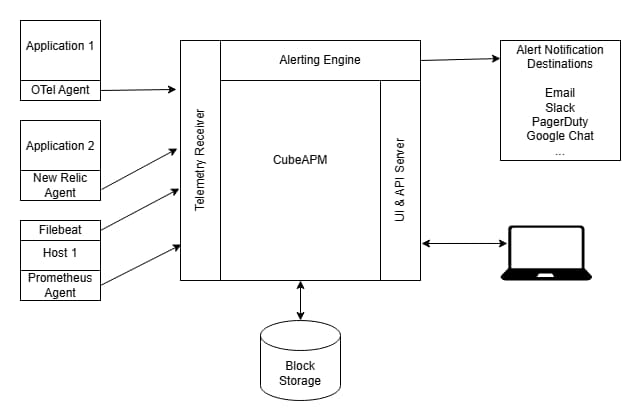
When evaluating Coralogix vs Sumo Logic vs CubeAPM, multi-agent support reflects how easily a system can ingest data from a variety of telemetry sources (logs, metrics, traces) via different agents or collectors.
CubeAPM: CubeAPM supports a wide range of collection agents, including OpenTelemetry, Prometheus, Datadog, New Relic, and Elastic agents. It works “out of the box with OpenTelemetry, Prometheus, and New Relic agents” for broad compatibility. This makes CubeAPM particularly suited for organizations migrating from mixed tool stacks or wanting to unify disparate agent types under one observability platform.
Coralogix: Coralogix supports agents and integrations through its observability pipeline (logs, metrics, traces) and has extended capabilities for “agents” via its MCP Server for AI-agent access to telemetry.
Sumo Logic: Sumo Logic supports both an “Installed Collector” and an “OpenTelemetry Collector” distribution. Their docs confirm compatibility with multiple platforms (Linux, MacOS, Windows, Kubernetes) and source types such as local files, syslog, host/process metrics, and transaction tracing.
MELT Support (Metrics, Events, Logs, Traces)

Here we’re looking at how each platform in this Coralogix vs Sumo Logic vs CubeAPM comparison covers the full suite of telemetry signals—Metrics, Events, Logs, and Traces (MELT)—and how deeply each integrates them into one cohesive observability experience.
CubeAPM: CubeAPM is a true full-stack observability solution, covering all four MELT pillars plus extras like RUM (Real User Monitoring), synthetic monitoring and error tracking. Teams using CubeAPM can trace a slow transaction (trace), see the logs associated with it, monitor relevant metrics (e.g., latency, error rate) and map events (like deployment or scaling changes) all in one place—with smart sampling to preserve high-fidelity data while keeping costs down.
Coralogix: Coralogix also presents itself as a “full-stack observability platform” that combines logs, metrics, traces, security and AI observability. Their platform overview confirms support for APM & Tracing, Log analytics, Infrastructure & metrics and even Real User Monitoring. The docs show OpenTelemetry support for traces, logs and metrics.
Sumo Logic: Sumo Logic covers logs, metrics and traces with documented support for tracing within its APM offering. From publicly available documentation, the emphasis appears slightly heavier on logs and metrics (and events in the context of logs/metrics).
Setup and Deployment
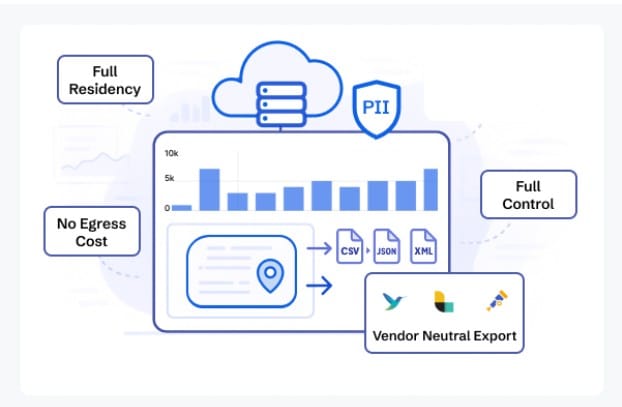
CubeAPM: It offers flexible deployment options, including fully managed SaaS or Bring Your Own Cloud (BYOC) self-hosted setups. Teams can deploy CubeAPM directly within their own infrastructure, keeping all telemetry data inside their cloud environment for compliance and low-latency access. The documentation details quick setup via Helm charts and OpenTelemetry Collector configurations for Kubernetes.
Coralogix: It operates as a cloud-based SaaS platform where telemetry is processed in Coralogix’s managed environment. While users can store archived data in their own cloud for cost optimization, live data still routes through Coralogix servers. On-premises deployment is not available.
Sumo Logic: It runs as a fully managed, multi-tenant SaaS solution optimized for public cloud environments. Deployments use agents or collectors through AWS CloudFormation, Terraform, or Kubernetes DaemonSets. Sumo Logic does not support self-hosted or hybrid deployment modes.
Pricing for Small, Medium, & Large Teams
Pricing directly impacts scalability and data management decisions, especially for teams ingesting large volumes of logs, metrics, or traces daily.
Here’s a pricing calculation summary for Coralogix vs Sumo Logic vs CubeAPM:
*All pricing comparisons are calculated using standardized Small/Medium/Large team profiles defined in our internal benchmarking sheet, based on fixed log, metrics, trace, and retention assumptions. Actual pricing may vary by usage, region, and plan structure. Please confirm current pricing with each vendor.
Cost for Small Teams (~30):
- CubeAPM: $2,080
- Coralogix: $4,090
- Sumo Logic: $4,641
Cost for Mid-Sized Teams (~125):
- CubeAPM: $7,200,
- Coralogix: $13,200
- Sumo Logic: $16,065
Cost for Large Teams (~250):
- CubeAPM: $15,200
- Coralogix: $29,000
- Sumo Logic: $33,915
CubeAPM Costs: Detailed Calculation
CubeAPM follows a simple ingestion-based model of $0.15 per GB, covering all data types — logs, metrics, traces, infrastructure, RUM, and synthetic monitoring. There are no additional costs for user seats, support, or retention. This predictable model helps teams plan long-term budgets with clarity.
- Small teams (~ 30): $2,080
- Mid-sized teams (~ 125): $7,200
- Large teams (~250): $15,200
Coralogix Costs: Detailed Calculation
Coralogix uses a tiered pricing model where each telemetry type is billed separately: Logs: $0.42/GB, Traces: $0.16/GB, Metrics: $0.05/GB, and AI: $1.5 per 1 million tokens. This structure allows customization but can lead to variability in monthly costs depending on the signal mix and retention levels.
- Small teams: $4,090
- Mid-size teams: $13,200
- Large teams: $29,000
Sumo Logic Costs: Detailed Calculation
Sumo Logic follows a usage-based pricing model tied to data scanning volume. Based on the official pricing details, costs range between $3.14 – $3.77 per TB scanned, depending on the chosen plan. Additional costs apply for extended retention, analytics credits, and enterprise features.
- Small teams: $4,641
- Mid-size teams: $16,065
- Large teams: $33,915
Sampling Strategy

CubeAPM: It uses Smart Sampling, an adaptive, context-aware mechanism that evaluates metrics like latency and error rate before deciding which traces to retain. This ensures critical data is preserved while achieving over 95% compression, greatly reducing storage and processing costs. CubeAPM’s documentation emphasizes that this approach “retains useful samples while operating at much higher efficiency,” helping teams lower cost without losing diagnostic precision.
Coralogix: It employs the Streama architecture for real-time data flow optimization and log pipeline management, which offers rate control and routing flexibility. It also offers other sampling strategies, such as tail-based and conditional error sampling.
Sumo Logic: It uses probabilistic sampling for trace and metrics data, allowing users to filter or downsample telemetry data, which is effective for standard workloads. Sumo Logic also supports pattern filtering and tail-based sampling.
Data Retention

Log or data retention policies determine how long telemetry data remains searchable and how each vendor balances cost with compliance. Here’s how CubeAPM, Coralogix, and Sumo Logic approach retention:
CubeAPM: It provides unlimited log retention at no extra cost, allowing teams to store all telemetry data—logs, metrics, traces, and events—indefinitely within their own environment. Because CubeAPM can be deployed in a Bring-Your-Own-Cloud (BYOC) setup, all data remains under the customer’s control while meeting compliance and localization requirements. This is beneficial for long-term analytics, audits, and AI model training on historical data.
Coralogix: It offers infinite data retention for logs, metrics, and traces. Its tiered retention is through its “hot, warm, and archive” storage architecture. Active (hot) data is searchable in real time, warm data remains available for medium-term analysis, and archived telemetry can be offloaded to the customer’s own cloud. This structure enables long-term retention while optimizing cost, but archived data incurs public cloud egress when restored for querying.
Sumo Logic: It provides 30 days of log retention for the trial account, while 7 days of retention is for the free plan, and 365 days of retention is available in the Professional plan. Extended multi-year retention is available in Enterprise tiers for extra charges. Retention is governed through Sumo Logic’s Continuous Intelligence Platform, which automatically manages hot and cold storage for performance efficiency. Customers can also export data to their own cloud storage for longer retention at additional cost.
Support Channel, Response Time & Pricing
Support responsiveness can heavily impact uptime and troubleshooting efficiency. Here’s how each vendor handles it:
CubeAPM: It provides direct Slack and WhatsApp support with engineers, ensuring responses within minutes. Support is included at no extra cost, helping teams resolve issues quickly without escalation delays.
Coralogix: It offers 24/7 in-app chat and email support, with quick responses during onboarding and enterprise use. Support is free for all plans and backed by extensive product documentation.
Sumo Logic: It provides email and chat support for Essentials/Professional tiers (8×7 – business hours) and 24/7 coverage for Enterprise plans, with premium SLAs available at extra cost.
Known For
Each of these observability tools has carved a niche in how they approach data collection, storage, and visualization.
CubeAPM: It is known for OpenTelemetry-native full-stack observability with complete MELT coverage and predictable pricing. The platform’s self-hosting and Bring-Your-Own-Cloud (BYOC) options make it ideal for organizations prioritizing data residency, compliance, and cost control.
Coralogix: It is recognized for log lifecycle management and cost-optimized data storage. Its index-free architecture and customer-managed archival allow teams to retain massive datasets while controlling costs, making it popular for high-volume log analytics and AI-powered anomaly detection.
Sumo Logic: It is best known for cloud-native log analytics and SIEM capabilities. The platform delivers scalable machine data insights and real-time dashboards suited for security monitoring and DevOps analytics in large, distributed cloud environments.
Which Tool Is Best for You? Why Brands Choose CubeAPM
Coralogix stands out for log lifecycle management and flexible archival that helps control storage expenses. Sumo Logic, on the other hand, is ideal for cloud-native enterprises prioritizing SIEM, machine data intelligence, and integrated analytics. Both offer solid SaaS convenience but are limited by usage-based pricing and a lack of self-hosting flexibility.
CubeAPM is the best choice for teams seeking OpenTelemetry-native, full-stack observability with predictable pricing, flexible deployment, and unlimited retention. CubeAPM helps engineering and DevOps teams monitor, trace, and analyze applications across microservices while maintaining complete data ownership — all at a fraction of traditional APM costs.
Benefits of Choosing CubeAPM
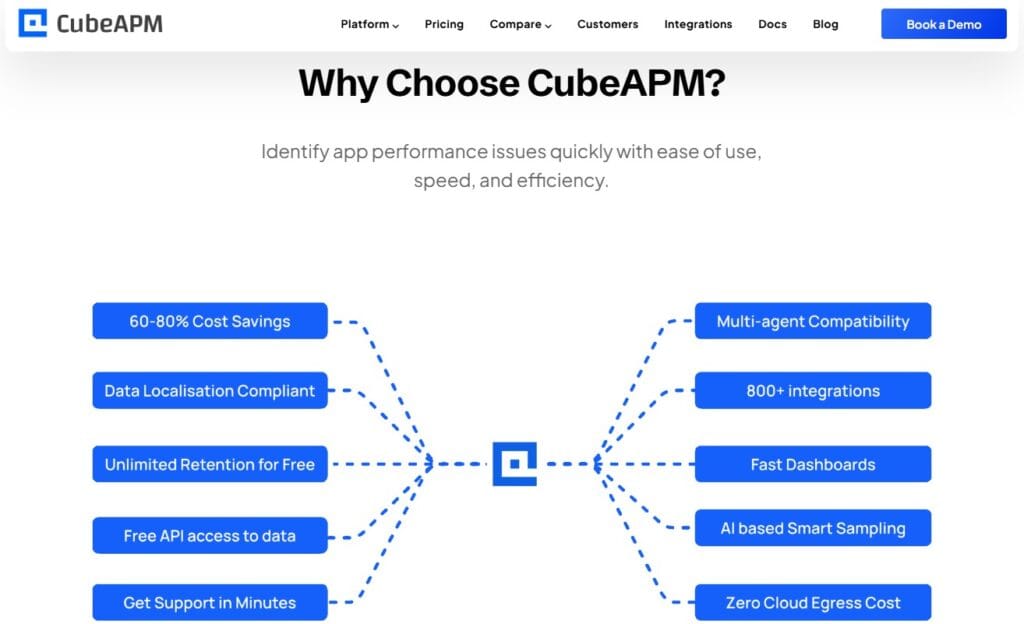
- Predictable pricing: $0.15/GB ingestion with no extra charges for users, support, or features, giving teams full cost transparency.
- Full-stack observability: Unified MELT (Metrics, Events, Logs, Traces) with built-in RUM, synthetic monitoring, and error tracking.
- Flexible deployment: Deploy on-prenises or via Bring Your Own Cloud (BYOC) to meet compliance and data residency requirements.
- Smart sampling: Over 95% compression ensures cost efficiency without losing critical diagnostic traces.
- Unlimited log retention: Store and query all telemetry data indefinitely at no additional cost.
- Instant support: Direct Slack and WhatsApp access to engineers for minute-level response times.
Coralogix vs Sumo Logic vs CubeAPM: Use Cases
Each observability platform in Coralogix vs Sumo Logic vs CubeAPM comparison is built for different types of teams and priorities — whether that’s controlling costs, ensuring compliance, or scaling analytics across multi-cloud environments. Here’s where each tool fits best:
Choose Coralogix if:
You are a data-intensive team or enterprise that prioritizes log lifecycle management, real-time analytics, and cost-optimized archival. It fits organizations balancing large-scale data ingestion with retention flexibility.
- For log-heavy environments: Handle petabytes of logs using an index-free architecture for faster querying and lower indexing costs.
- For cost-conscious enterprises: Archive data to your own cloud while maintaining searchable hot data in Coralogix’s SaaS layer.
- For compliance-aware teams: Keep archived telemetry in your cloud to maintain data sovereignty while meeting cost and retention goals.
- For anomaly detection: Leverage built-in machine-learning alerts and correlation for automated insight across log streams.
Choose Sumo Logic if:
You operate in a cloud-native enterprise environment that needs machine data analytics, SIEM, and operational visibility across distributed systems. It’s best for teams emphasizing security, scale, and centralized analytics.
- For security operations: Integrated SIEM and threat detection provide real-time alerts for incident investigation and compliance audits.
- For hybrid or multi-cloud deployments: Simplifies observability with unified log, metric, and trace ingestion across AWS, Azure, and GCP.
- For large-scale analytics: Combines dashboards, correlation queries, and alerts for quick pattern detection across terabytes of data.
- For enterprise continuity: 365-day retention by default with 24/7 enterprise support for mission-critical environments.
Choose CubeAPM if:
You need OpenTelemetry-native, full-stack observability with predictable pricing and flexible deployment. It’s the best choice for startups, DevOps/SRE teams, and regulated enterprises that value speed, data ownership, and transparency.
- For startups and SMBs: Rapid setup in under an hour, $0.15/GB pricing, and unlimited data retention — perfect for early-stage teams that need control without surprise bills.
- For full-stack observability: Unified APM, infra, logs, metrics, traces, RUM, and synthetic monitoring from one dashboard for complete MELT visibility.
- For compliance-heavy industries: Supports self-hosting (BYOC) and on-prem deployment to meet compliance.
- For DevOps and SREs: Smart sampling with 95%+ compression preserves critical traces while reducing data noise for faster root-cause analysis.
- For scalability and MTTR: Real-time Slack/WhatsApp support and context-rich dashboards reduce mean time to resolution across microservices.
Coralogix vs Sumo Logic vs CubeAPM: Which Is Better?
Coralogix and Sumo Logic deliver strong cloud-based analytics. But CubeAPM stands out with a simple $0.15/GB pricing, full-stack OpenTelemetry-native observability, self-hosting (BYOC) flexibility, and unlimited retention. With smart sampling, real-time Slack/WhatsApp support, and unified MELT coverage, CubeAPM empowers DevOps teams to achieve faster root-cause analysis and complete control over their data.
Experience observability without limits — Book a free CubeAPM demo today.
Disclaimer: The information in this article reflects the latest details available at the time of publication and may change as technologies and products evolve.
FAQ
1. What is the main difference between Coralogix, Sumo Logic, and CubeAPM?
The main difference lies in pricing transparency and deployment flexibility. Coralogix and Sumo Logic are cloud-only with variable usage-based pricing, while CubeAPM offers predictable $0.15/GB pricing, full-stack observability, and self-hosting (BYOC) for complete data control.
2. Which platform is more cost-effective for scaling observability?
CubeAPM is the most cost-effective, as it provides ingestion-based pricing with unlimited retention, unlike Coralogix and Sumo Logic, which charge separately for logs, metrics, and retention tiers.
3. Does Coralogix or Sumo Logic support self-hosting?
No. Both Coralogix and Sumo Logic are majorly SaaS-only solutions (with certain on-prem capabilities in Coralogix). In contrast, CubeAPM supports full self-hosting and Bring-Your-Own-Cloud (BYOC) deployments, allowing data to stay within your infrastructure for compliance and localization.
4. Which tool is better for enterprise compliance requirements?
CubeAPM is better suited for enterprises needing data residency, compliance, and secure in-cloud deployments. Coralogix partially supports data archiving in customer clouds, while Sumo Logic is fully managed and less flexible for compliance-heavy use cases.
5. Why do DevOps teams prefer CubeAPM over Coralogix and Sumo Logic?
Teams prefer CubeAPM because it delivers unified MELT visibility, smart sampling (95%+ compression), real-time support, and predictable costs — helping reduce MTTR and simplify observability at scale.