






The main difference between Sentry, New Relic, and CubeAPM is the problem each tool is designed to solve. Sentry focuses on application errors and developer debugging, New Relic delivers a broad SaaS-based observability platform, while CubeAPM is built for self-hosted, OpenTelemetry-native observability with predictable costs and full data control.
In practice, this means teams use Sentry to quickly identify and fix production errors, New Relic to monitor applications and infrastructure through a managed all-in-one platform, and CubeAPM when they need end-to-end visibility across metrics, logs, events, and traces without giving up ownership of their observability data.
This Sentry vs New Relic vs CubeAPM article compares how these tools differ in features, deployment models, pricing behavior, and real-world use cases.
Sentry vs New Relic vs CubeAPM Comparison
This comparison below is based on publicly available documentation and typical production usage patterns. The actual pricing, sampling, and retention behavior may vary depending on workload characteristics and system configuration.
| Feature | CubeAPM | Sentry | New Relic |
| Known for | Unified MELT, native OTEL, self-hosting, cost predictability | Error tracking and developer-focused APM | Full-stack APM, service maps, advanced analytics |
| Multi-Agent Support | Yes (OTel, New Relic, Datadog, Elastic, etc.) | Limited (OTel & multiple SDKs) | Yes (New Relic Agent, OTel, Prometheus) |
| MELT Support | Full MELT coverage | Limited (infra); traces & logs focused | Full MELT coverage |
| Deployment | Self-hosted with vendor-managed | SaaS; self-hosted | SaaS-only |
| Pricing | Ingestion-based: $0.15/GB | OSS: Free; paid: $26-$80 per month; Enterprise: custom | Free 100 GB/month; beyond: $0.40/GB. Per-user license: $49-$349/month |
| Sampling Strategy | Smart sampling, automated, context-aware | Dynamics (rule-based) sampling | Adaptive, head- based, & tail-based |
| Data Retention | Unlimited Retention | Free: 30d; Paid: 90d; Enterprise: custom | 30d for logs/events; add-on retention |
| Support Channel & TAT | Slack, WhatsApp; response in minutes | Community-based & email, Enterprise: account manager | Community, docs, ticket-based; TAT: 2d-2 hrs; 1hr priority |
Sentry vs New Relic vs CubeAPM: Feature Breakdown
Known for
This section explains how each observability tool describes its core purpose and strengths to help you understand the primary role of each platform.
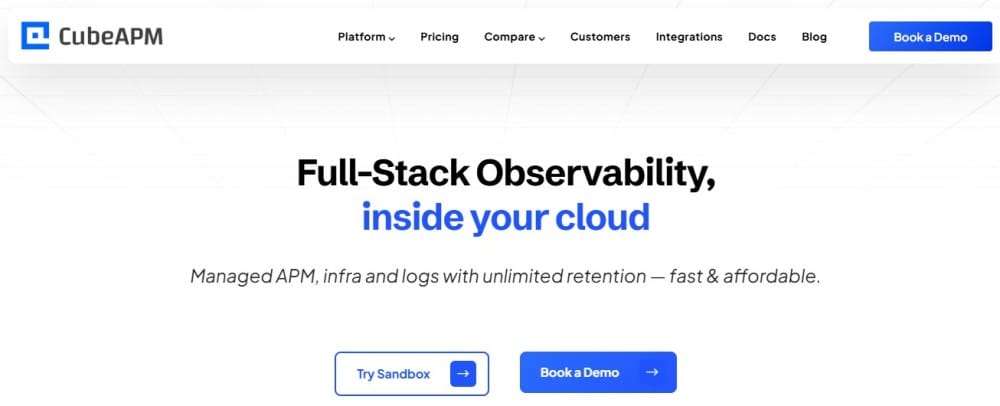
CubeAPM is positioned as a full-stack observability and APM platform that collects, visualizes, and alerts on telemetry data from applications and infrastructure. It emphasizes OpenTelemetry compatibility, unified metrics, logs, traces, and other signals, as well as support for managing the stack inside a customer’s environment while vendor-managing operations.
Sentry is presented on its official site as a developer-centric platform for error monitoring, performance monitoring, and distributed tracing that helps software teams detect, diagnose, and fix issues in their applications across many languages and frameworks.
New Relic describes itself as an all-in-one observability platform that gives engineering teams visibility into their entire stack, from applications and infrastructure to logs, metrics, and user experience, with dozens of capabilities and integrations designed to help troubleshoot, optimize performance, and derive insights from telemetry data.
Multi-Agent Support
This section explains which agents and instrumentation each tool supports, with clear examples of what each vendor lists as supported.
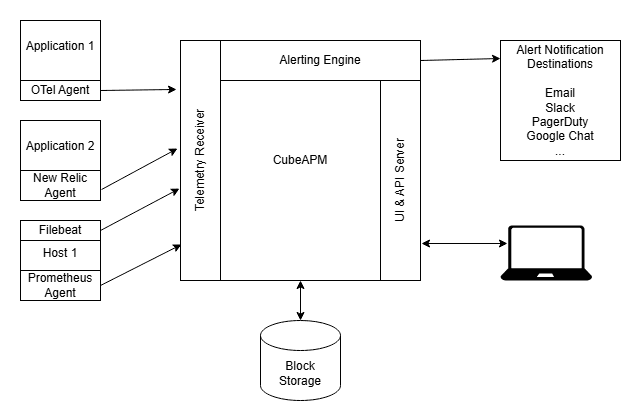
CubeAPM supports a wide set of agents and telemetry sources. It can ingest data from OpenTelemetry SDKs and collectors, Prometheus exporters for metrics, and agents or exporters from other vendors such as Datadog, New Relic, and Elastic. It also supports logs shipped via standard protocols and can receive telemetry from multiple instrumentation sources without forcing re-instrumentation.
Sentry’s official platform supports its own SDKs for many languages and frameworks, including JavaScript, Python, Java, .NET, and mobile SDKs. Sentry also accepts OpenTelemetry traces and events when properly configured. However, Sentry does not provide a broad set of infrastructure agents like host-level metric collectors or third-party exporters outside of application SDKs and trace ingestion.
New Relic supports multiple instrumentation sources, including its proprietary New Relic agents for applications, infrastructure, and browser/mobile. It also supports OpenTelemetry data via official integration and ingestion endpoints. Additionally, New Relic documents compatibility with Prometheus exporters for metrics and other community exporters, enabling both managed agents and standards-based telemetry to be used in concert.
MELT Support
This section explains how each platform supports metrics, events, logs, and traces, based on its official product documentation and feature pages.
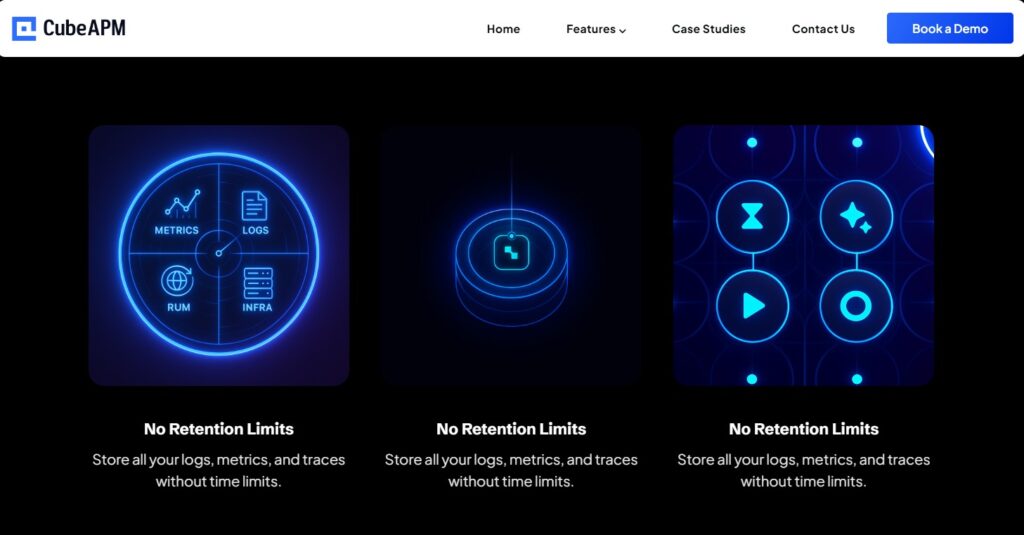
CubeAPM provides full MELT coverage. Its documentation states native support for metrics, logs, and traces through OpenTelemetry, along with correlated views across application and infrastructure data. The platform treats all four signals as first-class and links them for troubleshooting and analysis.
According to its official documentation, Sentry supports traces and logs via its SDKs and OTLP ingestion. Metrics support is limited to application-level metrics sent through SDKs, and infrastructure metrics are not a core part of the platform. Events are primarily represented as errors and transactions.
New Relic provides full MELT support as part of its SaaS observability platform. Its documentation confirms support for metrics, logs, events, and traces across applications and infrastructure, with built-in correlation, service maps, and analytics.
Deployment
This section explains how each platform is deployed, operated, and managed, based strictly on official product pages and documentation.
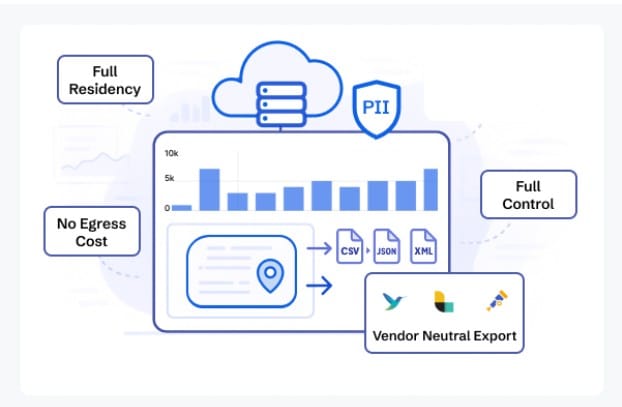
CubeAPM supports self-hosting deployment inside the customer’s cloud or on-premise infrastructure. The platform is vendor-managed, which means CubeAPM handles setup, upgrades, and maintenance while the customer retains control over where observability data is stored. This model is positioned for teams with data residency, compliance, or latency requirements.
Sentry is primarily delivered as a hosted SaaS platform operated by Sentry. Sentry also offers a self-hosted deployment option for teams that want to run Sentry on their own infrastructure, but in this model, customers are responsible for scaling, upgrades, and ongoing operations.
New Relic is provided only as a SaaS observability platform. All data ingestion, storage, processing, and platform operations are handled by New Relic in its managed cloud regions. Customers configure instrumentation and access controls, but do not have to manage the underlying infrastructure.
Pricing for Small, Mid, and Large Teams
To summarize the pricing:
*All pricing comparisons are calculated using standardized Small/Medium/Large team profiles defined in our internal benchmarking sheet, based on fixed log, metrics, trace, and retention assumptions. Actual pricing may vary by usage, region, and plan structure. Please confirm current pricing with each vendor.
| Approx. cost for teams (size) | Small (~30) | Mid-Sized (~125) | Large (~250) |
| CubeAPM | $2,080 | $7,200 | $15,200 |
| New Relic | $7,896 | $25,990 | $57,970 |
| Sentry | $3,560 | $12,100 | $32,400 |
CubeAPM Costs in Detail
CubeAPM uses a usage-based ingestion pricing model with a published rate of $0.15 per GB ingested. This pricing applies to metrics, logs, and traces ingested into the platform and scales linearly with volume without per-user charges or mandatory add-ons.
- Small teams (~ 30): $2,080
- Mid-sized teams (~ 125): $7,200
- Large teams (~250): $15,200
New Relic Cost in Detail
New Relic’s pricing is mainly usage-based with a free tier. Every account gets 100 GB of data ingest per month at no cost, and additional data beyond this limit is charged at about $0.40 per GB under the standard data pricing model. After free allocations are consumed, Core users are typically priced at around $49 per user per month, while Full Platform user licenses can range up to $349 per user per month in Pro and Enterprise usage models.
- Small teams: $7,896
- Mid-size teams: $25,990
- Large teams: $57,970
Sentry Cost in Detail
Sentry offers a freemium and tiered subscription model with pay-as-you-go options. Its free tier lets teams start without cost and then scale based on usage. Paid plans include Team starting around $26 per month and Business around $80 per month with higher quotas for errors, spans, and logs; additional usage, such as logs beyond included quota,s is billed at $0.50 per GB when configured within pay-as-you-go budgets.
- Small teams: $3,560
- Mid-size teams: $12,100
- Large teams: $32,400
Teams usually start noticing pricing differences once telemetry volume grows beyond early usage. Sustained traffic, high-cardinality logs, and expanding microservices make observability costs more variable, pushing teams to track and forecast spend more closely.
Sampling Strategy
This section explains how each platform controls telemetry volume, based on official documentation and product guides.

CubeAPM uses automated Smart Sampling to reduce data volume while retaining high-value signals. Its documentation describes context-aware sampling that prioritizes slow requests, errors, and anomalous traces over routine traffic. Sampling decisions are applied automatically without requiring manual rule tuning.
Sentry uses dynamic, rule-based sampling. According to its documentation, teams define sampling rules based on attributes such as transaction name, environment, or outcome. Sampling rates are applied during ingestion to control event and transaction volume.
New Relic supports multiple sampling approaches. Its documentation describes head-based sampling at ingestion and tail-based sampling through OTel pipelines. Sampling can be configured to retain representative traces or focus on specific services and conditions.
Data Retention
This section explains how long each platform retains observability data, using exact figures published in official documentation and pricing pages.
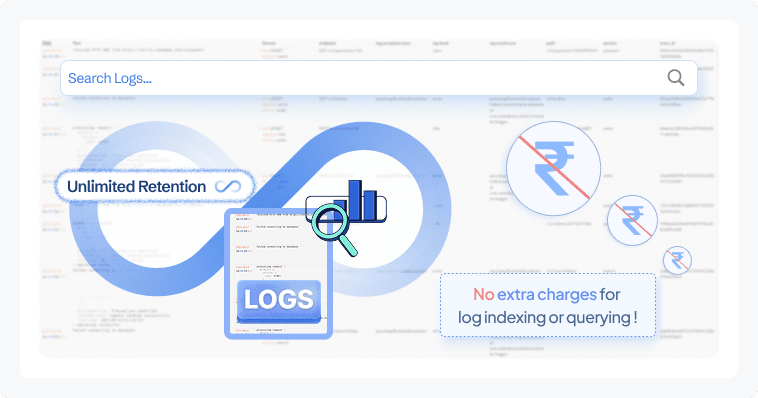
CubeAPM offers unlimited data retention by default. Its official documentation and product pages state that metrics, logs, and traces can be retained indefinitely without additional charges or tier upgrades.
Sentry uses plan-based data retention. According to Sentry’s official documentation, the Free plan retains data for 30 days, paid Team and Business plans retain data for 90 days, and Enterprise plans support custom retention agreements.
New Relic retains logs and events for 30 days by default. Its documentation confirms that longer retention periods are available through paid retention add-ons, with retention length depending on the selected data tier.
Support Channel and TAT
This section explains how each tool provides customer support and what response times are published on their official sites or documentation, using exact official information where available.
CubeAPM offers support through Slack and WhatsApp, with responses typically in minutes. Its official documentation states that direct support is available via messaging channels with access to core engineers for real-time troubleshooting.
Sentry provides community support through GitHub and Discord. Email support is also available in all plans. Its pricing page notes that Enterprise customers receive premium customer success and a dedicated Technical Account Manager.
New Relic offers support based on plan level. According to its official support documentation, standard customers receive community and ticket-based support, with typical response times ranging from 2 days for lower tiers to 2 hours for higher tiers. Priority support with a one-hour response is available on premium plans.
If you want to dive deeper into feature and pricing comparison, check out our CubeAPM vs New Relic page.
How Teams Typically Decide Between Sentry, New Relic, and Self-Hosted Observability
As teams move beyond early adoption, observability decisions are rarely made by engineering alone. Cost, data ownership, and operational impact start to matter as much as features, especially at scale.
Who is involved
Engineering teams evaluate how quickly issues can be detected, debugged, and resolved in production. Platform or SRE teams focus on deployment models, operational overhead, and long-term scalability. Finance teams look at how observability spend grows with usage, while security and compliance teams assess data residency, access controls, and audit requirements.
What questions block decisions
Teams often get stuck on questions that feature comparisons do not fully answer. How predictable will costs be as telemetry volume grows. Where will observability data be stored and who controls it. How much operational effort is required to run or maintain the platform. These questions tend to surface only after initial pilots or early production usage.
Why comparisons alone aren’t enough
At scale, real usage patterns matter more than feature lists. Sustained traffic, high-cardinality data, and microservice sprawl expose differences in pricing behavior, sampling effectiveness, and data retention policies. Teams typically need hands-on evaluation, cost modeling, and production testing to understand how each platform behaves under real workloads.
Sentry vs New Relic vs CubeAPM: Use Cases
This section summarizes when teams typically choose each platform, based on product positioning, documentation, and observed usage patterns across different team sizes and architectures.
Choose CubeAPM if:
Teams choose CubeAPM when they need full-stack observability with strong control over data, cost, and deployment, especially as systems scale.
- You want full-stack observability using OpenTelemetry across metrics, logs, and traces, without vendor lock-in, based on CubeAPM documentation.
- You operate in regulated environments and require data to stay inside your own cloud or VPC, based on CubeAPM’s self hosted deployment model.
- You need predictable pricing as telemetry volume grows, using ingestion-based pricing, based on CubeAPM’s published pricing and sales data.
- You want unlimited data retention for audits, long-term performance analysis, or post incident reviews, based on CubeAPM product documentation.
- You run Java or JVM based services such as Spring Boot or distributed Java microservices and need deep end to end tracing across services, databases, and message queues, based on CubeAPM APM capabilities.
- You want to reduce mean time to resolution by correlating high latency traces, logs, and metrics during incidents, based on demo and customer usage patterns.
Choose Sentry if:
Teams choose Sentry when developer productivity and fast error resolution are the primary goals.
- You are focused on error tracking and application-level performance issues rather than full infrastructure observability, based on Sentry’s product focus.
- You want a quick setup using language-specific SDKs with minimal configuration, based on Sentry documentation.
- You need strong developer workflows, such as stack traces, error grouping, and release-level visibility, to shorten debugging cycles.
- You are a startup or small team prioritizing fast feedback on application errors over system-wide observability.
Choose New Relic if:
Teams choose New Relic when they want a broad managed observability platform with minimal operational responsibility.
- You want an all-in-one SaaS platform covering APM, infrastructure monitoring, logs, and user experience, based on New Relic’s official platform positioning.
- You prefer a managed service where data storage, scaling, and platform operations are handled by the vendor.
- You need extensive integrations, dashboards, and service maps out of the box for large or complex environments.
- You are comfortable managing usage-based pricing and user-based licensing as observability adoption expands, based on New Relic’s pricing model.
Conclusion
Sentry, New Relic, and CubeAPM address different observability needs. Sentry focuses on developer-centric error tracking, New Relic provides a broad SaaS observability platform, and CubeAPM emphasizes full-stack visibility with stronger control over data and costs.
As systems scale, teams often evaluate how pricing behaves, where data lives, and how easily metrics, logs, and traces connect during incidents. These factors tend to matter as much as features when observability becomes business-critical.
For teams seeking OpenTelemetry-native observability, predictable pricing, unlimited retention, and self-hosted deployment without operational burden, CubeAPM stands out as a strong option. Explore a live demo to see how it fits your environment.
Disclaimer: The information in this article reflects the latest details available at the time of publication and may change as technologies and products evolve.
FAQs
1. Can Sentry and New Relic be used together in the same environment?
Yes. Some teams use Sentry for error tracking and New Relic for broader observability. This setup can work, but it increases tooling complexity and cost as telemetry volume grows.
2. Does CubeAPM require rewriting existing instrumentation to migrate?
In most cases, no. Based on CubeAPM documentation, teams can continue using OpenTelemetry and standard exporters, reducing the need for re-instrumentation during migration.
3. How do these tools handle observability in Kubernetes environments?
All three support Kubernetes monitoring, but with different depth. New Relic provides managed Kubernetes integrations, Sentry focuses on application errors inside containers, and CubeAPM correlates Kubernetes metrics with traces and logs inside the customer’s environment.
4. Which tool is better for long-running investigations or audits?
Tools with longer or unlimited retention are typically preferred. CubeAPM supports unlimited retention, while Sentry and New Relic rely on plan-based or add-on retention, which can limit historical analysis.
5. How do these platforms affect long-term observability budgeting?
Sentry and New Relic use tiered or usage-based pricing that can vary with traffic and adoption. CubeAPM follows a predictable ingestion-based pricing model, which can simplify forecasting as observability usage expands.