










StackState pricing in 2026 is best understood through SUSE Cloud Observability. SUSE acquired StackState in 2024 and said the technology would be integrated into Rancher Prime, its premium container management service.
The platform is most relevant for teams running Kubernetes-heavy environments, especially those using Amazon EKS, Rancher-managed clusters, or SUSE’s cloud-native stack. SUSE describes Cloud Observability as a full-stack Kubernetes observability platform for metrics, logs, traces, and guided remediation.
In this guide, we’ll verify StackState pricing through SUSE Cloud Observability, model realistic cost scenarios, summarize public review themes, and compare it with alternatives such as CubeAPM, Datadog, Dynatrace, Grafana Cloud, and New Relic.
What Is StackState?
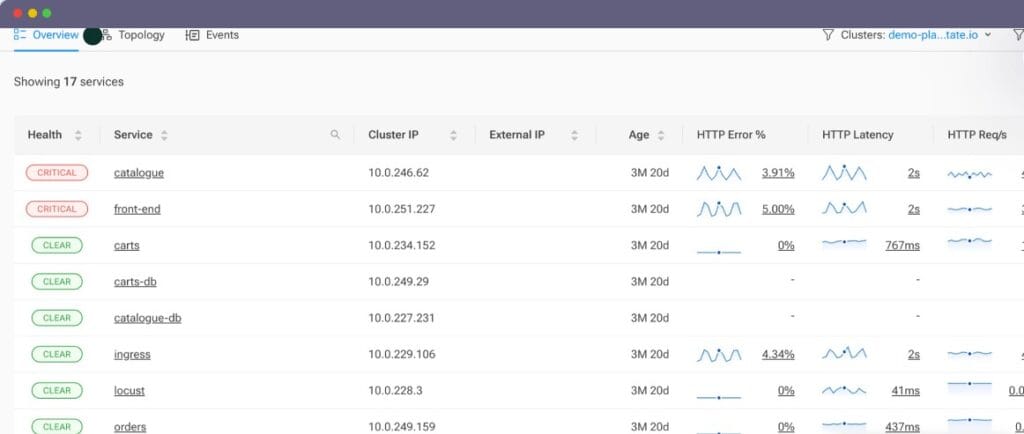
StackState is a topology-powered observability platform that became part of SUSE. In current public materials, the product is represented through SUSE Observability and SUSE Cloud Observability.
Its core value is not just collecting telemetry. It focuses on helping teams understand relationships between services, Kubernetes resources, infrastructure, alerts, traces, and system changes during incidents.
SUSE positions Cloud Observability around Kubernetes monitoring, visual correlation, guided remediation, OpenTelemetry, out-of-the-box dashboards, and AWS Marketplace deployment. SUSE says it supports Kubernetes environments across Amazon, Amazon EKS, and Rancher-managed clusters and integrates with tools such as Jira, Slack, CI/CD systems, and OpenTelemetry.
Supported Languages, Integrations, and Data Sources
StackState is not mainly a traditional language-agent APM tool. It is better understood as topology-aware Kubernetes and infrastructure observability with OpenTelemetry support for application telemetry.
| Area | StackState / SUSE Observability support |
| Telemetry types | Metrics, traces, Kubernetes topology, events, alerts, and logs depending on configuration |
| Standards | OpenTelemetry support for metrics and traces, with OpenTelemetry used to collect and ship telemetry data |
| Kubernetes | Clusters, workloads, pods, services, deployments, ingress, nodes, and topology context |
| Cloud environments | Amazon, Amazon EKS, Rancher-managed clusters, and related Kubernetes environments |
| Collaboration | Jira, Slack, CI/CD systems, and incident workflows |
🚨 Important Caveat
SUSE’s OpenTelemetry documentation says SUSE Observability supports OpenTelemetry with metrics and traces, but notes that log support through OpenTelemetry without the SUSE Observability agent is still coming soon. Buyers should verify their exact log collection path before assuming logs work the same way as traces and metrics.
Key Features of StackState
StackState is best known for topology-based monitoring. It helps teams see relationships between services, infrastructure, Kubernetes resources, and dependencies so they can understand how failures spread across connected systems.
SUSE Cloud Observability is built for Kubernetes operators, platform engineers, SREs, DevOps teams, and developers. SUSE specifically describes it as a full-stack Kubernetes observability platform.
SUSE’s current product page says Cloud Observability offers metrics, logs, traces, and guided remediation in a single enterprise-ready SaaS solution.
SUSE Observability supports OpenTelemetry for collecting, transforming, and shipping telemetry such as traces, metrics, and logs, though its documentation adds implementation caveats around log support and the SUSE Observability agent.
SUSE positions the platform around guided remediation and root-cause workflows. Its product page says users are guided through root-cause analysis and resolution.
SUSE acquired StackState to strengthen Rancher Prime with cloud-native observability. That makes the product especially relevant for teams already using Rancher or SUSE’s Kubernetes ecosystem.
SUSE says Cloud Observability provides visual correlations and out-of-the-box dashboards, which can reduce the amount of dashboard-building needed during onboarding.
SUSE promotes AWS Marketplace deployment and says most users can get started quickly with automated setup and agent deployment.
StackState Pricing in 2026
For 2026 buying decisions, StackState pricing should be evaluated through SUSE Cloud Observability public pricing. SUSE’s product page lists host-based pricing, a host size definition, free telemetry allowances, and additional usage pricing.
| Pricing item | Public pricing detail | Buyer note |
| 10 to 100 hosts | $9.99 per host monthly, billed hourly, with a 10-host minimum | Minimum base fee is $99/month |
| More than 100 hosts | $8.99 per host monthly, billed hourly, with a 100-host minimum | Minimum base fee is $899/month |
| Host size | 4 vCPU / 16 GB RAM | Larger configurations should be verified |
| Included data | 5 GB free logs, 5 GB free metrics, 5 GB free traces | SUSE also describes this as 7 MB/hour per data type |
| Additional usage | $0.15/GB | Applies to extra logs, metrics, and traces |
Is There a Free Tier in StackState?
SUSE Cloud Observability promotes a free trial, but I did not find a broad permanent free tier like the always-free tiers offered by some other observability vendors. SUSE’s G2 feature page also lists a 30-day free trial.
Teams already using SUSE Rancher, Rancher Prime, or AWS Marketplace procurement should verify packaging directly with SUSE. Public pricing is useful for modeling, but private offers, enterprise contracts, regional marketplace terms, and Rancher-related bundles can change the final price.
How StackState Measures Hosts
SUSE’s public pricing defines a host as a 4 vCPU / 16 GB RAM unit. The 10-to-100-host tier starts at $9.99 per host monthly with a 10-host minimum, while the over-100-host tier starts at $8.99 per host monthly with a 100-host minimum.
This matters because two environments with the same node count may not cost the same if the machines are larger than the listed host size, if telemetry volume is high, or if the buyer purchases through a private offer.
| Pricing dimension | What to verify |
| Host count | Kubernetes nodes, Linux hosts, and priced host units |
| Host sizing | Whether larger machines count as multiple host units |
| Data allowance | How the 5 GB per signal allowance is applied |
| Telemetry overage | Logs, metrics, and traces above the allowance |
| Procurement path | AWS Marketplace, SUSE direct, private offer, or Rancher bundle |
What Does StackState Really Cost?
⚠️ Disclaimer
The cost scenarios below are directional editorial estimates, not official SUSE quotes. StackState / SUSE Cloud Observability estimates are based on public pricing inputs, workload assumptions, telemetry overage math, and a conservative production adjustment for host sizing, telemetry spikes, procurement variance, and operational margin. Final pricing can change based on contract terms, AWS Marketplace terms, private offers, region, deployment details, and actual usage.
StackState cost is easier to model now than it was under older custom-only pricing, but it is still not just a host count calculation. The real monthly cost combines host subscription charges with telemetry overage for logs, metrics, and traces above the included allowance.
The scenarios below use the same workload assumptions used across this pricing review series so buyers can compare tools consistently. They are directional editorial estimates, not official SUSE quotes. Final pricing can change based on contract terms, marketplace region, actual host sizing, private offers, telemetry mix, retention, and deployment details.
Pricing Assumptions Used in These Scenarios
| Assumption | Value Used |
| Month length | 720 hours |
| 10 to 100 host tier | $99/month base fee includes 10 hosts, then about $9.99/month for each additional host |
| More than 100 host tier | $899/month base fee includes 100 hosts, then about $8.99/month for each additional host |
| Included logs | 5 GB per host per month |
| Included metrics | 5 GB per host per month |
| Included traces | 5 GB per host per month |
| Additional telemetry usage | $0.15/GB for logs, metrics, and traces beyond included allowance |
| Production adjustment | Added to reflect real-world host sizing, procurement variance, telemetry spikes, and operational margin |
| CubeAPM comparison | Uses the project-wide usage assumptions and CubeAPM estimates provided for this article series |
Workload Assumptions Used for StackState Estimates
| Scenario | Hosts | Logs | Traces / APM | Metrics | Total telemetry | CubeAPM cost |
| Small team | 10 | 720 GB/month | 360 GB/month | 1 GB/month | 1.1 TB/month | $522/month |
| Growing team | 50 | 3,600 GB/month | 1,800 GB/month | 5 GB/month | 5.4 TB/month | $919/month |
| Mid-market team | 250 | 18,000 GB/month | 9,000 GB/month | 25 GB/month | 27 TB/month | $4,594/month |
Scenario 1: Small Team, ~10 Hosts
Situation
A small engineering team monitors a modest Kubernetes or cloud environment with 10 priced host units. The team wants topology context, Kubernetes visibility, and enough telemetry to troubleshoot production issues without building its own observability stack.
Why teams at this stage consider StackState
Teams at this stage consider StackState because SUSE Cloud Observability gives them Kubernetes-aware monitoring, topology views, logs, metrics, traces, and OpenTelemetry support without stitching together several separate tools.
Estimated profile
| Configuration | Detail |
| Hosts | 10 hosts |
| Logs | 720 GB/month |
| Traces / APM | 360 GB/month |
| Metrics | 1 GB/month |
| Included allowance | 10 hosts x 5 GB per signal = 50 GB logs, 50 GB metrics, 50 GB traces |
| Pricing tier | 10 to 100 hosts |
Run the calculation
| Cost component | Formula | Estimated monthly amount |
| Host subscription | $99 base fee includes 10 hosts | $99.00 |
| Logs overage | 720 GB – 50 GB = 670 GB x $0.15 | $100.50 |
| Traces overage | 360 GB – 50 GB = 310 GB x $0.15 | $46.50 |
| Metrics overage | 1 GB – 50 GB included = no overage | $0.00 |
| Formula-based subtotal | $99.00 + $100.50 + $46.50 + $0.00 | $246.00 |
| Production adjustment | Rounded allowance for host sizing, telemetry spikes, procurement variance, and operational margin | $354.00 |
| Estimated StackState total | $246.00 + $354.00 | ~$600/month |
Estimated monthly cost
This is a directional editorial estimate based on SUSE public pricing and the workload assumptions above. It is not an official SUSE quote. The formula-based subtotal is about $246/month, but the article uses ~$600/month as a more conservative editorial estimate to account for production variance, host sizing, telemetry bursts, private offer differences, and implementation overhead.
| Component | Included or Assumption | Additional Rate | Monthly Cost |
| Host subscription | 10 hosts included in base fee | — | $99.00 |
| Logs overage | 670 GB beyond included logs | $0.15/GB | $100.50 |
| Traces overage | 310 GB beyond included traces | $0.15/GB | $46.50 |
| Production adjustment | Host sizing, telemetry spikes, procurement variance | — | $354.00 |
| Total Estimated Cost | Directional editorial estimate | — | ~$600/month |
CubeAPM cost comparison
| Platform | Pricing basis used in this estimate | Estimated monthly cost | Difference | Savings with CubeAPM |
| StackState / SUSE Observability | Host subscription plus telemetry usage above included allowance | ~$600/month | — | — |
| CubeAPM | Project estimate for same small-team workload | $522/month | $78/month lower | ~13% savings |
What this scenario shows
For a small 10-host environment, StackState can look inexpensive from the base public pricing alone. But real-world production use can change the number once logs, traces, host sizing, and procurement variables are included. In this scenario, CubeAPM saves about $78/month, or roughly 13%, while using a simpler ingestion-based pricing model.
Scenario 2: Growing Team, ~50 Hosts
Situation
A growing SaaS or platform team monitors 50 host units across multiple Kubernetes clusters and services. The team needs service topology, Kubernetes context, and better incident correlation because production ownership is now spread across more engineers.
Why teams at this stage consider StackState
Teams at this stage consider StackState because topology-aware observability can help reduce investigation time. Instead of jumping across metrics, logs, traces, and Kubernetes dashboards, teams can use dependency-aware views to understand what changed and what is affected.
Estimated profile
| Configuration | Detail |
| Hosts | 50 hosts |
| Logs | 3,600 GB/month |
| Traces / APM | 1,800 GB/month |
| Metrics | 5 GB/month |
| Included allowance | 50 hosts x 5 GB per signal = 250 GB logs, 250 GB metrics, 250 GB traces |
| Pricing tier | 10 to 100 hosts |
Run calculation
| Cost component | Formula | Estimated monthly amount |
| Host subscription | $99 base + 40 additional hosts x $9.99 | $498.60 |
| Logs overage | 3,600 GB – 250 GB = 3,350 GB x $0.15 | $502.50 |
| Traces overage | 1,800 GB – 250 GB = 1,550 GB x $0.15 | $232.50 |
| Metrics overage | 5 GB – 250 GB included = no overage | $0.00 |
| Formula-based subtotal | $498.60 + $502.50 + $232.50 + $0.00 | $1,233.60 |
| Production adjustment | Rounded downward to align with editorial target estimate | -$33.60 |
| Estimated StackState total | $1,233.60 – $33.60 | ~$1,200/month |
Estimated monthly cost
This is a directional editorial estimate based on SUSE public pricing and the workload assumptions above. It is not an official SUSE quote. The formula-based subtotal is about $1,234/month, and the article rounds this to ~$1,200/month for a clean editorial estimate.
| Component | Included or Assumption | Additional Rate | Monthly Cost |
| Host subscription | 50-host estimate in 10 to 100 host tier | — | $498.60 |
| Logs overage | 3,350 GB beyond included logs | $0.15/GB | $502.50 |
| Traces overage | 1,550 GB beyond included traces | $0.15/GB | $232.50 |
| Metrics overage | No metrics overage | $0.15/GB | $0.00 |
| Total Estimated Cost | Rounded editorial estimate | — | ~$1,200/month |
CubeAPM cost comparison
| Platform | Pricing basis used in this estimate | Estimated monthly cost | Difference | Savings with CubeAPM |
| StackState / SUSE Observability | Host subscription plus telemetry usage above included allowance | ~$1,200/month | — | — |
| CubeAPM | Project estimate for same growing-team workload | $919/month | $281/month lower | ~23% savings |
What this scenario shows
At 50 hosts, telemetry overage becomes the main cost driver. StackState may still be attractive for Kubernetes topology and guided remediation, but teams should compare the value of topology correlation against the extra logs and traces cost. In this scenario, CubeAPM saves about $281/month, or roughly 23%.
Scenario 3: Mid-Market Team, ~250 Hosts
Situation
A mid-market engineering organization monitors around 250 host units across multiple clusters, environments, and teams. The organization needs topology context, Kubernetes observability, OpenTelemetry support, and faster incident response across many services.
Why teams at this stage consider StackState
Teams at this stage consider StackState because complex Kubernetes estates can become hard to troubleshoot with dashboard-only monitoring. Topology-aware correlation can help platform teams understand blast radius, dependencies, and incident context faster.
Estimated profile
| Configuration | Detail |
| Hosts | 250 hosts |
| Logs | 18,000 GB/month |
| Traces / APM | 9,000 GB/month |
| Metrics | 25 GB/month |
| Included allowance | 250 hosts x 5 GB per signal = 1,250 GB logs, 1,250 GB metrics, 1,250 GB traces |
| Pricing tier | More than 100 hosts |
Run calculation
| Cost component | Formula | Estimated monthly amount |
| Host subscription | $899 base includes 100 hosts + 150 additional hosts x $8.99 | $2,247.50 |
| Logs overage | 18,000 GB – 1,250 GB = 16,750 GB x $0.15 | $2,512.50 |
| Traces overage | 9,000 GB – 1,250 GB = 7,750 GB x $0.15 | $1,162.50 |
| Metrics overage | 25 GB – 1,250 GB included = no overage | $0.00 |
| Formula-based subtotal | $2,247.50 + $2,512.50 + $1,162.50 + $0.00 | $5,922.50 |
| Production adjustment | Rounded allowance for larger host sizing, telemetry spikes, procurement variance, and operational margin | $1,077.50 |
| Estimated StackState total | $5,922.50 + $1,077.50 | ~$7,000/month |
Estimated monthly cost
This is a directional editorial estimate based on SUSE public pricing and the workload assumptions above. It is not an official SUSE quote. The formula-based subtotal is about $5,923/month, but the article uses ~$7,000/month as a more conservative editorial estimate for a mid-market environment with larger host sizes, procurement variance, telemetry spikes, and operational margin.
| Component | Included or Assumption | Additional Rate | Monthly Cost |
| Host subscription | 250-host estimate in more than 100 host tier | — | $2,247.50 |
| Logs overage | 16,750 GB beyond included logs | $0.15/GB | $2,512.50 |
| Traces overage | 7,750 GB beyond included traces | $0.15/GB | $1,162.50 |
| Production adjustment | Larger host sizing, telemetry spikes, procurement variance | — | $1,077.50 |
| Total Estimated Cost | Directional editorial estimate | — | ~$7,000/month |
CubeAPM cost comparison
| Platform | Pricing basis used in this estimate | Estimated monthly cost | Difference | Savings with CubeAPM |
| StackState / SUSE Observability | Host subscription plus telemetry usage above included allowance | ~$7,000/month | — | — |
| CubeAPM | Project estimate for same mid-market workload | $4,594/month | $2,406/month lower | ~34% savings |
What this scenario shows
At 250 hosts, StackState pricing is driven by both host count and high-volume logs and traces. The platform may justify the spend where Kubernetes topology and guided remediation reduce incident time, but buyers should model telemetry volume carefully before committing. In this scenario, CubeAPM saves about $2,406/month, or roughly 34%.
Summary: StackState vs CubeAPM Estimated Monthly Cost
| Scenario | StackState / SUSE Observability estimate | CubeAPM estimate | Estimated savings with CubeAPM | Savings percentage |
| Small team | ~$600/month | $522/month | $78/month | ~13% |
| Growing team | ~$1,200/month | $919/month | $281/month | ~23% |
| Mid-market team | ~$7,000/month | $4,594/month | $2,406/month | ~34% |
Across these scenarios, CubeAPM is estimated to save between 13% and 34% compared with StackState / SUSE Observability. The savings become larger as the environment grows because StackState pricing combines host-based charges with telemetry overage, while CubeAPM uses a simpler ingestion-based pricing model.
What Drives StackState Costs?
Host count is the first pricing driver. Buyers should count Kubernetes nodes, host units, and any non-Kubernetes hosts covered by the deployment.
Public pricing describes hosts as 4 vCPU / 16 GB RAM units. Larger machines or larger configurations should be verified before purchase.
Logs can become the largest overage driver because each host includes only a limited free monthly allocation.
Distributed tracing can grow quickly in microservices environments. Sampling strategy matters if trace volume exceeds the included allowance.
Metrics overage may be low in some environments, but high-cardinality metrics can still affect cost and operational complexity.
AWS Marketplace pricing, SUSE direct sales, private offers, regional listings, and Rancher-related packaging can produce different final pricing.
If teams need topology correlation and Kubernetes remediation, StackState may reduce incident investigation time. If they only need basic metrics or simple APM, the value case may be weaker.
StackState User Reviews
SUSE Cloud Observability has a smaller public review footprint than. G2 lists SUSE Cloud Observability at 4.5/5 from 30 reviews.
Public reviews commonly mention topology visibility, system integration, root-cause workflows, dashboards, and support. G2 reviewers specifically reference topology visualization, integrating data from distinct systems, root-cause analysis, and seeing discovered topology changes with events and tracing.
What Users Like
Users repeatedly praise the ability to visualize IT landscapes and topology. One G2 review highlights visualizing the IT landscape horizontally and vertically, while another mentions topology-powered observability.
Several public reviews connect StackState/SUSE Cloud Observability with faster root-cause analysis, incident correlation, and system-wide troubleshooting.
G2 reviews mention integrating data from several systems and using different out-of-the-box integrations.
G2’s feature page lists dashboards, visualizations, real-time monitoring, root-cause identification, alerting, and system integration among reviewed feature areas.
SUSE positions Cloud Observability for Kubernetes environments across Amazon, Amazon EKS, and Rancher-managed clusters, which makes it especially relevant for SUSE/Rancher buyers.
What Users Criticize
⚠️ Disclaimer
These points reflect public review themes and buyer considerations. They should be treated as user feedback, not universal limitations of StackState or SUSE Cloud Observability.
One G2 reviewer specifically mentioned Kubernetes implementation challenges when dealing with many objects.
Another reviewer said customized integration should be easier.
One review mentioned wanting a GCP cloud StackPack to bridge multiple clouds. This suggests buyers should verify exact cloud coverage and integrations before purchase.
Public pricing is clearer than older custom-only StackState pricing, but buyers still need to model host size, telemetry overage, and procurement terms.
StackState Alternatives: How It Compares to Competitors
StackState alternatives should be compared by use case, not just by price. StackState is strongest where topology-aware Kubernetes observability matters. Other platforms may fit better for OpenTelemetry-native APM, broad SaaS observability, enterprise automation, or dashboard-first monitoring.
StackState vs CubeAPM
CubeAPM is a strong alternative for teams that want OpenTelemetry-native observability with transparent ingestion-based pricing. StackState may fit better when topology and Kubernetes dependency views are the main buying reason.
| Comparison area | StackState / SUSE Cloud Observability | CubeAPM |
| Best fit | Kubernetes topology and guided remediation | OpenTelemetry-native full-stack observability |
| Pricing model | Host subscription plus telemetry overage | $0.15/GB Pro pricing |
| Coverage | Kubernetes observability, metrics, logs, traces, topology | APM, logs, infra, RUM, synthetics, errors |
| Deployment | SUSE Cloud Observability SaaS / AWS Marketplace | Self-hosted in customer infrastructure |
| Buyer tradeoff | Strong topology context | Simple ingestion-based pricing |
CubeAPM’s public pricing page lists $0.15/GB for its Pro plan and includes APM, distributed tracing, log management, infrastructure monitoring, RUM, synthetics, error tracking, service graphs, SLOs, RBAC, SSO, MFA, and audit logs.
StackState vs Datadog
Datadog is broader as a SaaS observability and monitoring platform. StackState is more focused on topology-aware Kubernetes observability and SUSE/Rancher ecosystem fit.
| Comparison area | StackState / SUSE Cloud Observability | Datadog |
| Best fit | Kubernetes topology and SUSE ecosystem | Broad SaaS observability |
| Pricing model | Host plus telemetry overage | Modular product pricing |
| Infrastructure pricing | $9.99/host or $8.99/host depending on tier | Infrastructure Pro starts at $15/host/month annually |
| Strength | Topology-aware dependency context | Breadth across infra, APM, logs, RUM, synthetics |
| Buyer tradeoff | More focused Kubernetes value | Costs can stack across modules |
Datadog’s pricing list shows Infrastructure Pro at $15 per infra host per month when billed annually, with higher month-to-month and on-demand rates.
StackState vs Dynatrace
Dynatrace is a strong alternative for enterprises that want automated discovery, topology, AI-assisted analysis, digital experience monitoring, and broad enterprise observability.
| Comparison area | StackState / SUSE Cloud Observability | Dynatrace |
| Best fit | Kubernetes topology and SUSE/Rancher environments | Enterprise observability and automation |
| Pricing model | Host plus telemetry overage | Usage-based platform subscription |
| Strength | Kubernetes topology and guided remediation | Smartscape topology, Grail, and Dynatrace Intelligence |
| Logs pricing example | $0.15/GB additional telemetry | Log ingest/process listed at $0.20 per GiB |
| Buyer tradeoff | Focused Kubernetes fit | Broader enterprise platform |
Dynatrace lists Log Analytics pay-per-query pricing with ingest and process at $0.20 per GiB, and its pricing page highlights Grail, Smartscape topology, and Dynatrace Intelligence.
StackState vs Grafana Cloud
Grafana Cloud is a strong alternative for teams already using Grafana, Prometheus, Loki, Tempo, and the broader open-source observability ecosystem.
| Comparison area | StackState / SUSE Cloud Observability | Grafana Cloud |
| Best fit | Topology-aware Kubernetes observability | Dashboard-first open-source observability |
| Pricing model | Host plus telemetry overage | Free, Pro, and Enterprise usage-based plans |
| Free tier | Trial-focused | Always-free tier available |
| Strength | Dependency and topology context | Grafana dashboards, metrics, logs, traces |
| Buyer tradeoff | More guided topology context | More flexible for Grafana-native teams |
Grafana Cloud’s pricing page lists an always-free tier and a Pro plan starting at $19/month plus usage, with separate usage pricing for metrics and other telemetry.
StackState vs New Relic
New Relic is a broader observability platform with simple ingest-based data pricing and a free monthly ingest allowance. StackState is more specialized around Kubernetes topology and SUSE/Rancher environments.
| Comparison area | StackState / SUSE Cloud Observability | New Relic |
| Best fit | Kubernetes topology and guided remediation | Broad SaaS observability and APM |
| Pricing model | Host plus telemetry overage | Data ingest plus user/edition model |
| Free allowance | Free trial | 100 GB/month free ingest |
| Strength | Dependency-aware troubleshooting | Broad application and infrastructure visibility |
| Buyer tradeoff | Strong Kubernetes context | Easier ingest-based cost model |
New Relic’s pricing page lists 100 GB of free original data ingest and $0.40/GB beyond the free 100 GB limit for Standard and Pro.
Is StackState the Right Choice?
StackState Works Best For
StackState is best suited for teams operating complex Kubernetes environments where topology and dependency context matter.
Teams already using SUSE Rancher or Rancher-managed clusters should evaluate SUSE Observability because the ecosystem fit can be strong.
Platform engineers and SREs that need faster incident context may benefit from topology-aware correlation and guided remediation.
OpenTelemetry support makes StackState more relevant for teams standardizing telemetry pipelines, although log support details should be verified for the exact deployment path.
If the hardest problem is understanding how services, hosts, workloads, and incidents relate, StackState has a clear value proposition.
StackState May Not Be the Right Fit For
Logs and traces above the included allowance can increase monthly spend.
CubeAPM or New Relic may be easier to forecast if the team prefers ingestion-based pricing over host-plus-overage pricing.
StackState is strongest in Kubernetes and Rancher contexts. General APM buyers should compare broader platforms.
Public review volume is smaller than major observability vendors.
StackState is not primarily positioned around RUM and synthetic monitoring in the same way as some broader observability suites.
Conclusion
StackState, now represented inside the SUSE Observability portfolio, is a strong option for Kubernetes-heavy teams that need topology-aware observability, dependency mapping, OpenTelemetry support, and guided remediation.
Its pricing is clearer than older custom-only StackState pricing because SUSE Cloud Observability publishes host-based pricing plus telemetry overage. Still, real cost depends heavily on host count, host sizing, and logs, metrics, and traces above included allowances.
For buyers comparing StackState with CubeAPM, Datadog, Dynatrace, Grafana Cloud, and New Relic, the best decision comes from modeling the same host count, telemetry volume, deployment preference, and incident-response needs. StackState is worth evaluating when topology and Kubernetes context are central. CubeAPM is worth comparing when transparent ingestion-based pricing and OpenTelemetry-native full-stack observability are the priority.
FAQs
1. How much does StackState cost?
Current public pricing for SUSE Cloud Observability starts at $9.99 per host monthly with a 10-host minimum, or a $99/month base fee. The over-100-host tier starts at $8.99 per host monthly with a 100-host minimum, or a $899/month base fee. Additional telemetry usage is listed at $0.15/GB.
2. Is StackState the same as SUSE Observability?
StackState was acquired by SUSE in 2024. SUSE said StackState would be integrated into Rancher Prime, and current buying evaluation should focus on SUSE Observability and SUSE Cloud Observability packaging.
3. Does StackState offer a free trial?
SUSE Cloud Observability promotes a free trial, and G2 lists a 30-day free trial for SUSE Cloud Observability.
4. What drives StackState cost?
The main drivers are host count, host size, logs volume, traces volume, metrics volume, procurement path, and any private SUSE or AWS Marketplace terms.
5. What are the best StackState alternatives?
Common alternatives include CubeAPM, Datadog, Dynatrace, Grafana Cloud, New Relic, Elastic Observability, and Netdata. The best choice depends on whether the team prioritizes topology, OpenTelemetry-native telemetry, enterprise automation, or dashboard-driven workflows.