










The main difference between Coralogix, New Relic, and CubeAPM is how much control you get over your observability data and costs.
Coralogix and New Relic are SaaS-first platforms designed for convenience and managed scale. CubeAPM is a self-hosted, OpenTelemetry-native observability platform built for predictable pricing, full data ownership, and long-term scalability.
This difference matters more today than it did a few years ago as teams move to microservices, ship faster, and generate massive volumes of logs, metrics, and traces. Costs grow faster, critical traces get sampled out during incidents, and compliance needs are getting stricter.
In this Coralogix vs New Relic vs CubeAPM comparison article, we’ll compare the tools across deployment, pricing, sampling, data retention, and real-world use cases.
Coralogix vs New Relic vs CubeAPM Comparison
| Feature | CubeAPM | Coralogix | New Relic |
| Known for | Unified MELT, self-hosting, OTel-native, cost predictability | Log analytics with archival flexibility | Full-stack APM, advanced analytics, stervice maps |
| Multi-Agent Support | Yes (OTel, New Relic, Datadog, Elastic, etc.) | Yes (OTel, Prometheus) | Yes ( New Relic Agent, OTel, Prometheus) |
| MELT Support | Full MELT coverage | Full MELT coverage | Full MELT coverage |
| Deployment | Self-hosted with vendor-managed | Mostly SaaS-based | SaaS-only |
| Pricing | Ingestion-based: $0.15/GB | Logs: $0.42/GB, Traces: $0.16/GB, Metrics: $0.05/GB, AI: 1.5 per 1M tokens | Free 100 GB/month; beyond that $0.40/GB. User-based license: $49-$349 per user |
| Sampling Strategy | Smart sampling – fully automated, context-aware | Multiple: Stream- based, tail-based, and conditional error sampling | Adaptive head-based (via APM agents); tail-based (via Infinite Tracing or OTel) |
| Data Retention | Unlimited Retention (no extra cost) | Infinite retention | 30d for logs/events (120d in Data Plus); add-on retention |
| Support Channel & TAT | Slack, WhatsApp; response in minutes | 24/7 chat and email; response in minutes | Community, docs, ticket-based; TAT: 2d to 2 hrs, 1 hr (priority) |
Coralogix vs New Relic vs CubeAPM: Feature-by-Feature Breakdown
Each of these platforms covers metrics, logs, traces, and events, but they are built with very different assumptions about cost, control, and how teams actually debug systems at scale. The differences below explain why teams often shortlist one and quickly eliminate the others.
Known for
CubeAPM is known for unified MELT observability with a self-hosted, OpenTelemetry-native architecture and predictable, ingestion-based pricing. It is designed for teams that want observability to behave like infrastructure they own, not a black-box SaaS. This makes CubeAPM especially attractive for organizations that care about long-term cost stability, unlimited data retention, and keeping telemetry inside their own cloud or VPC.
Coralogix is best known for large-scale log analytics with strong archival and retention flexibility. Many teams adopt Coralogix when logs are the dominant signal and data volumes are high. Its strength lies in helping teams manage, enrich, and store logs efficiently over long periods, while still supporting metrics and traces as complementary signals.
New Relic is known as a mature, full-stack APM platform with advanced analytics, service maps, and a broad SaaS ecosystem. It is commonly used by teams that want a single, fully managed platform for application performance, infrastructure monitoring, and user experience, without managing any underlying observability infrastructure themselves.
Multi-Agent Support
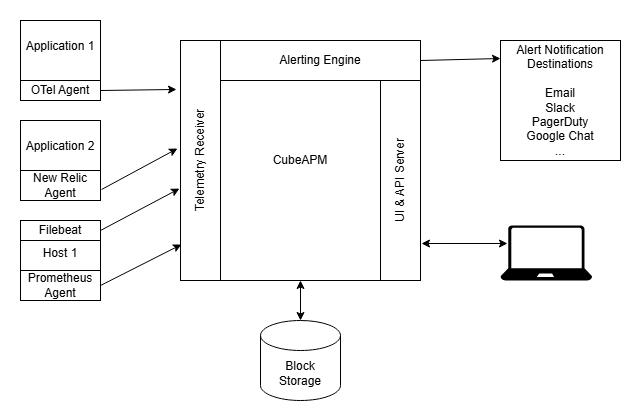
CubeAPM supports multiple agents, including OpenTelemetry, New Relic, Datadog, and Elastic agents. This allows teams to reuse existing instrumentation while gradually standardizing on OpenTelemetry, which can reduce migration effort and avoid re-instrumenting services all at once.
Coralogix supports OpenTelemetry and Prometheus natively. This fits well with teams already using open-source tooling for metrics and traces and looking to route telemetry into a managed analytics platform without adopting proprietary agents.
New Relic supports its proprietary New Relic agents as well as OpenTelemetry and Prometheus. While OpenTelemetry is supported, the deepest integration and feature coverage are typically achieved when using New Relic’s own agents.
MELT Support (Metrics, Events, Logs, Traces)
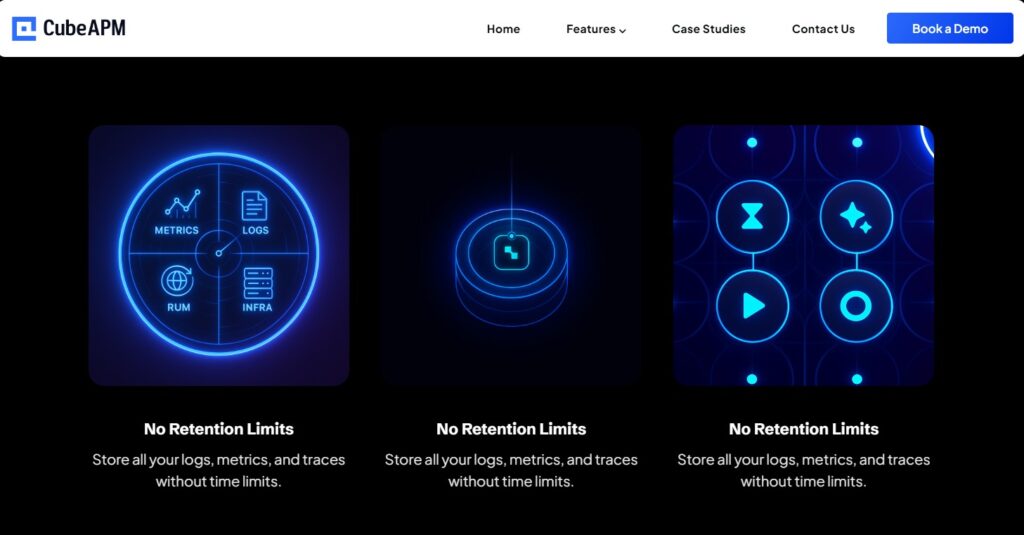
CubeAPM provides full MELT support with an emphasis on correlation across traces, logs, metrics, and errors. The platform is designed so teams can pivot between signals while investigating latency spikes, errors, or infrastructure bottlenecks, which is useful when debugging distributed microservices.
Coralogix also offers full MELT coverage, with particularly strong capabilities around logs, enrichment, and long-term storage. Metrics and traces complement log-centric workflows, making Coralogix well-suited for environments where logs are the primary source of operational insight and audits.
New Relic delivers full MELT within a single SaaS interface, with mature APM features, service maps, and analytics. Its MELT implementation is often application-centric, focusing on performance monitoring and service relationships across complex application stacks.
Deployment

CubeAPM is deployed as a self-hosted platform with vendor-managed setup. Telemetry ingestion, processing, and storage run inside the customer’s own infrastructure or cloud environment, which allows teams to enforce internal security, networking, and data residency policies while offloading setup and maintenance complexity.
Coralogix is mostly SaaS-based. While it provides flexibility around data pipelines, parsing, and retention policies, telemetry data is processed and stored in Coralogix-managed environments. This model favors ease of adoption and managed scalability.
New Relic is a SaaS-only platform. All observability data is sent to and processed within New Relic’s cloud, which simplifies deployment and operations but limits the ability to control where and how telemetry data is stored.
Pricing for Small, Mid, and Large Teams
To summarize the pricing:
*All pricing comparisons are calculated using standardized Small/Medium/Large team profiles defined in our internal benchmarking sheet, based on fixed log, metrics, trace, and retention assumptions. Actual pricing may vary by usage, region, and plan structure. Please confirm current pricing with each vendor.
| Approx. Cost for Teams | Small (~30) | Mid-Sized (~125) | Large (~250) |
| CubeAPM | $2,080 | $7,200 | $15,200 |
| Coralogix | $4,090 | $13,200 | $29,000 |
| New Relic | $7,896 | $25,990 | $57,970 |
CubeAPM Costs in Detail
CubeAPM uses ingestion-based pricing at $0.15 per GB. Pricing is tied to the volume of telemetry ingested rather than per-user or per-host licensing. Data retention and core observability features are included, which simplifies forecasting as usage grows.
- Small teams (~ 30): $2,080
- Mid-sized teams (~ 125): $7,200
- Large teams (~250): $15,200
Coralogix Cost in Detail
Coralogix prices observability data by signal type. Logs, traces, and metrics are priced separately, with published rates such as logs at $0.42 per GB, traces at $0.16 per GB, and metrics at $0.05 per GB, based on Coralogix pricing documentation.
- Small teams: $4,090
- Mid-size teams: $13,200
- Large teams: $29,000
New Relic Cost in Detail
New Relic offers a usage-based SaaS pricing model with a free tier that includes 100 GB of data ingestion per month. Beyond that, ingestion is charged at published rates, along with user-based licensing ranging from $49 to $349 per user, depending on role and access level. Costs, therefore, scale with both telemetry volume and team size.
- Small teams: $7,896
- Mid-size teams: $25,990
- Large teams: $57,970
Sampling Strategy
Sampling determines which telemetry data gets stored and analyzed. The strategy a platform uses impacts both cost and visibility, especially in high-volume environments.
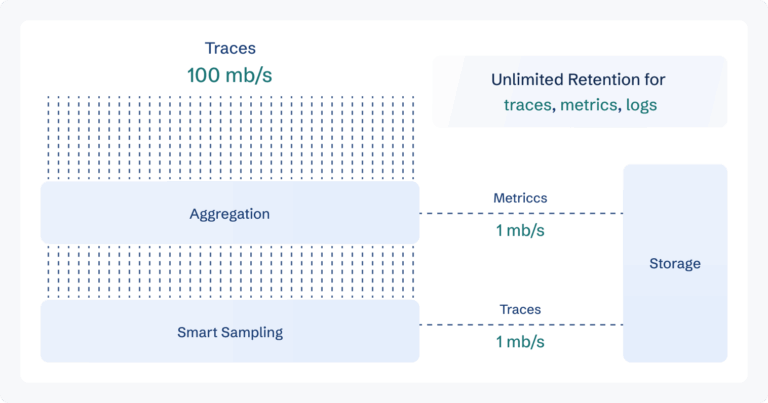
CubeAPM uses smart, automated sampling that prioritizes high-value data such as latency outliers and error paths, while filtering out less informative traffic to keep storage costs predictable. This adaptive approach helps teams retain meaningful traces without ingesting every single request, which can be especially helpful at scale.
Coralogix supports multiple sampling strategies using OpenTelemetry components, including tail-based sampling and conditional policies. Tail sampling evaluates complete traces before deciding which ones to keep, and conditional sampling can be tuned to retain traces or RUM sessions based on criteria like errors or latency.
New Relic offers a range of sampling options. Standard distributed tracing uses head-based sampling, which decides early in the trace whether to keep data, while features like Infinite Tracing use tail-based sampling to retain traces that meet configured criteria such as errors or duration.
Data Retention
Data retention policies affect how long telemetry is stored and how easily teams can investigate historical issues, meet compliance requirements, or analyze long-term trends.

CubeAPM offers unlimited data retention at no extra cost. Telemetry, including traces, logs, and metrics, can be stored indefinitely, which supports long-term analysis and auditability without the need for tiered storage plans or retention add-ons. This approach is documented in CubeAPM’s platform and pricing materials.
Coralogix supports infinite retention, particularly for logs and other observability data. Data can be archived for long periods, and retention tiers can be configured based on usage and compliance needs, which is helpful for teams managing large data volumes and long-term storage requirements.
New Relic retains logs and events for 30 days by default, with an option to extend to 120 days under the Data Plus plan. Longer retention beyond these tiers generally requires additional configurations, such as live archive or custom retention add-ons, as listed in New Relic’s documentation.
Support Channel & TAT
CubeAPM offers support through Slack and WhatsApp, with responses often provided in minutes. This support model aims to give teams direct access to engineers familiar with the product, based on CubeAPM’s documentation and customer feedback.
Coralogix provides 24/7 chat and email support, with response times typically measured in minutes during business hours or critical incidents, according to Coralogix’s support documentation.
New Relic support is available via community forums, documentation, and ticket-based channels. Response times vary based on plan level, ranging from standard ticket responses to faster turnaround with priority or enterprise support, as outlined in New Relic’s support documentation.
Which tool is best for you? Why brands choose CubeAPM
Each of these platforms is strong in a specific context, but they are optimized for different priorities around cost, control, and operational ownership.
Coralogix is best for teams that are primarily log-driven and want a SaaS platform with strong log analytics, enrichment, and long-term archival flexibility, without managing observability infrastructure themselves. New Relic is best for teams that want a mature, all-in-one SaaS observability platform with deep APM features, service maps, and broad integrations.
CubeAPM is best for teams that want full-stack observability without giving up cost predictability, data control, or trace fidelity, especially as telemetry volumes scale.
Benefits of Using CubeAPM
CubeAPM stands out for teams that treat observability as core infrastructure rather than a black-box SaaS. It is often chosen by engineering teams that want predictable spend, unlimited retention, OpenTelemetry-first design, and faster root-cause analysis without sampling blind spots.
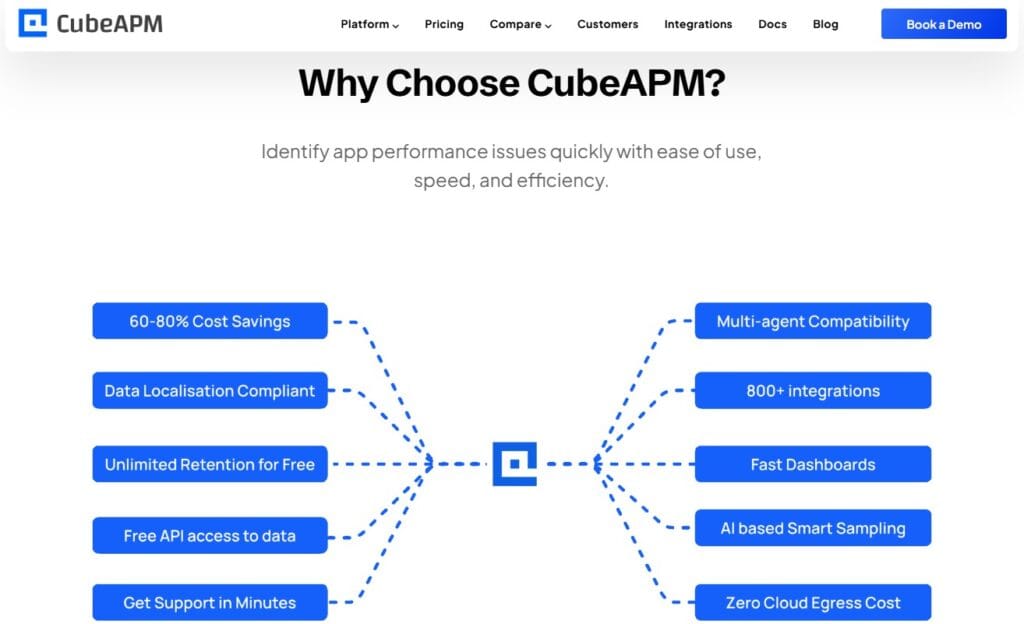
- Predictable, ingestion-based pricing: Costs scale linearly with data volume, making it easier to forecast spend as environments grow, without per-user licensing or surprise overages.
- Self-hosted with data ownership: Telemetry stays inside the customer’s cloud or on-prem infrastructure, helping teams meet data residency, compliance, and internal security requirements.
- OpenTelemetry-native by design: Native support for OpenTelemetry and compatibility with existing agents reduces lock-in and simplifies migrations from other tools.
- Smart, context-aware sampling: Sampling prioritizes high-latency and error-heavy traces, preserving the data that actually matters during incidents.
- Unlimited data retention: Teams can retain traces, logs, and metrics long-term for audits, historical analysis, and post-incident reviews without retention add-ons.
- Direct access to engineers: Support via Slack and WhatsApp enables faster resolution during critical issues, which directly impacts MTTR in production environments.
Coralogix vs New Relic vs CubeAPM: Use Cases
While all three platforms support full-stack observability, teams usually choose between them based on deployment preferences, cost behavior at scale, and how much control they need over telemetry data.
Choose CubeAPM if:
CubeAPM fits teams that want observability to behave like owned infrastructure rather than a metered SaaS service, especially as data volumes, service complexity, and compliance requirements grow.
- You need a self-hosted or VPC-controlled observability platform for strict data residency, security, or regulatory compliance requirements, based on CubeAPM’s deployment model.
- You want predictable, ingestion-based pricing that scales linearly with telemetry volume, without per-user licensing or retention add-ons, based on CubeAPM pricing pages and sales demos.
- You rely on OpenTelemetry and want an OpenTelemetry-native platform that also supports existing New Relic, Datadog, or Elastic agents, reducing migration effort and vendor lock-in.
- You run Java-based backend systems (Spring Boot, JVM microservices) and need deep, end-to-end tracing across services, databases, and external calls to diagnose latency, thread contention, or downstream failures.
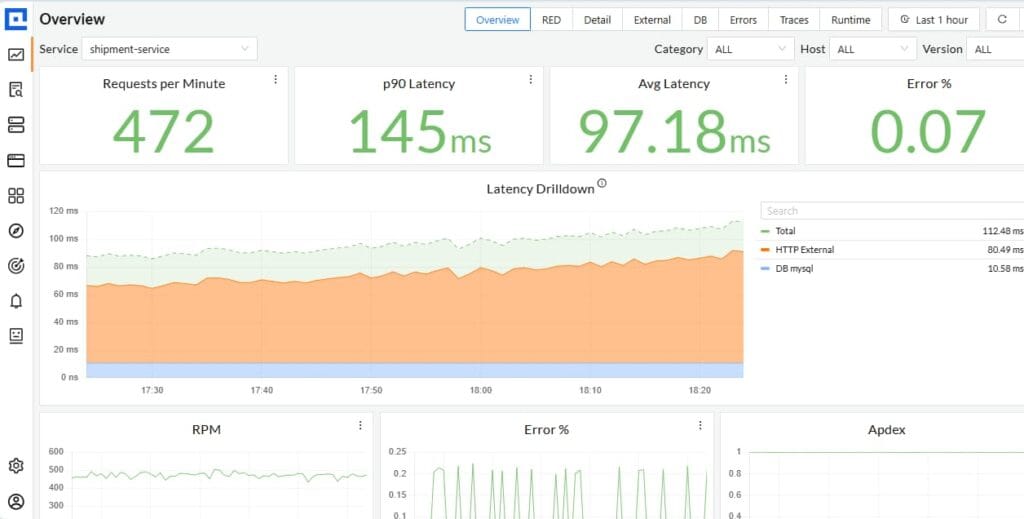
- You operate Python services (Django, Flask, FastAPI) and want lightweight instrumentation that captures request traces, background jobs, and error paths without high overhead.
- You maintain Ruby or Ruby on Rails applications and need consistent APM coverage across web requests, background workers, and database interactions, even as traffic scales.
- You require unlimited data retention for audits, long-term trend analysis, or post-incident reviews, without paying extra as historical data accumulates.
- You want to reduce mean time to resolution (MTTR) using context-aware sampling that prioritizes error-heavy and high-latency traces during real production incidents.
- You operate microservices or distributed systems and need reliable end-to-end tracing across services without losing critical data to aggressive or purely probabilistic sampling.
Choose Coralogix if:
Coralogix is well-suited for teams where logs are the primary observability signal and long-term log storage is a core requirement.
- You run log-heavy environments and need strong log analytics, enrichment, and archival flexibility, based on Coralogix’s product documentation.
- You prefer a SaaS-based platform that minimizes operational overhead while still allowing granular control over log pipelines and retention.
- You want to optimize observability spend by tuning ingestion and retention separately for logs, traces, and metrics, based on Coralogix’s signal-based pricing model.
- You need long-term log retention for compliance, audits, or forensic analysis without building custom storage pipelines.
Choose New Relic if:
New Relic works best for teams that prioritize convenience, ecosystem depth, and a fully managed SaaS experience.
- You want a mature, all-in-one SaaS observability platform with strong APM features, service maps, and integrated dashboards, based on New Relic’s platform capabilities.
- Your team prefers minimal infrastructure management and is comfortable sending all telemetry to a vendor-managed cloud.
- You benefit from New Relic’s large integration ecosystem and existing proprietary agents across applications and infrastructure.
- You are comfortable with usage-based ingestion pricing combined with user-based licensing, as documented on New Relic’s pricing pages.
Conclusion
Coralogix and New Relic both solve real observability problems, but teams often run into trade-offs as they scale. CubeAPM presents a self-hosted, OpenTelemetry-native platform that offers predictable ingestion-based pricing, unlimited data retention, smart sampling, and full-stack MELT observability. It gives teams control over their data, costs, and troubleshooting depth without sacrificing ease of use.
If you’re looking for an observability platform that scales cleanly with your architecture and your business, CubeAPM is built for that next phase. Book a demo to see it in action.
Disclaimer: The information in this article reflects the latest details available at the time of publication and may change as technologies and products evolve.
FAQs
1. Does CubeAPM require teams to change their existing instrumentation?
No. CubeAPM supports OpenTelemetry natively and is compatible with existing New Relic, Datadog, and Elastic agents. This allows teams to migrate gradually without re-instrumenting all services at once.
2. How do Coralogix and New Relic handle data egress and transfer costs?
Both Coralogix and New Relic operate mostly as SaaS platforms, so telemetry data is continuously transferred to vendor-managed infrastructure. Data transfer and egress costs depend on volume and usage patterns, as documented on their respective pricing and support pages.
3. Can CubeAPM be used by startups, or is it only for large enterprises?
CubeAPM is used by both startups and growing engineering teams that want predictable, simple pricing and full-stack observability early on, without worrying about sharp cost increases as telemetry volume grows.
4. Which platform is better for long-running incident investigations or audits?
CubeAPM and Coralogix are better suited for long-term investigations because they support unlimited or infinite retention. New Relic’s default retention is shorter, and extended retention typically requires additional configurations or add-ons.
5. How do these tools fit into an OpenTelemetry-first observability strategy?
CubeAPM is designed as an OpenTelemetry-native platform from the ground up. Coralogix supports OpenTelemetry well for logs, metrics, and traces. New Relic supports OpenTelemetry but offers the deepest feature integration when using its proprietary agents.