










Dynatrace is a mature enterprise observability platform for application performance monitoring, infrastructure monitoring, Kubernetes visibility, log analytics, digital experience monitoring, application security, and AI-assisted root cause analysis. It is especially strong for large environments that want automated discovery, OneAgent-based instrumentation, Davis AI, and deep service dependency mapping.
For cloud-native teams, the tradeoff is usually not capability, but costs once usage grows. Teams running Kubernetes, microservices, and OpenTelemetry pipelines often need predictable telemetry costs, flexible instrumentation, self-hosted or hybrid deployment options, and less friction when working with vendor-neutral telemetry.
This review compares seven Dynatrace alternatives for cloud-native environments: CubeAPM, Grafana + Prometheus, New Relic, SigNoz, Datadog, Elastic Observability, and Honeycomb. Each tool is evaluated for Kubernetes support, OpenTelemetry compatibility, deployment flexibility, pricing transparency, and public user-review feedback.
🔑 Key Takeaways
- Dynatrace Full-Stack and pod-hour Kubernetes pricing can be harder to forecast in autoscaling environments.
- CubeAPM offers OpenTelemetry-native observability with predictable per-GB pricing and self-hosted or vendor-managed deployment.
- Prometheus and Grafana remain the default open-source Kubernetes metrics stack for teams with PromQL expertise.
- New Relic is easier to start with, centering on data ingest and users with 100 GB/month of free ingest.
- SigNoz is the strongest open-source option for traces, metrics, and logs in one OpenTelemetry-native platform.
- Datadog offers broad enterprise coverage but modular pricing grows quickly as teams add APM, logs, RUM, and synthetics.
Why Teams Look for a Dynatrace Alternative
Dynatrace Full-Stack Monitoring is priced at $0.01 per memory-GiB-hour. That means cost scales with the monitored host’s memory footprint and runtime, not just the number of hosts. This can be harder to forecast in Kubernetes environments where node sizes, memory allocation, and workload density change frequently.
Dynatrace Kubernetes Platform Monitoring is priced at $0.002 per pod-hour, which Dynatrace presents as about $1.40/month per pod. That is useful for cluster-level visibility, but it can become another variable to track in environments with autoscaling workloads, short-lived jobs, and frequent pod churn.
Dynatrace supports OpenTelemetry ingestion, so the issue is not basic OTEL compatibility. The concern is architecture. Teams already standardized on OTel SDKs, Collectors, and vendor-neutral pipelines may prefer a backend where OTLP is the primary design center rather than one option alongside a proprietary agent model.
Dynatrace is built for complex enterprise environments. That depth is valuable, but smaller teams may find the platform heavy if they mainly need Kubernetes metrics, distributed tracing, log search, and basic alerting. G2 review patterns also show that users praise Dynatrace’s capabilities but commonly mention price and learning curve as concerns.
Quick Comparison: 7 Dynatrace Alternatives
| Tool | Best For | Pricing Model | OpenTelemetry Fit | Self-Hosted |
| CubeAPM | Kubernetes, microservices, cost control | $0.15/GB ingested | OTLP-native | Yes |
| Grafana + Prometheus | OSS Kubernetes monitoring | Free OSS; Grafana Cloud from $19/month + usage | Via OTel Collector/Alloy | Yes |
| New Relic | Managed full-stack observability | 100 GB free, then $0.40/GB + users | Native OTLP support | No |
| SigNoz | Open-source OTEL observability | Free OSS; Cloud from $49/month | OTEL-native | Yes |
| Datadog | Enterprise observability breadth | Per host/module + usage | Supports OTLP | No |
| Elastic Observability | Log-heavy Elastic users | Serverless ingest/retention or Elastic Cloud/self-managed | Native OTLP support | Yes |
| Honeycomb | High-cardinality trace debugging | Event-based | Native OTLP support | No |
Best Dynatrace Alternatives for Cloud-Native Apps
1. CubeAPM: OpenTelemetry-Native Observability for Kubernetes Teams
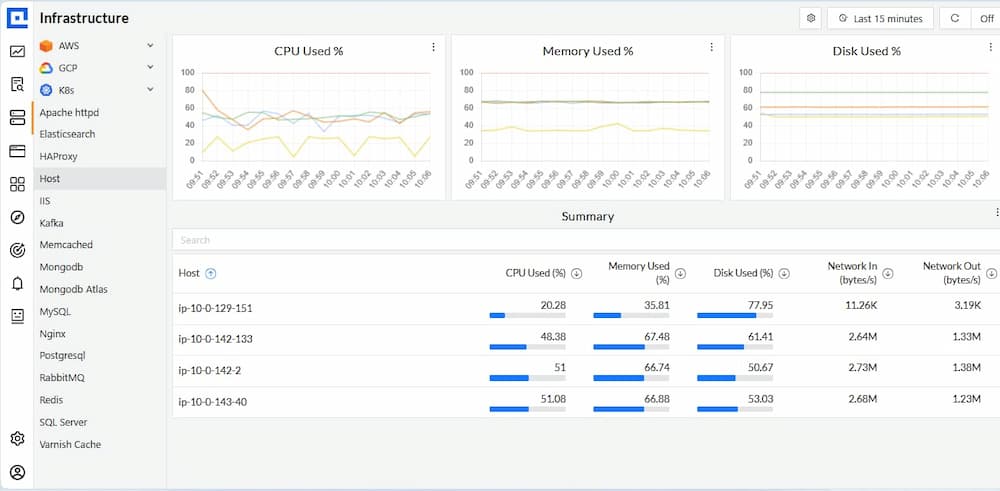
CubeAPM is built for teams that want OpenTelemetry-native observability without per-host, per-pod, or per-user pricing. It ingests telemetry through OTLP and brings metrics, logs, traces, events, RUM, synthetics, and error tracking into one platform.
Cloud-Native Features
CubeAPM fits Kubernetes and microservices teams that already use OpenTelemetry SDKs, Collectors, or agents. Instead of forcing teams into a proprietary instrumentation model, it works with existing OTLP pipelines and supports self-hosted/vendor-managed deployment, where telemetry can stay inside the customer’s environment while CubeAPM handles upgrades, patches, and support. CubeAPM publicly lists predictable pricing at $0.15/GB ingested.
Pros and Cons From User Reviews
| Pros | Cons |
| Fast dashboards and responsive support | Not suited for teams looking for off-prem solutions |
| Cost-effective compared with larger APM tools | Strictly an observability platform and does not support cloud security management |
| Easy integration with existing telemetry pipelines | |
| Strong fit for self-hosted/data-residency needs |
CubeAPM reviews on G2 and Capterra commonly praise fast dashboards, support responsiveness, cost-effectiveness, and ease of integration. Capterra feedback also notes that the UI/dashboard experience can improve and that the product is self-hosted but not open source.
Pricing
CubeAPM pricing is publicly listed at $0.15/GB ingested, with no host-based fees or surprise overages. This makes it easier to model for teams that already estimate logs, traces, metrics, and events by GB/month.
Best for: Kubernetes and microservices teams that want predictable pricing, OpenTelemetry-native ingestion, and self-hosted/vendor-managed deployment.
2. Grafana + Prometheus: The Open-Source Kubernetes Standard
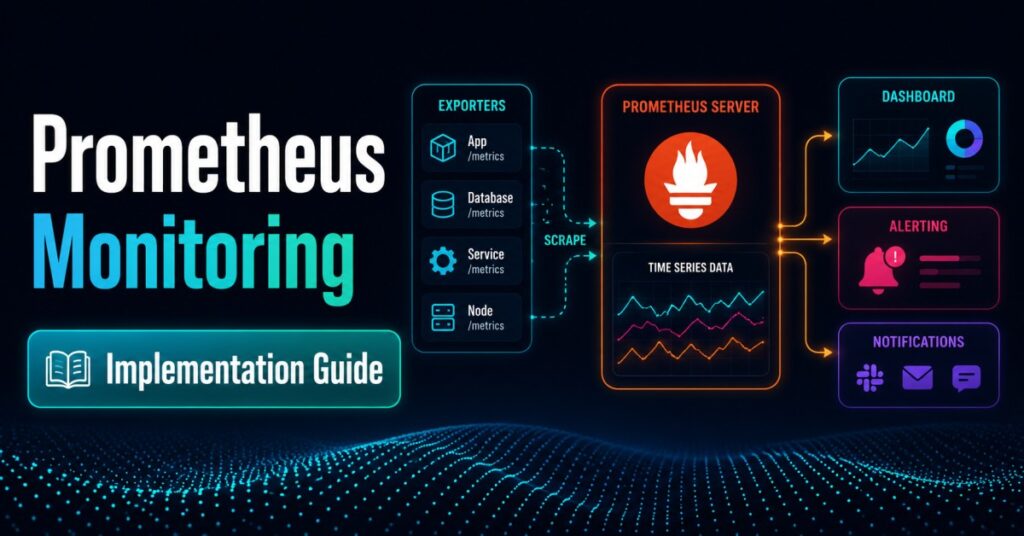
Prometheus and Grafana remain the default open-source monitoring stack for Kubernetes metrics. When paired with Loki for logs, Tempo for traces, and Grafana Alloy or the OpenTelemetry Collector for telemetry collection, the stack can cover a broad observability surface.
Cloud-Native Features
Prometheus works naturally in Kubernetes through service discovery, scraping, exporters, and PromQL. The Prometheus Operator provides Kubernetes-native deployment and management for Prometheus and related monitoring components, while Grafana adds dashboards, visualization, and alerting workflows. Grafana Alloy is Grafana’s OpenTelemetry Collector distribution and supports metrics, logs, traces, and profiles.
Pros and Cons From User Reviews
| Pros | Cons |
| Strong dashboards and visualization | Steep learning curve for new users |
| Flexible plugin and data-source ecosystem | Advanced dashboard setup can be complex |
| Strong Kubernetes metrics ecosystem | PromQL can be difficult for beginners |
| Free when self-hosted | Requires operational ownership at scale |
Grafana reviews commonly praise dashboards, real-time monitoring, flexibility, and integrations. Recurring criticism centers on learning curve, dashboard configuration, and advanced setup complexity.
Pricing
Prometheus, Grafana OSS, Loki, and Tempo are free when self-hosted. Grafana Cloud Pro has a $19/month platform fee plus usage, while Grafana Enterprise is custom and lists a $25,000/year minimum commit on Grafana’s pricing page.
Best for: Teams with Kubernetes, PromQL, and platform engineering expertise that want maximum control and low licensing cost.
3. New Relic: Usage-Based APM for Cloud-Native Applications
New Relic is a managed full-stack observability platform covering APM, infrastructure, logs, browser monitoring, mobile monitoring, synthetics, Kubernetes monitoring, and OpenTelemetry ingestion.
Cloud-Native Features
New Relic fits teams that want a managed observability platform rather than operating their own backend. It supports Kubernetes monitoring, OpenTelemetry pipelines, application performance monitoring, infrastructure telemetry, logs, and distributed tracing. New Relic’s pricing and billing docs also state that the platform bills data by GB ingested and includes 100 GB/month free.
Pros and Cons From User Reviews
| Pros | Cons |
| Clean dashboards and real-time insights | Costs can rise with usage |
| Strong application troubleshooting | Full Platform user seats add cost |
| Good infrastructure and APM visibility | Setup can require tuning |
| Useful production debugging workflows | Pricing can feel complex for larger teams |
New Relic reviews on G2 commonly praise real-time insights, dashboards, integrations, and troubleshooting. The main recurring caution is that pricing can become expensive as usage increases.
Pricing
New Relic includes 100 GB/month of free data ingest, then charges $0.40/GB beyond the free 100 GB limit for original data ingest. Data Plus is listed at $0.60/GB beyond the free limit.
Best for: Teams that want a managed SaaS observability platform with ingest-based forecasting and broad APM/infrastructure coverage.
4. SigNoz: End-to-End Observability
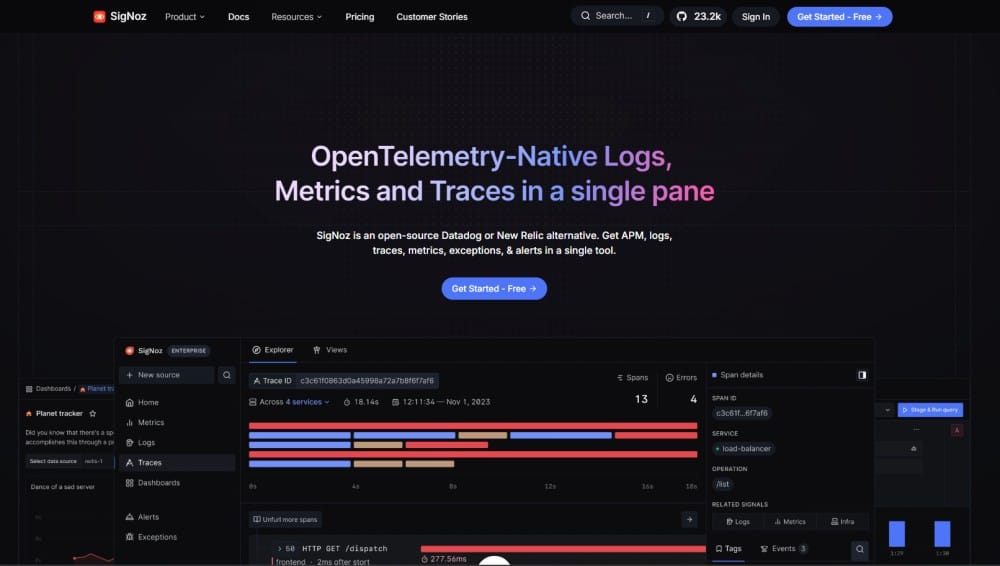
SigNoz is an open-source observability platform built around OpenTelemetry. It brings traces, metrics, logs, dashboards, alerts, exceptions, and APM into one interface.
Cloud-Native Features
SigNoz is built around OpenTelemetry and is positioned as an open-source alternative for logs, metrics, traces, dashboards, alerts, and more. Its GitHub page describes it as a platform for logs, metrics, and traces in one place, and the product is commonly used by teams that want vendor-neutral telemetry without stitching together too many separate tools.
Pros and Cons From Public User/Community Feedback
| Pros | Cons |
| OpenTelemetry-native architecture | Self-hosting requires operational effort |
| Open-source and self-hostable | Steep learning curve, especially for self-hosted |
| Unified logs, metrics, and traces | Backend tuning may be needed for self-hosted version |
| No host-based Cloud pricing | SaaS version gets expensive as usage grows |
Pricing
SigNoz Cloud starts at $49/month, includes $49 of usage, and allows any mix of logs, traces, and metrics. SigNoz pricing also lists usage examples such as 163 GB of logs/traces or 490 million metric samples included in that usage credit.
Best for: Teams that want an open-source, OpenTelemetry-native alternative with traces, metrics, and logs in one platform.
5. Datadog: Comprehensive Platform for Enterprise Cloud-Native Stacks
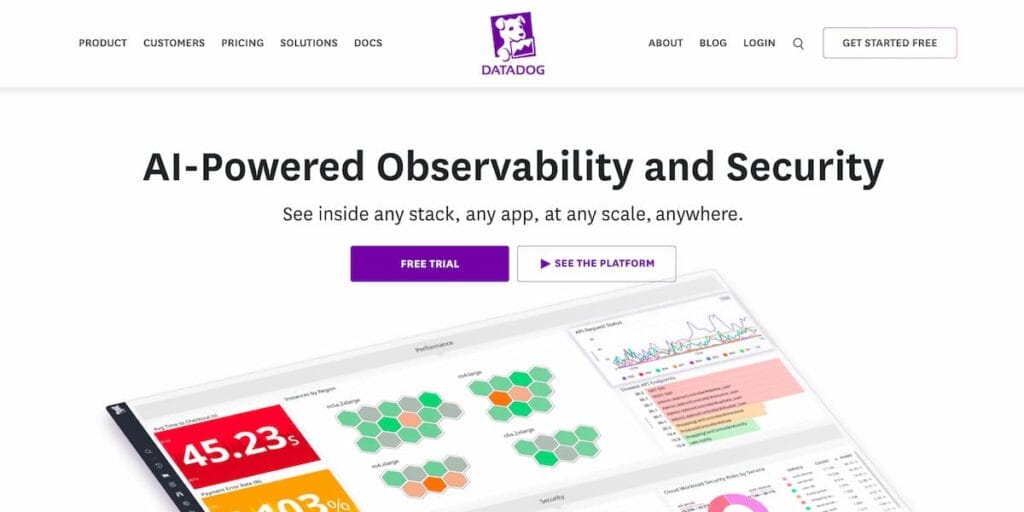
Datadog is a broad enterprise observability platform covering infrastructure monitoring, APM, logs, RUM, synthetics, security, network monitoring, CI visibility, and cloud integrations.
Cloud-Native Features
Datadog supports Kubernetes through its Agent and Cluster Agent model, service discovery, tagging, dashboards, workload visibility, and Kubernetes-focused monitoring workflows. It also supports OpenTelemetry through Datadog Agent OTLP ingest, OpenTelemetry Collector routing, and Datadog exporter paths. This makes it workable for OTel pipelines, although many advanced workflows still benefit from Datadog-native instrumentation.
Pros and Cons From User Reviews
| Pros | Cons |
| Unified logs, metrics, traces, and alerts | Cost can escalate quickly |
| Strong integrations and dashboards | Modular pricing can be hard to forecast |
| Good real-time monitoring | Learning curve for full platform use |
| Useful troubleshooting and analytics | Some teams report pricing complexity |
Datadog reviews on G2 commonly praise ease of use, dashboard creation, integrations, real-time monitoring, and unified observability. G2 review summaries also note that users often appreciate logs, metrics, and traces in one interface, while cost escalation is a recurring concern.
Pricing
Datadog’s public pricing list shows Infrastructure Pro at $15/host/month with annual billing. Datadog’s APM billing docs list APM at $31 per underlying APM host per month, with included ingested and indexed span allowances. Logs, synthetics, RUM, security, database monitoring, and other modules are billed separately.
Want to Estimate Your Datadog Costs Before You Commit?
Datadog’s modular pricing can be hard to forecast once you combine infrastructure monitoring, APM, logs, RUM, synthetics, and security.
Use the CubeAPM Datadog pricing calculator to estimate your monthly spend and compare it with simple per-GB observability pricing.
Try the CalculatorBest for: Enterprises that want broad managed observability, security, and integration coverage in one SaaS platform.
6. Elastic Observability: Logs-First Observability on Open Standards
Elastic Observability extends the Elastic Stack into logs, infrastructure metrics, APM, traces, profiling, synthetics, and Kubernetes visibility. It is a natural fit for teams already using Elasticsearch and Kibana.
Cloud-Native Features
Elastic supports OpenTelemetry ingestion and states that the Elastic Stack natively supports OTLP, allowing trace data and metrics from OpenTelemetry Collectors or SDKs to be sent to Elastic. Elastic also fits Kubernetes and cloud-native workflows through Elastic Agent, integrations, and Elastic Cloud on Kubernetes.
Pros and Cons From User Reviews
| Pros | Cons |
| Strong centralized log access | Steep learning curve |
| Powerful search and filtering | Can overwhelm first-time users |
| Good infrastructure and GKE visibility | Setup requires Elastic expertise |
| Flexible for log-heavy teams | Pricing/licensing needs careful review |
Elastic Observability reviews on G2 praise centralized log access, log management, real-time visibility, and infrastructure monitoring. Recurring criticism includes the learning curve, log filtering difficulty, and the complexity of Elastic Stack workflows for newer users.
Pricing
Elastic Serverless Observability pricing lists ingest as low as $0.07/GB ingested for Logs Essentials and $0.09/GB ingested for the broader Observability tier. Retention is listed as low as $0.017–$0.019/GB retained per month, depending on tier. Use “as low as” language because pricing varies by tier, usage, retention, and region.
Best for: Log-heavy teams already invested in Elasticsearch who want to extend the same stack into metrics, traces, and APM.
7. Honeycomb: High-Cardinality Observability for Distributed Services

Honeycomb is built for high-cardinality event analysis and trace-driven debugging. It is especially useful for teams investigating latency, customer-specific issues, release regressions, and complex microservice behavior.
Cloud-Native Features
Honeycomb works well for modern microservices because it is built around event-level analysis and high-cardinality querying. That helps teams slice telemetry by fields such as user ID, tenant ID, region, pod, build version, endpoint, and feature flag. Honeycomb’s docs explain that high-cardinality and high-dimensionality data help isolate problems that low-cardinality metrics can miss.
Pros and Cons From User Reviews
| Pros | Cons |
| Excellent high-cardinality querying | Less suited to classic dashboard-first monitoring |
| Strong distributed tracing workflows | May need another tool for infra-heavy monitoring |
| Fast incident investigation | Retention limits can matter |
| Intuitive exploration experience | Event-based pricing needs volume planning |
Honeycomb reviews on G2 commonly praise high-cardinality querying, distributed tracing, incident investigation, and intuitive exploration. G2 pros-and-cons summaries also show users call out the product’s strong insights while noting that Honeycomb is not cheap.
Pricing
Honeycomb Free includes up to 20M events and 100M time-series data points. Pro starts at $130 per 100M events, up to 1.5B events, with Enterprise volume discounts available.
Best for: High-traffic microservices teams that need deep trace exploration and high-cardinality debugging.
How to Choose the Right Dynatrace Alternative
- Choose CubeAPM if your main priorities are OpenTelemetry-native ingestion, predictable per-GB pricing, Kubernetes support, and self-hosted/vendor-managed deployment.
- Choose Grafana + Prometheus if you have platform engineering capacity and want a low-license-cost open-source stack for Kubernetes metrics, dashboards, logs, and traces.
- Choose New Relic if you want a managed full-stack SaaS platform with usage-based ingest pricing and broad APM/infrastructure coverage.
- Choose SigNoz if you want an open-source, OpenTelemetry-native platform that unifies traces, metrics, and logs without host-based Cloud pricing.
- Choose Datadog if you need broad managed platform coverage, deep integrations, and enterprise-grade observability modules across infrastructure, APM, logs, security, and digital experience.
- Choose Elastic Observability if your team is already invested in Elasticsearch and wants log-first observability with APM, metrics, and OTel ingestion.
- Choose Honeycomb if your main problem is high-cardinality debugging, distributed tracing, and understanding why only some users, tenants, pods, or deployments are affected.
📌 Monitor Your Cloud-Native Apps with CubeAPM
CubeAPM is an OpenTelemetry-native observability platform built for Kubernetes and microservices teams. It unifies metrics, logs, traces, events, RUM, synthetics, and error tracking in one interface, with predictable $0.15/GB ingestion pricing and no host-based fees.
For teams moving away from Dynatrace, CubeAPM is strongest when the goal is to keep OpenTelemetry pipelines, avoid host/pod-based billing, and run observability inside your own cloud without taking on the full operational burden of managing an open-source stack.
Conclusion
Dynatrace is still one of the strongest enterprise observability platforms, especially for organizations that want automatic discovery, OneAgent, Davis AI, service dependency mapping, and deep full-stack visibility. The reason teams look for alternatives is usually not lack of capability. It is cost predictability, OpenTelemetry-first architecture, self-hosting needs, or a desire for a simpler operating model.
CubeAPM is the best fit for cloud-native teams that want OpenTelemetry-native full-stack observability with predictable per-GB pricing. Prometheus and Grafana remain the strongest open-source route. New Relic is easier to adopt for managed usage-based observability. SigNoz is the strongest open-source end-to-end OTEL alternative. Datadog gives the broadest enterprise platform coverage. Elastic Observability works best for log-heavy Elastic users. Honeycomb is ideal for high-cardinality microservices debugging.
The right choice depends on your instrumentation strategy, telemetry volume, compliance needs, Kubernetes maturity, and whether your team wants to operate the stack or consume it as a managed platform.
Disclaimer: Pricing, packaging, and feature availability can change over time. The details in this article are based on public vendor documentation, pricing pages, and review sources available at the time of writing. Always verify current pricing and contract terms directly with each vendor before making a purchase decision. CubeAPM is the product of the publisher; comparisons are intended to be factual and balanced.
FAQs
1. What is the best Dynatrace alternative for cloud-native apps?
CubeAPM is the strongest option for teams that want OpenTelemetry-native observability, Kubernetes support, predictable per-GB pricing, and self-hosted/vendor-managed deployment. Grafana + Prometheus is the strongest open-source route, while New Relic and Datadog are better for teams that prefer managed SaaS platforms.
2. Which Dynatrace alternative has the best OpenTelemetry support?
CubeAPM, SigNoz, and Honeycomb are the strongest OpenTelemetry-first options. Dynatrace, New Relic, Datadog, and Elastic also support OpenTelemetry ingestion, but their broader platforms include their own agents, collectors, or data models alongside OTLP support.
3. Is Prometheus and Grafana enough to replace Dynatrace?
For Kubernetes metrics, dashboards, and alerting, Prometheus and Grafana can cover a lot. But replacing Dynatrace fully usually requires adding Loki for logs, Tempo or another tracing backend, alert routing, storage, retention, access control, and operational ownership. That makes the stack powerful but more hands-on.
4. Is SigNoz a good open-source Dynatrace alternative?
Yes, SigNoz is one of the strongest open-source alternatives because it is OpenTelemetry-native and unifies traces, metrics, and logs in one application. It is best for teams that want control and vendor-neutral instrumentation, but self-hosted SigNoz still requires operational work around scaling, upgrades, and retention.
5. How does Dynatrace pricing compare with alternatives?
Dynatrace Full-Stack Monitoring is priced at $0.01 per memory-GiB-hour, while Kubernetes Platform Monitoring is priced at $0.002 per pod-hour. Alternatives use different models: CubeAPM uses per-GB ingest, New Relic uses ingest plus users, Datadog uses per-host/module pricing, SigNoz uses usage-based Cloud pricing, Elastic Serverless uses ingest and retention, and Honeycomb uses event volume.