






In this article, we’ll explore the top KubeSense alternatives, comparing their features, pricing, and reviews, to help you find the best APM solution.
Top 7 KubeSense Alternatives
- CubeAPM
- Datadog
- New Relic
- Dynatrace
- SigNoz
- AppSignal
- Coralogix
Why Look for KubeSense Alternatives?
1. Rising Costs at Scale
KubeSense can be cost-effective in smaller environments, but as Kubernetes clusters, workloads, and telemetry volume grow, costs may increase significantly. Teams operating at scale often look for alternatives with more predictable, usage-based pricing models.
2. Learning Curve & Operational Overhead
Teams report that while the platform integrates deeply with Kubernetes, configuring eBPF-based instrumentation and tuning anomaly detection rules requires expertise. For smaller DevOps teams, this can create a steep onboarding curve compared to plug-and-play APM tools.
Criteria for Suggesting KubeSense Alternatives
1. Pricing Transparency & Total Cost of Ownership (TCO)
A sustainable observability platform should have simple, predictable pricing. Tools like CubeAPM provide flat per-GB or per-node models without hidden charges, helping teams save costs.
2. OpenTelemetry-Native Support
With OpenTelemetry becoming the industry standard, the best alternatives must natively support OTEL to prevent vendor lock-in and ensure compatibility across metrics, logs, traces, and events.
3. Deployment Flexibility
Compliance-conscious organizations need deployment options — from cloud SaaS for speed, to on-prem/BYOC for full data residency and localization control.
4. Full MELT Coverage
Modern observability requires a unified view across Metrics, Events, Logs, and Traces (MELT). Alternatives must provide deep coverage across all four pillars, not just APM or logs in isolation.
5. Responsive Support & Community
Rapid issue resolution is critical for SRE and DevOps teams. Alternatives should offer multi-channel support (Slack, on-call, knowledge base) with short response times, ensuring production reliability.
KubeSense Overview
Known For
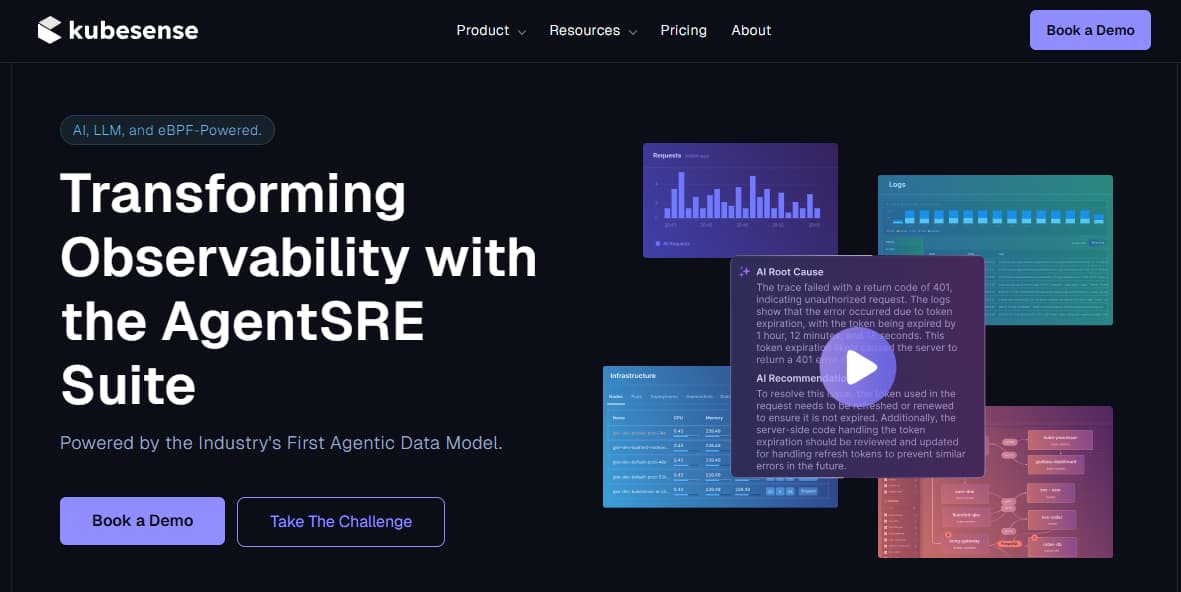
KubeSense is a Kubernetes-first observability platform offering APM, log management, and infrastructure monitoring with eBPF-based, agentless data capture. It is primarily known for reducing monitoring overhead in cloud-native environments.
Standout Features
- AI-driven SRE (AgentSRE) with anomaly detection and RCA.
- eBPF kernel-level telemetry for lightweight data capture.
- Unified MELT observability (metrics, events, logs, traces).
Key Features
- Application Performance Monitoring (APM)
- Log Management
- Infrastructure Monitoring
- Trace Explorer and protocol visibility
- AI-based alerting and anomaly detection
Pros
- Unified platform covering multiple telemetry types.
- Efficient instrumentation through eBPF.
- AI-enhanced troubleshooting for faster RCA.
Cons
- Steep learning curve for new users.
- High costs as usage grows.
Best For
Teams running Kubernetes-heavy workloads that want unified observability and AI-driven incident response without heavy instrumentation.
Pricing & Customer Reviews
- Basic: $0.25/GB ingested
- Standard – $0.20/GB ingested
- Premium – $0.20/GB ingested
- Enterprise – Custom – custom data volumes
- Reviews: Still early-stage—no aggregated G2 or Gartner ratings yet, but positioning appeals to mid-market DevOps teams exploring alternatives to Datadog or New Relic.
Top 7 KubeSense Alternatives
1. CubeAPM

Known For
OpenTelemetry-native observability platform built for cost efficiency, compliance, and simplicity, covering full-stack MELT with SaaS and on-prem deployment options.
Key Features
- Application Performance Monitoring (APM) with distributed tracing.
- Log management with real-time search and analytics.
- Infrastructure monitoring across Kubernetes, VMs, and hybrid clouds.
- Real User Monitoring (RUM) and synthetic monitoring for frontend coverage.
- Error tracking integrated with traces for faster RCA.
Standout Features
- Smart Sampling that retains traces tied to errors and latency spikes while filtering out noise — lowering costs by up to 70%.
- Flexible deployment options: SaaS or on-prem with strict compliance support.
- Transparent pricing: $0.15/GB ingestion
Pros
- Up to 60–70% cheaper than Datadog and New Relic.
- Compliance-ready with on-prem option.
- Quick, developer-friendly onboarding.
Cons
- Not suited for teams looking for off-prem solutions
- Strictly an observability platform and does not support cloud security management
Best For
Mid-sized and large teams seeking predictable pricing, OTEL-native observability, and compliance-friendly hosting.
Pricing & Customer Reviews
- Pricing: $0.15/GB for data ingestion
- Reviews: Red at 4.7/5(Based on end-user feedback from Slack)
CubeAPM vs KubeSense
2. Datadog
Known For
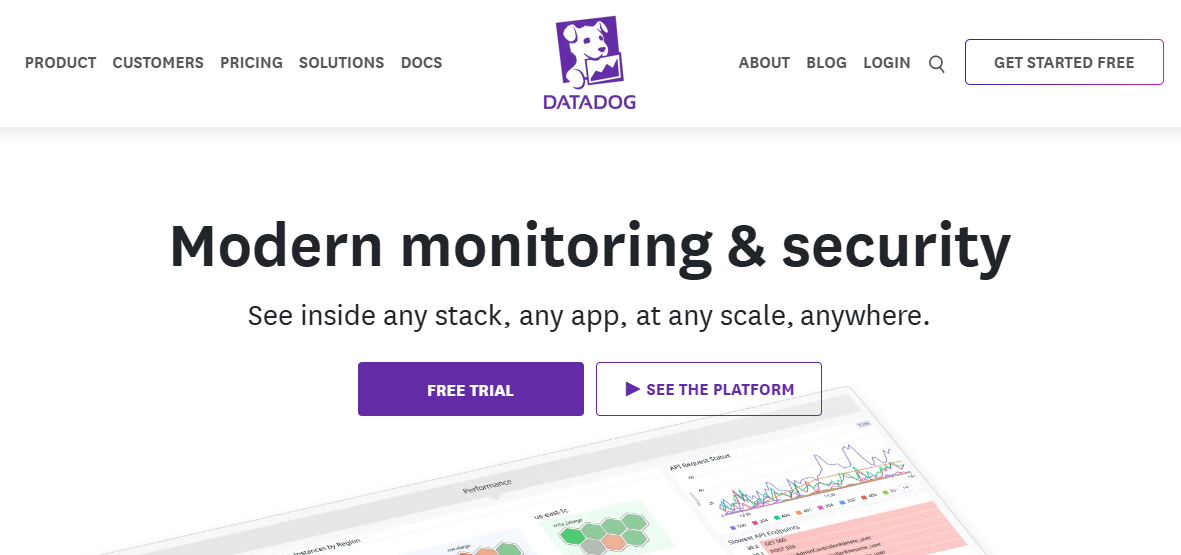
Datadog is a market-leading observability and monitoring platform, widely adopted for its breadth of features, strong ecosystem integrations, and support for both cloud and hybrid environments.
Key Features
- Application Performance Monitoring (APM) with distributed tracing.
- Real User Monitoring (RUM) and synthetic monitoring.
- Log management and analytics.
- Infrastructure and container monitoring.
- Security monitoring and compliance features.
- Dashboards, alerting, and advanced visualization.
Standout Features
- Extensive ecosystem with hundreds of integrations across cloud, databases, and applications.
- Comprehensive frontend coverage with RUM and synthetics.
- Mature, enterprise-ready features across MELT observability.
Pros
- Rich, full-stack monitoring capabilities.
- Strong ecosystem support and integrations.
- Good frontend visibility with RUM and synthetic tools.
Cons
- High costs that scale sharply with data volumes.
- Steep learning curve and complexity for newcomers
- Interface and configuration overload — can be overwhelming
Best For
Enterprises needing a feature-rich, mature observability platform with wide integration support and advanced frontend monitoring, and who can handle complex billing structures.
Pricing & Customer Reviews
- APM (Pro Plan): $31/host/month
- Infra Monitoring(Pro Plan): $15/host/month
- Infra Cost: starting at $15/host/month
- Reviews: Rated around 4.4/5 on G2. Praised for feature depth, but customers frequently mention cost overruns and billing complexity.
Datadog vs KubeSense
Datadog is a broad, full-stack observability platform with extensive integrations and mature monitoring across complex environments. KubeSense delivers full-stack observability using eBPF-based data collection and AI-driven analysis. Datadog is best suited for teams that need wide integration coverage and a long-established observability ecosystem.
3. New Relic
Known For
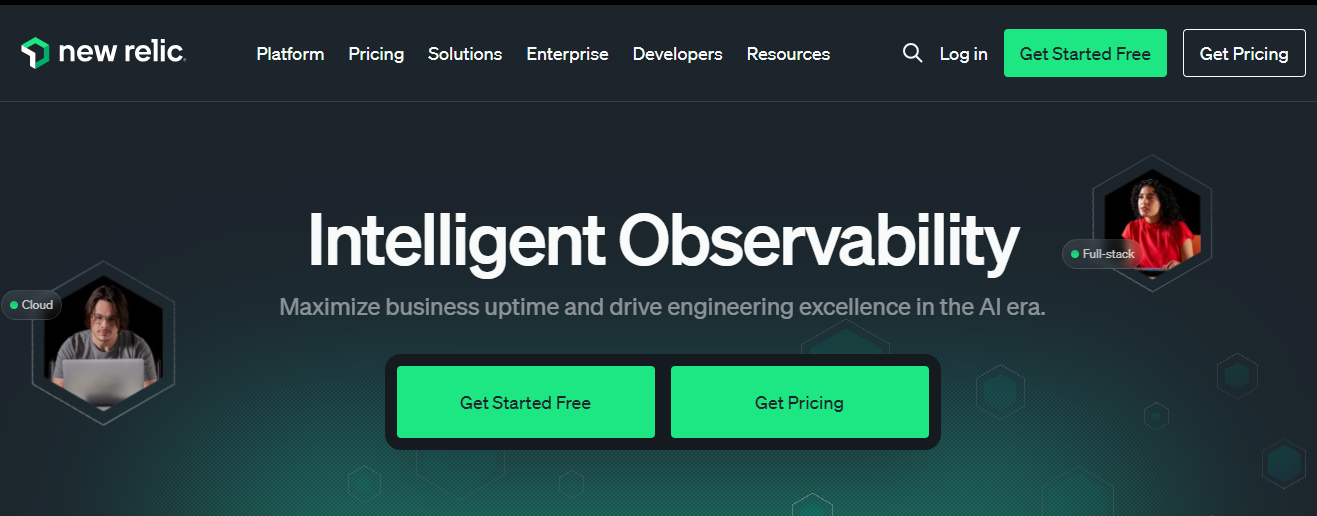
New Relic is one of the oldest and most widely recognized APM platforms, best known for its application-centric monitoring and frontend observability through RUM and synthetic monitoring.
Key Features
- Application Performance Monitoring (APM) with distributed tracing.
- Log management and analytics.
- Real User Monitoring (RUM) and browser monitoring.
- Synthetic monitoring for pre-production checks.
- Infrastructure monitoring across servers, containers, and cloud.
- Error tracking and alerting with integrated dashboards.
Standout Features
- Strong frontend visibility through RUM and synthetic monitoring.
- Mature ecosystem with deep integrations across cloud and application stacks.
- Longstanding reputation in APM with developer-friendly tooling.
Pros
- Comprehensive application and frontend monitoring.
- Mature, feature-rich product with proven reliability.
- Strong documentation and integration ecosystem.
Cons
- User Licenses Are Expensive: Full-access licenses start at $349/user/month
- Users find the initial setup complex, requiring significant knowledge
- Challenges with limited features, including restricted access
Best For
Large enterprises and SaaS providers needing mature application and frontend monitoring, with budgets to support high recurring licensing costs.
Pricing & Customer Reviews
- Free: 100GB/month ingested
- Data ingested: $0.40/GB beyond the free 100 GB
- Full Platform User: $418.80/user(for monthly pay as you go)
- Reviews: Around 4.4/5 on G2. Users value the depth of application monitoring but often complain about high pricing and licensing complexity.
New Relic vs KubeSense
New Relic is a full-stack observability and monitoring platform with broad telemetry support, rich dashboards, and a large integration ecosystem. KubeSense delivers full-stack observability using eBPF-based data collection and AI-driven analysis. New Relic is best suited for teams that want a mature, widely adopted observability suite with extensive ecosystem integrations and flexible telemetry ingestion.
4. Dynatrace
Known For
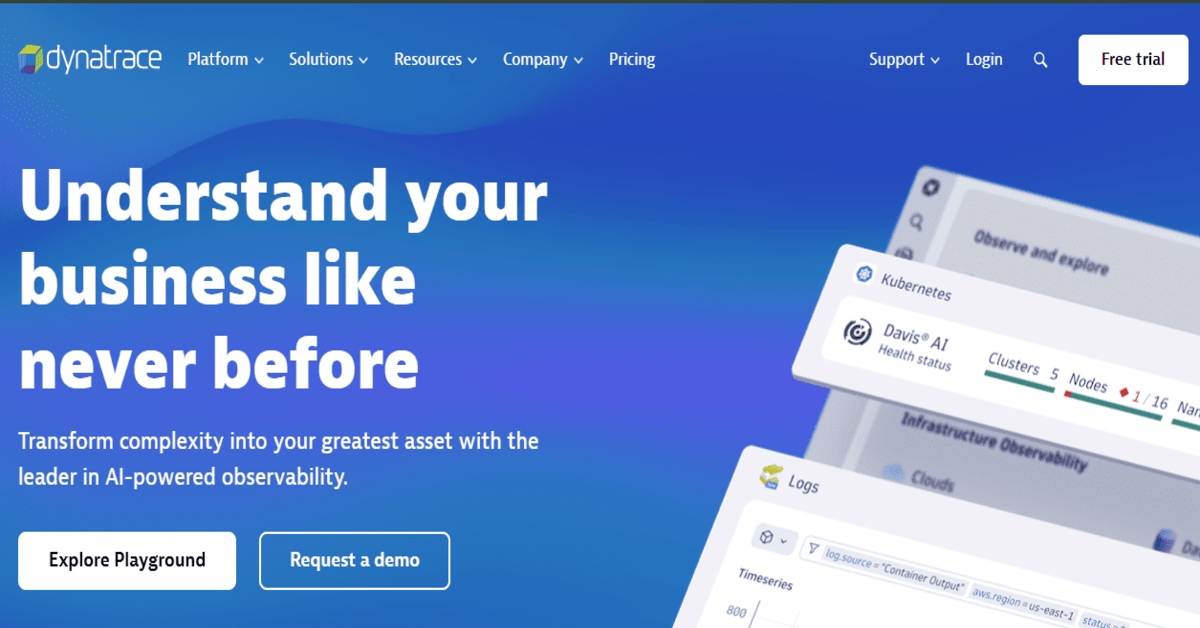
Dynatrace is an enterprise-grade observability and AIOps platform, recognized for its Davis AI engine, which delivers automated root cause analysis and predictive insights across large-scale, hybrid, and multi-cloud environments.
Key Features
- Application Performance Monitoring (APM) with distributed tracing.
- Infrastructure and cloud monitoring with topology mapping.
- Log management and analytics.
- Real User Monitoring (RUM) and digital experience monitoring.
- Synthetic monitoring for proactive performance checks.
- Security monitoring and application vulnerability detection.
Standout Features
- Davis AI for anomaly detection, RCA, and predictive analytics.
- Automatic dependency mapping across applications, microservices, and infrastructure.
- Enterprise scalability with built-in automation for large distributed systems.
Pros
- Highly automated, reducing manual investigation time.
- Comprehensive coverage of MELT and security monitoring.
- Strong support for enterprise-scale hybrid and multi-cloud environments.
Cons
- High costs compared to smaller vendors.
- Complex to set up and manage for mid-sized teams.
- Steeper learning curve due to the platform’s depth.
Best For
Large enterprises with complex architectures that need AI-driven automation, predictive insights, and scalability across thousands of services.
Pricing & Customer Reviews
- Full-Stack Monitoring: $58 /month/8 GiB host
- Infra Monitoring: $29/month/8 GiB host
- Reviews: Around 4.5/5 on G2. Customers highlight powerful AI-driven insights but note complexity and cost as key drawbacks.
Dynatrace vs KubeSense
Dynatrace is an AI-augmented, full-stack observability and monitoring platform with automated discovery, dependency mapping, and broad support for infrastructure, applications, and user experience. KubeSense delivers full-stack observability using eBPF-based data collection and AI-driven analysis. Dynatrace is best suited for teams that need automated topology mapping, strong enterprise governance, and a comprehensive monitoring ecosystem across complex systems.
5. SigNoz
Known For
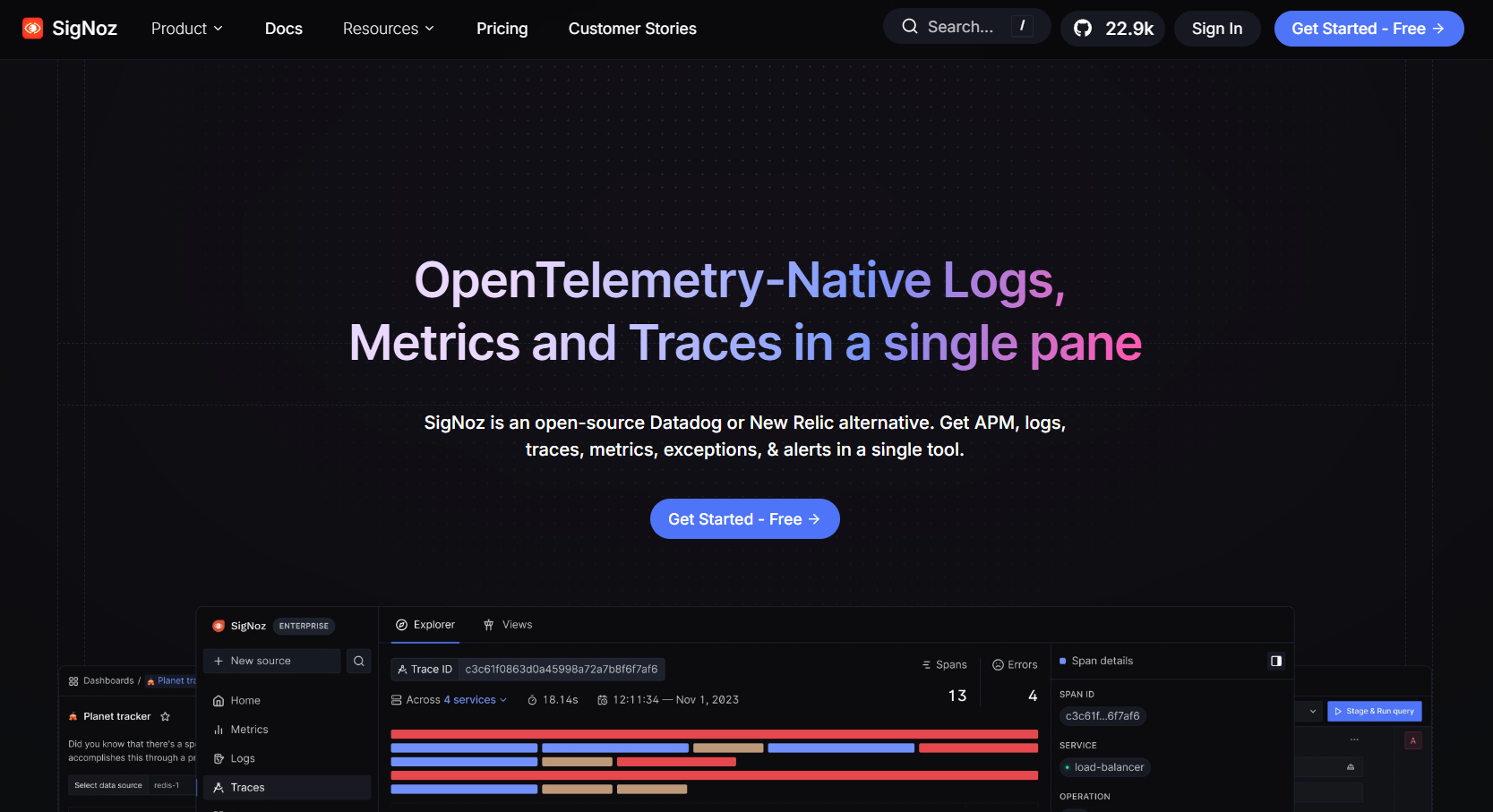
SigNoz is an open-source observability platform built on OpenTelemetry, known as a popular alternative to proprietary APMs for teams wanting transparency, self-hosting, and cost control.
Key Features
- Application Performance Monitoring (APM) with distributed tracing.
- Log management with ClickHouse-based storage.
- Metrics monitoring with Prometheus-style queries.
- Dashboards and visualization with Grafana-like flexibility.
- Error tracking integrated with traces for faster RCA.
Standout Features
- Open-source and OTEL-native, ensuring no vendor lock-in.
- Self-hosted option for full control and compliance.
- Affordable cloud offering with flexible pricing for startups and SMBs.
Pros
- Free to self-host with strong community support.
- Transparent, predictable pricing for SaaS.
- Strong adoption among developers moving toward OTEL.
Cons
- Managing ClickHouse memory usage is time-consuming
- Operational complexity, especially for managing the stacks
- The UI, while functional, might feel cluttered
Best For
Startups, SMBs, and developer-led teams that want low-cost, open-source observability with self-hosted or hybrid options.
Pricing & Customer Reviews
- Free for open-source self-hosted
- Free tier + base fee of $49/month. Charges beyond the base fee are based on data ingested:
- Traces: $0.30/GB.
- Logs: $0.30/GB.
- Metrics: $0.10/million samples.
- Reviews: Rated around 4.6/5 on G2. Praised for simplicity, cost efficiency, and strong developer community, though some users note feature gaps at enterprise scale.
SigNoz vs KubeSense
6. AppSignal
Known For
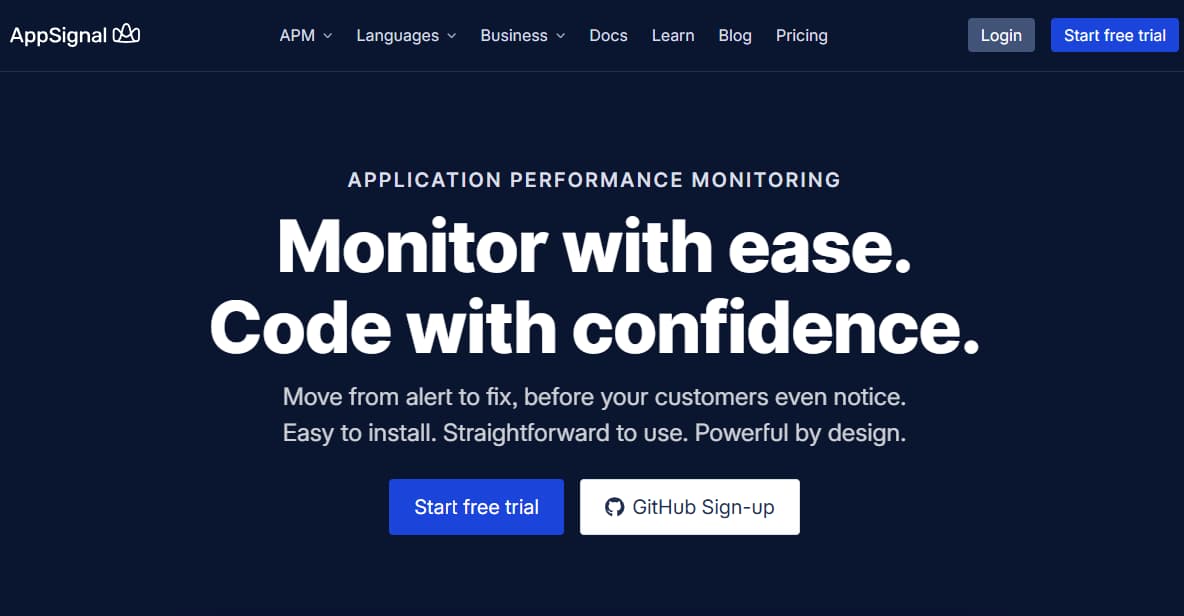
AppSignal is known as a developer-friendly APM tool tailored for smaller engineering teams, especially popular among Ruby, Elixir, Node.js, and Python applications. It emphasizes simplicity, ease of setup, and actionable insights without enterprise-level complexity.
Key Features
- Application Performance Monitoring (APM) with distributed tracing.
- Error tracking with context-rich reports.
- Host and infrastructure monitoring.
- Dashboards and custom metrics.
- Built-in anomaly detection and alerting.
Standout Features
- Extremely easy to set up and use, with auto-instrumentation for supported languages.
- All-in-one pricing model with no separate add-ons.
- Strong focus on developer experience with a lightweight UI.
Pros
- Simple and intuitive setup.
- Affordable and transparent pricing.
- Excellent for language-specific ecosystems like Ruby and Elixir.
Cons
- Overwhelming UX/UI that hinders usability for beginners
- High costs, especially for high traffic
Best For
Small to mid-sized developer teams seeking an affordable, plug-and-play APM for supported languages without needing enterprise complexity.
Pricing & Customer Reviews
- Logging is free for the first 1GB/month
- APM: $25 for 250K requests/month
- Enterprise SAML SSO ($ 449 per month)
- Long-term log storage ($ 89 per month)
- HIPAA Compliance ($ 89 per month)
- Reviews: Around 4.6/5 on G2. Praised for ease of use and developer-first design, though some note it lacks advanced enterprise observability features.
AppSignal vs KubeSense
AppSignal is an observability and performance monitoring platform that provides metrics, traces, error tracking, and alerts with a focus on simplicity and developer experience. In contrast, KubeSense delivers full-stack observability using eBPF-based data collection and AI-driven analysis. AppSignal is best suited for teams that want a straightforward, developer-friendly monitoring solution with easy setup and clear performance insights.
7. Coralogix
Known For
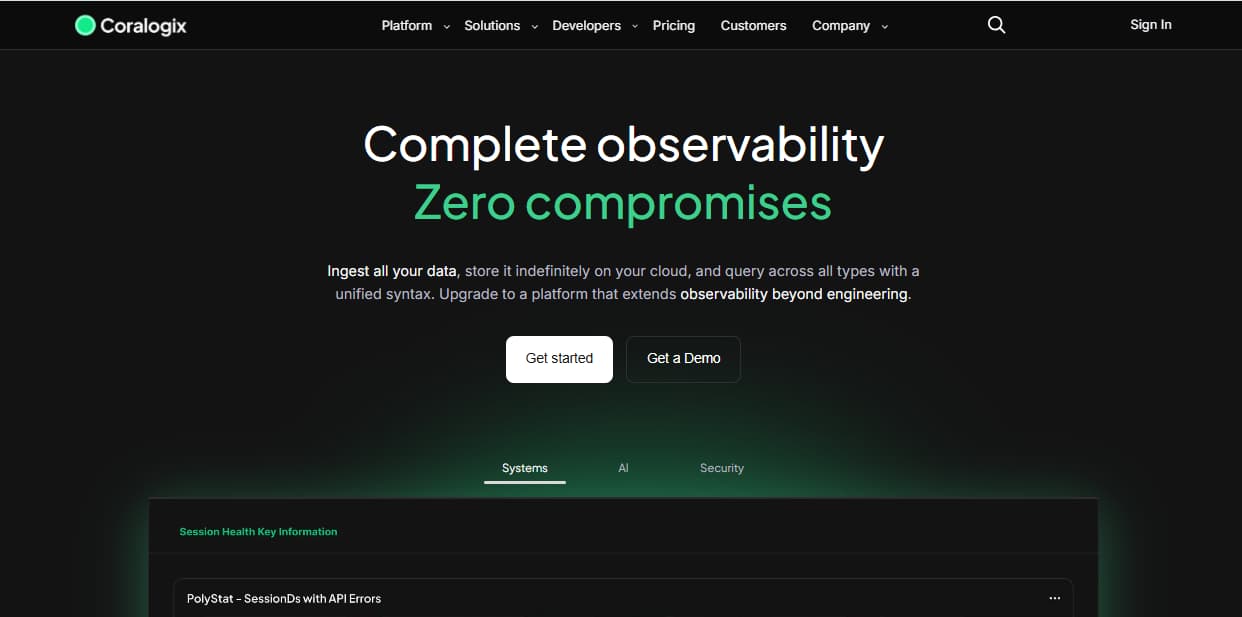
Coralogix is best known for its full-stack monitoring and cost-optimized data retention, leveraging its unique log lifecycle management to reduce storage costs while maintaining observability depth.
Key Features
- Application Performance Monitoring (APM) and distributed tracing.
- Advanced log management with pipeline processing.
- Real User Monitoring (RUM) and session replay.
- Metrics and infrastructure monitoring.
- SIEM and compliance features for security observability.
Standout Features
- Log Lifecycle: Hot, warm, and cold storage tiers with the option to archive data directly into the customer’s own cloud storage at minimal cost.
- AI-powered insights for anomaly detection and pattern recognition.
- Strong frontend monitoring with RUM, replay, and core web vitals.
Pros
- Lower long-term storage costs through customer-owned archival.
- Broad observability stack covering MELT and security.
- Mature platform with strong frontend observability capabilities.
Cons
- Steep learning curve
- Overwhelming UI that makes navigation a challenge
Best For
Organizations with high log volumes seeking to cut storage costs while maintaining full observability, especially those with their own cloud infrastructure.
Pricing & Customer Reviews
- Logs: $0.42/GB
- Traces: $0.16/GB
- Metrics: $0.05/GB
- AI: $1.5 per 1M tokens
- Reviews: Rated around 4.6/5 on G2. Praised for log analytics power and cost optimization, but some users report hidden complexity with data pipelines and compliance concerns.
Coralogix vs KubeSense
Coralogix is a full-stack observability platform that unifies logs, metrics, traces, and security analytics with strong real-time processing and alerting. In contrast, KubeSense delivers full-stack observability using eBPF-based data collection and AI-driven analysis. Coralogix is best suited for teams that want unified MELT observability with advanced log processing and real-time analytics.
Conclusion
KubeSense delivers strong Kubernetes-focused observability with eBPF and AI-driven features, but its dual pricing and complexity push many teams to seek alternatives. Enterprise tools like Datadog, New Relic, and Dynatrace offer depth but at high cost, while Coralogix, SigNoz, and AppSignal target specific needs. CubeAPM stands out as the most balanced option, combining full MELT coverage, transparent pricing, smart sampling, and flexible deployment for predictable, enterprise-ready observability.
Disclaimer: The information in this article reflects the latest details available at the time of publication and may change as technologies and products evolve.