

Choosing the top APM tools for cloud-native apps has become critical as modern architectures rely on microservices, containers, and Kubernetes orchestration. Cloud-native environments scale fast — and fail fast — demanding observability platforms that can track distributed systems in real time.
CubeAPM is built precisely for this reality. It delivers deep visibility into Kubernetes clusters, microservices, and service meshes without heavy agents. By using OpenTelemetry-native pipelines, auto-discovery, and smart sampling, CubeAPM captures traces and metrics even as containers restart or scale dynamically.
In this guide, we’ll unpack what APM tools for cloud-native apps do, why engineering teams choose different platforms, and compare the top 8 APM solutions with verified pricing and real-world scaling examples.
Top 8 APM Tools for Cloud-Native Apps
- CubeAPM
- Dynatrace
- Coralogix
- Sumo Logic
- Better Stack
- Datadog
- New Relic
- SigNoz
What Is an APM Tool for Cloud-Native Apps?
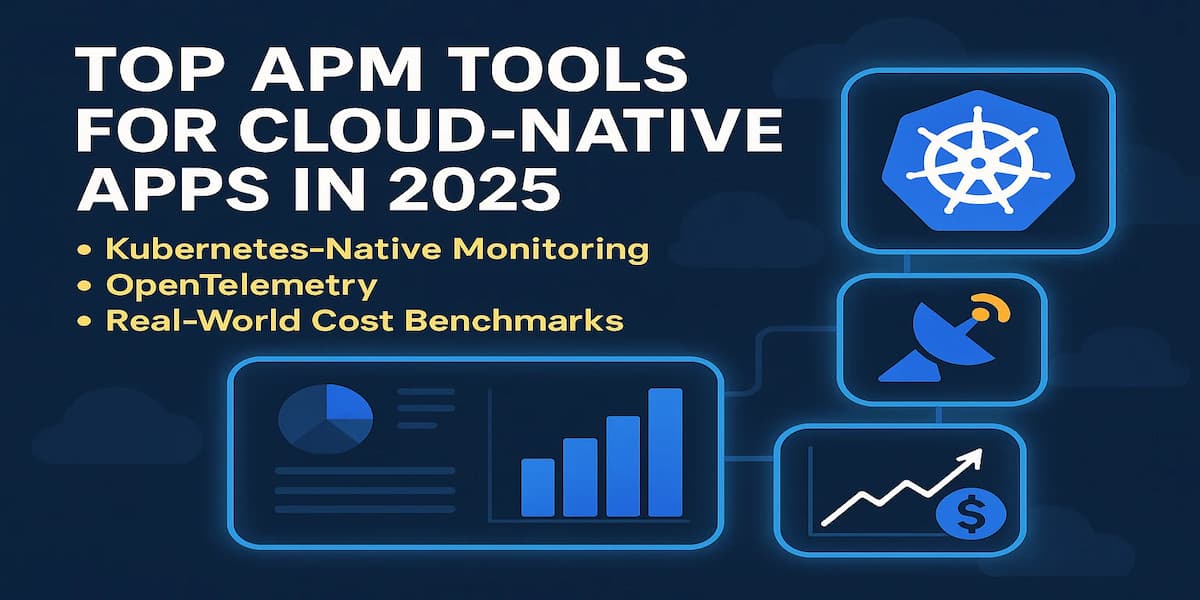
An Application Performance Monitoring (APM) tool for cloud-native apps is designed to track the performance, availability, and dependencies of distributed workloads running across containers, pods, and microservices. Unlike legacy APMs built for monolithic systems, modern solutions must adapt to ephemeral infrastructure and dynamic orchestration where services may start, stop, or move within seconds.
In a cloud-native environment, APM goes beyond code profiling — it continuously observes latency between microservices, API response times, container resource usage, and trace spans across multiple layers of the stack. The best tools correlate metrics, logs, and traces (MELT) in real time, giving DevOps teams end-to-end visibility into complex application topologies.
Most modern APMs now embrace OpenTelemetry as a vendor-neutral standard for instrumentation, ensuring consistency across languages, frameworks, and platforms like Kubernetes, EKS, or GKE. This enables developers to collect unified telemetry data and reduce vendor lock-in — a crucial factor in large-scale cloud-native observability.
Example: How CubeAPM Monitors Cloud-Native Apps
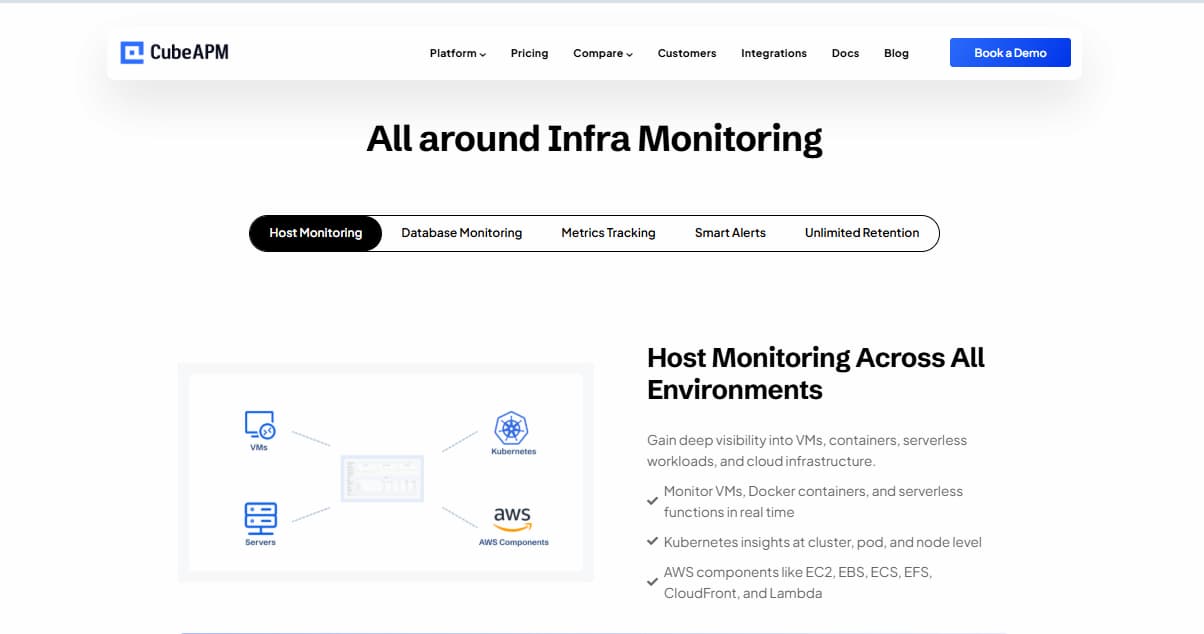
CubeAPM monitors cloud-native environments through an OpenTelemetry-native pipeline that automatically discovers workloads across Kubernetes clusters, microservices, and serverless functions. Instead of relying on heavy agents, CubeAPM connects via lightweight collectors that stream telemetry—metrics, logs, traces, and events (MELT)—from any containerized or managed service.
Once data is ingested, CubeAPM’s service maps visualize real-time dependencies between pods, APIs, and databases, revealing bottlenecks in multi-cluster or hybrid deployments. Its smart sampling engine dynamically adjusts trace collection during high traffic to reduce cost without losing critical insights, while trace-to-log correlation enables instant root-cause analysis across layers.
For cloud-native teams, CubeAPM goes beyond monitoring uptime—it provides end-to-end observability for CI/CD pipelines, auto-scalers, and ephemeral workloads. With no host-based pricing and a flat $0.15/GB ingestion model, teams can monitor thousands of containers or serverless functions without unpredictable costs.
Key Highlights of CubeAPM for Cloud-Native Apps:
- Auto-discovery: Detects new pods and services instantly across Kubernetes clusters.
- Smart Sampling: Handles bursty traffic efficiently without losing trace context.
- Unified MELT Visibility: Correlates metrics, logs, traces, and events in one view.
- OpenTelemetry-Native: Supports vendor-neutral instrumentation and interoperability.
- Transparent Pricing: Flat $0.15/GB ingestion—no host, container, or agent fees.
Why Teams Choose Different APM Tools for Cloud-Native Apps
No two cloud-native environments operate the same way. A startup deploying microservices on GKE has very different needs from an enterprise running multi-cluster workloads across AWS, Azure, and on-prem data centers. As a result, teams often choose different APM tools based on specific priorities like scale, pricing flexibility, and observability depth.
1. Scalability and Data Volume Management
Cloud-native systems generate enormous telemetry data from containers, functions, and service meshes. At scale, pricing models make or break an APM strategy. Solutions like CubeAPM offer predictable ingestion-based pricing, while others such as Datadog or New Relic still charge per host, container, or custom metric. For teams ingesting terabytes of traces or logs each month, cost predictability directly affects monitoring coverage.
2. Depth of Observability
Different APMs specialize in different pillars of MELT—Metrics, Events, Logs, and Traces. Some, like Dynatrace and New Relic, emphasize deep code-level instrumentation, while others like CubeAPM focus on unified telemetry correlation and OpenTelemetry-native ingestion for Kubernetes and serverless workloads. The right tool depends on whether a team prioritizes root-cause tracing, infrastructure health, or user experience analytics.
3. Integration with Cloud-Native Ecosystem
APM tools must fit seamlessly into DevOps workflows—spanning Kubernetes, Helm, Istio, Terraform, CI/CD, and GitOps pipelines. Modern tools like CubeAPM and Elastic APM support auto-discovery of pods and microservices, while enterprise vendors like Dynatrace extend coverage into legacy VM environments for hybrid observability.
4. Pricing Transparency and Cost Control
As telemetry volumes grow exponentially, teams are demanding clear pricing per GB or per data type instead of opaque bundle models. CubeAPM and SigNoz stand out for flat-rate, ingestion-based pricing, whereas tools like Datadog and New Relic often involve complex per-host, per-feature, or per-agent fees that escalate unpredictably.
5. OpenTelemetry and Vendor Neutrality
Adoption of OpenTelemetry (OTEL) has reshaped how organizations evaluate APM tools. Instead of being locked into proprietary agents, teams now prefer platforms that natively ingest OTEL traces, metrics, and logs. This ensures interoperability, easier migration, and lower instrumentation overhead across heterogeneous tech stacks.
6. AI-Driven Insights and Automation
With workloads scaling faster than human teams can monitor, AI-assisted analysis is becoming critical. Modern APMs like Dynatrace Davis AI, New Relic Grok, and CubeAPM’s anomaly detection engine leverage pattern recognition to surface performance degradations, outliers, and noisy alert suppression in real time.
Top Tools for Monitoring Cloud Native Apps
1. CubeAPM
Known For
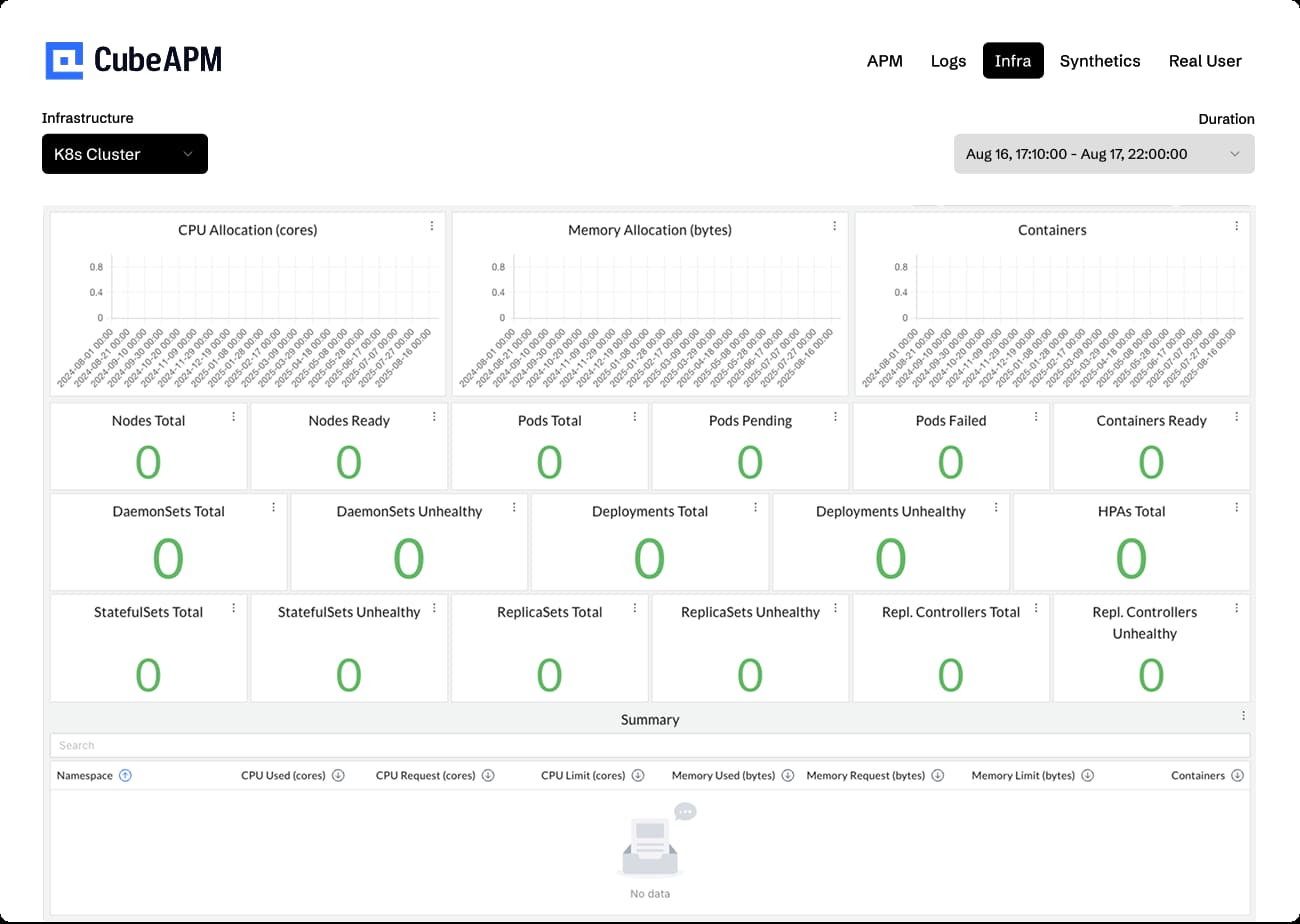
CubeAPM is an OpenTelemetry-native observability platform purpose-built for Kubernetes and cloud-native workloads. It provides full-stack MELT visibility (Metrics, Events, Logs, Traces) across containers, microservices, and serverless functions. Engineered for auto-scaling environments, CubeAPM adapts to ephemeral workloads, integrates seamlessly with CI/CD systems, and visualizes dependencies across clusters and namespaces in real time. It’s widely adopted by teams that need a lightweight, scalable, and vendor-neutral monitoring solution for cloud-native applications.
Cloud-Native Apps Monitoring Features
- Automatic discovery of pods, namespaces, and workloads.
- Real-time service dependency mapping.
- Smart trace sampling during high traffic.
- eBPF-based container and node metrics.
- Multi-cluster and hybrid-cloud visibility.
- Trace-to-log correlation for instant root cause analysis.
- CI/CD deployment tracking and rollback impact analysis.
Key Features
- OpenTelemetry-native ingestion and processing.
- Unified MELT correlation in one dashboard.
- Prebuilt Kubernetes dashboards and alerts.
- 800+ ready integrations (Nginx, Kafka, Redis, PostgreSQL, etc.).
- Lightweight collectors with minimal resource use.
- Self-hosted or BYOC deployment options.
- Granular retention and storage controls.
Pros
- Native support for Kubernetes, microservices, and OTEL.
- Lightweight architecture and zero host/container fees.
- Smart sampling keeps costs predictable at scale.
- Unified visibility reduces MTTR.
- Supports SaaS and on-prem deployments.
Cons
- Not suited for teams looking for off-prem solutions
- Strictly an observability platform and does not support cloud security management
Pricing
CubeAPM follows a simple, transparent model — $0.15 per GB of data ingested
CubeAPM Cloud-Native App Monitoring Pricing at Scale
*All pricing comparisons are calculated using standardized Small/Medium/Large team profiles defined in our internal benchmarking sheet, based on fixed log, metrics, trace, and retention assumptions. Actual pricing may vary by usage, region, and plan structure. Please confirm current pricing with each vendor.
For a mid-sized SaaS company ingesting 45TB(~45,000) total monthly data ingestion and 45,000TB of observability data outcharged by the cloud provider, the total cost will be about ~$7200/month.
Tech Fit
CubeAPM is ideal for Kubernetes-first, multi-cloud, and OpenTelemetry-standardized teams that prioritize scalability, cost predictability, and deep observability correlation. It fits perfectly into modern DevOps workflows — from CI/CD pipelines and service meshes (Istio, Linkerd) to event-driven and serverless architectures. Cloud-native companies ingesting large telemetry volumes (10 TB +/month) or running multi-cluster environments benefit most from CubeAPM’s flat pricing, smart sampling, and lightweight deployment model.
2. Dynatrace
Known For
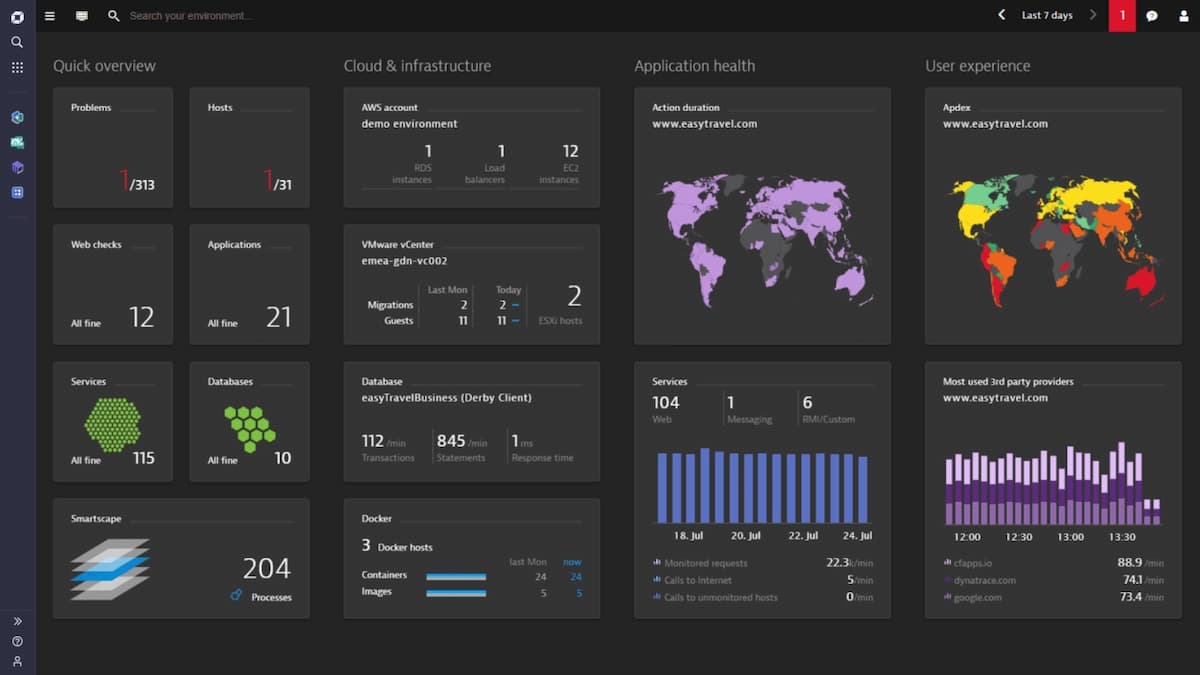
Dynatrace is a leading enterprise-grade observability and APM platform known for its AI-driven automation and deep integration with cloud-native and hybrid environments. Its patented Davis AI engine automatically detects anomalies, maps dependencies across services, and provides causal analysis in real time. Dynatrace is widely adopted in large enterprises that require extensive automation, governance, and service intelligence across dynamic infrastructures.
Cloud-Native Apps Monitoring Features
- Auto-discovery of services, pods, and nodes across Kubernetes clusters.
- Deep instrumentation for Java, .NET, Python, Go, Node.js, and PHP.
- OneAgent auto-injection into containers and services.
- Real-time topology mapping for applications, databases, and APIs.
- Davis AI for anomaly detection and impact correlation.
- End-to-end distributed tracing with full transaction visibility.
- Cloud-native integrations with AWS EKS, Azure AKS, and GCP GKE.
Key Features
- Unified observability for infrastructure, APM, logs, and digital experience.
- Code-level diagnostics with AI-powered root cause analysis.
- Kubernetes workload view with resource and dependency insights.
- Full-stack auto-instrumentation through Dynatrace OneAgent.
- Smartscape topology engine for service relationship mapping.
- Built-in AIOps automation and noise suppression.
- Integrations with Terraform, Prometheus, OpenTelemetry, and CI/CD tools.
Pros
- Highly automated setup and dependency detection.
- AI-powered insights with minimal manual tuning.
- Strong performance analytics for large-scale microservices.
- Enterprise-grade governance and role-based access control.
Cons
- Complex pricing model with high entry cost.
- Heavy OneAgent footprint in resource-constrained environments.
- Closed instrumentation ecosystem limits flexibility.
- Limited control over sampling and data retention.
Pricing
Dynatrace pricing is tiered by module and data type:
- Infrastructure Monitoring: $29/mo/host
- Full-Stack Monitoring: $58/mo/8 GiB host
Dynatrace Cloud-Native App Monitoring Pricing at Scale
A midsized SaaS company operating 125 APM hosts, 200 infra hosts, 10TB(~10,000 GB) of ingested logs, 300,000 custom metrics, 1,500,000 container hours, and 45,000GB of observability data out(charged by cloud provider), the cost would come around ~$21,850/month.
Tech Fit
Dynatrace is ideal for large-scale enterprises and regulated industries needing robust automation, deep code-level analytics, and AI-assisted diagnostics. It excels in complex, multi-cluster Kubernetes and hybrid cloud setups where automated dependency mapping and alert correlation are mission-critical.
3. Coralogix
Known For
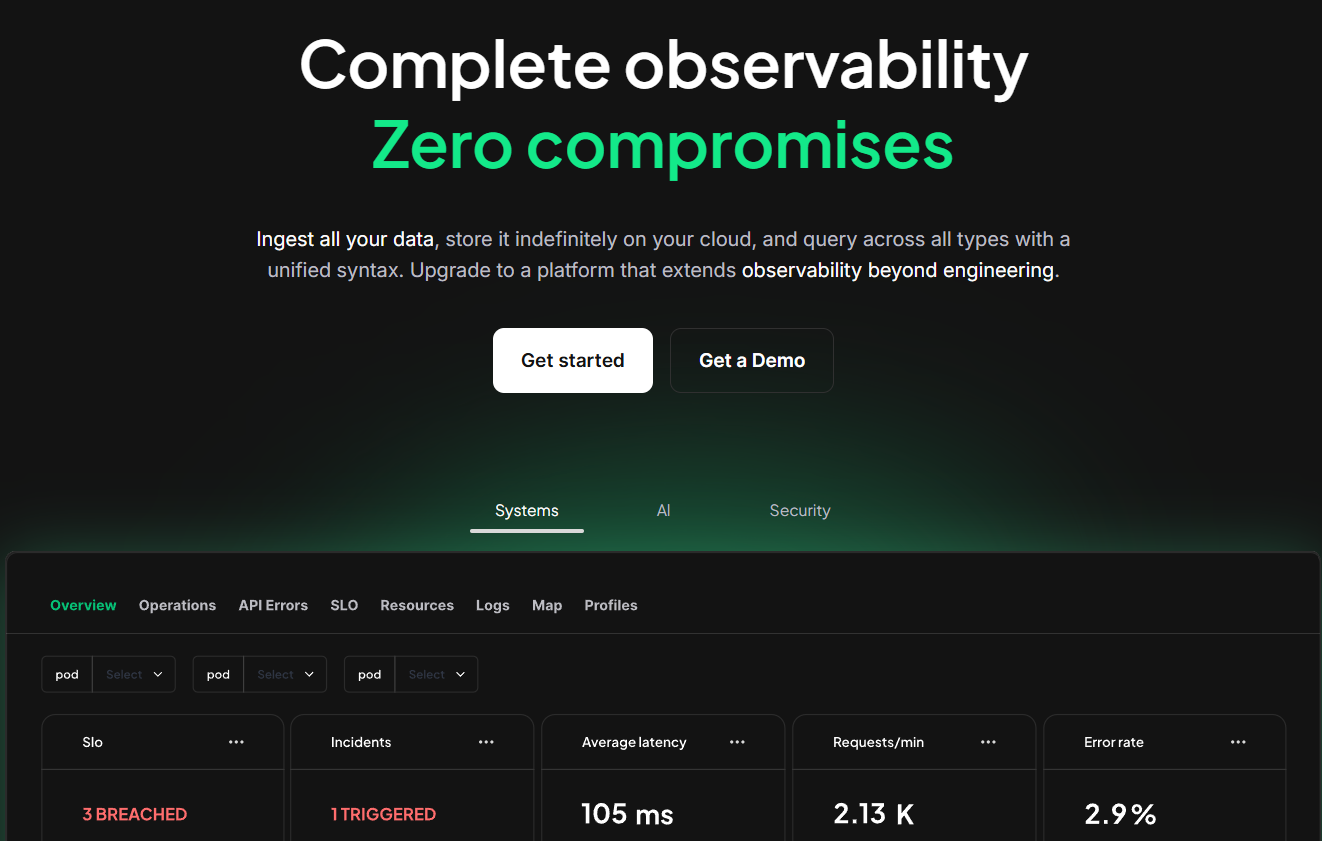
Coralogix is a stream-based observability platform designed for cloud-native and microservices architectures. It focuses heavily on real-time log analytics, metrics visualization, and distributed tracing powered by its Streama processing engine. Rather than storing all data before analysis, Coralogix processes telemetry on the fly — allowing faster insights and reduced indexing costs. It’s popular among engineering teams seeking high-volume log ingestion with lower data retention overhead.
Cloud-Native Apps Monitoring Features
- Real-time log and metric ingestion for containerized workloads.
- OpenTelemetry-native pipelines for metrics, traces, and logs.
- Kubernetes and serverless observability dashboards.
- Dynamic log clustering and pattern detection for anomaly analysis.
- On-the-fly parsing and enrichment for structured/unstructured data.
- Service map visualization for APIs, pods, and cloud services.
- Built-in compliance modes for SOC 2, ISO 27001, and GDPR.
Key Features
- Streama engine for real-time log processing and reduced indexing costs.
- Machine learning-based log pattern recognition.
- Query Studio for advanced metric and trace exploration.
- Archive and rehydrate logs on demand for cost control.
- Seamless integrations with AWS, GCP, and Azure telemetry pipelines.
- Security data monitoring via Coralogix Flow Alerts.
- Support for OpenTelemetry and FluentBit exporters.
Pros
- Highly cost-efficient for large-scale log ingestion.
- Real-time insights with low latency.
- OpenTelemetry support for vendor-neutral data pipelines.
- Flexible retention and archive options.
- Strong compliance and data governance features.
Cons
- UI less intuitive than Datadog or New Relic.
- Trace visualization not as advanced as dedicated APM tools.
- Requires fine-tuning for complex query workloads.
Pricing
Coralogix follows a usage-based model divided into data tiers:
- Logs: $0.42 per GB
- Traces: $0.44 per GB
- Metrics: $0.05 per GB
- AI: $1.50 per 1M tokens
Coralogix Cloud-Native App Monitoring Pricing at Scale
For a midsized SaaS company ingesting 25,000GB of data by APM hosts, 10,000GB of data by infra hosts, 10,000GB of data by log hosts, and 45,000GB of observability data out(charged by cloud provider), the cost would be around ~$13,200.
Tech Fit
Coralogix fits data-driven engineering teams running high-ingest workloads, event-driven architectures, and multi-cloud Kubernetes clusters. It’s especially effective for organizations prioritizing log analytics, cost optimization, and compliance.
4. Sumo Logic

Known For
Sumo Logic is a cloud-native log analytics and observability platform built for Kubernetes, microservices, and SaaS environments. Known for its strong security analytics and machine learning-based log patterning, it helps DevOps and SecOps teams correlate metrics, traces, and logs in real time. Sumo Logic’s native cloud integrations and continuous intelligence platform make it popular among enterprises seeking unified observability and compliance visibility in a single stack.
Cloud-Native Apps Monitoring Features
- Auto-collection of logs, metrics, and traces from Kubernetes and cloud workloads.
- Real-time analytics using continuous query streams.
- Native integrations with AWS CloudWatch, GCP Stackdriver, and Azure Monitor.
- Prebuilt dashboards for containers, APIs, and serverless applications.
- Machine learning-based anomaly detection and outlier analysis.
- OpenTelemetry collector support for standardized ingestion.
- Security information and event management (SIEM) integration for cloud-native security.
Key Features
- Unified analytics across DevOps and SecOps data.
- Built-in apps for Kubernetes, AWS Lambda, and Docker.
- LogReduce and LogExplain for automated pattern grouping.
- Root cause explorer with topology and correlation analysis.
- Real-time alerting, SLO tracking, and anomaly prediction.
- Flexible retention and archival for cost control.
- OpenTelemetry and FluentD/FluentBit support for ingest flexibility.
Pros
- Strong combination of observability and security analytics.
- Native support for Kubernetes and major cloud providers.
- Robust machine learning capabilities for anomaly detection.
- Flexible log retention and archive options.
Cons
- Query performance can lag with large data volumes.
- Pricing and retention tiers can be confusing for new users.
- Limited visualization customization compared to Datadog or New Relic.
- Higher long-term storage costs for historical log retention.
Pricing
Sumo Logic uses a tiered ingestion model:
- Infrequent Tier (cold data): ~$0.016 credits per GB scanned (query-based access).
- Log Ingestion (estimated): ~$0.10 per GB.
- Query/Scan (occasional): ~$0.004 per GB analyzed.
- AWS Marketplace Reference: ~700 credits = ~$135/month (≈1 GB log ingest + 365 days retention).
Sumo Logic Cloud-Native App Monitoring Pricing at Scale
For a midsized SaaS ingesting 45TB(~45,000GB) of logs per month and 45,000GB of observability data out(charged by cloud provider), the cost would come around ~$16,065/month.
Tech Fit
Sumo Logic is a solid choice for DevOps, SecOps, and platform teams managing multi-cloud and containerized infrastructures. It’s especially valuable for organizations needing real-time log correlation, security visibility, and machine learning-based anomaly detection in a single platform.
5. Better Stack
Known For
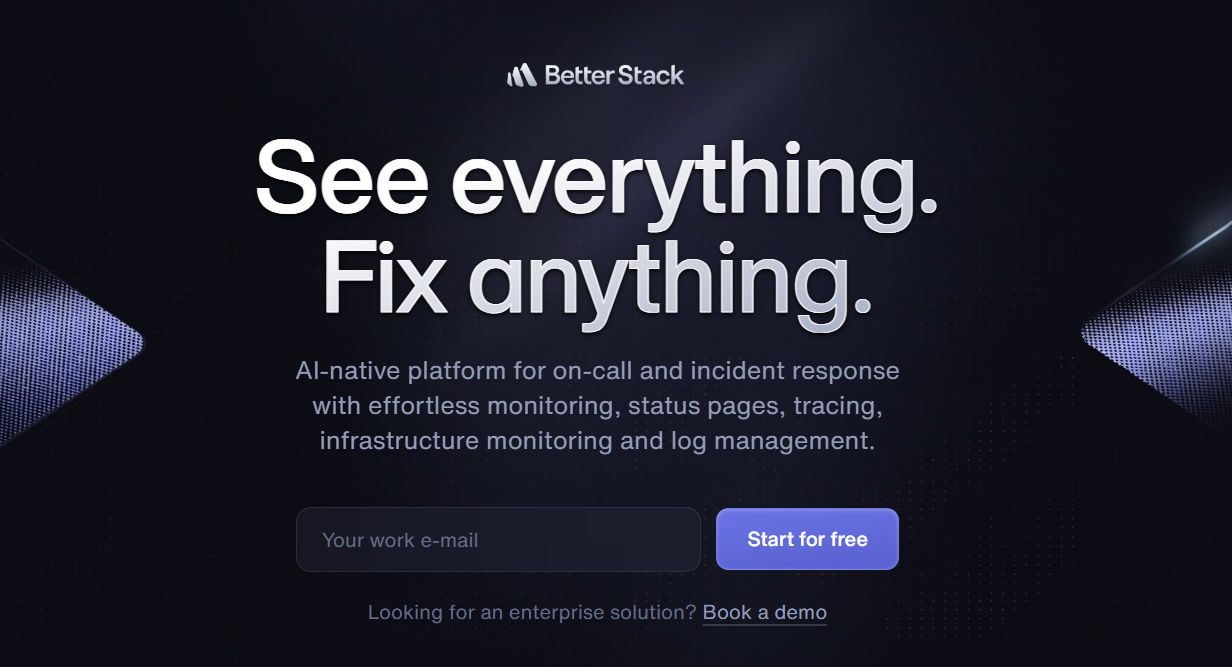
Better Stack is a modern observability and uptime monitoring platform designed for cloud-native and serverless applications. It combines logs, dashboards, and incident management into one unified interface, offering developers fast querying, beautiful visualizations, and tight integration with alerting tools like PagerDuty and Slack. Its PostgreSQL-based log engine delivers high-speed queries across large datasets, making it a favorite for modern DevOps teams focused on speed and simplicity.
Cloud-Native Apps Monitoring Features
- Real-time log ingestion from Kubernetes, Docker, and cloud environments.
- Uptime and performance monitoring for APIs, endpoints, and microservices.
- OpenTelemetry support for traces, metrics, and structured logs.
- Fast SQL-based querying on top of PostgreSQL log storage.
- Custom dashboards for cloud-native and CI/CD workloads.
- Incident response and on-call scheduling within the same platform.
- Integration with GitHub, Slack, PagerDuty, and Sentry.
Key Features
- Unified monitoring and alerting for modern cloud workloads.
- Real-time dashboard updates with low-latency metrics.
- Logtail for SQL-based log management and querying.
- Uptime monitoring with global checkpoint coverage.
- Shared dashboards for collaborative debugging.
- Seamless integration with existing DevOps toolchains.
- Role-based permissions for engineering and SRE teams.
Pros
- Clean, intuitive UI for monitoring and collaboration.
- Combines observability and incident management in one stack.
- Real-time querying and visualization using PostgreSQL.
- Affordable pricing and fast setup for startups and SMBs.
Cons
- Limited depth in distributed tracing and APM analytics.
- Fewer native integrations compared to enterprise APM tools.
- Basic machine learning and anomaly detection capabilities.
- No eBPF or deep container-level metrics yet.
Pricing
Better Stack uses a transparent, per-feature pricing model:
- Logs & Traces: $0.45 per GB (beyond included free allowance)
- Metrics: Included in most plans (up to 2 billion data points retained)
- Free Plan: 3 GB logs retained for 3 days, 2 B metrics retained for 30 days
Better Stack Cloud-Native App Monitoring Pricing at Scale
For a mid-sized SaaS company operating 125 APM hosts, ingesting 25TB(~25, OOOGB) of data by APM hosts, 10TB (~10,000GB) of logs, 10TB (~10,000GB) of infra hosts, and 45,000GB of observability data (charged by the cloud provider), the cost would come around $20,550/month.
Tech Fit
Better Stack is best suited for DevOps teams, SREs, and cloud-native startups prioritizing uptime reliability, fast debugging, and collaboration. It’s especially valuable for small-to-medium companies that want real-time dashboards, SQL-based log analytics, and integrated incident management without the complexity of traditional APM tools.
6. Datadog
Known For
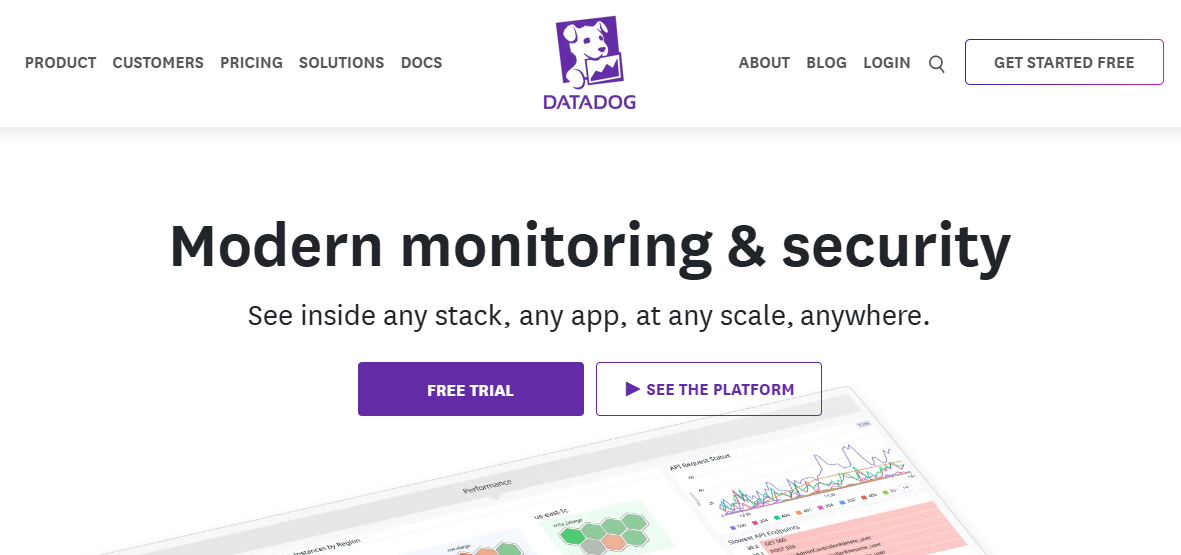
Datadog is one of the most widely used observability platforms for monitoring cloud-native and hybrid environments. Known for its broad ecosystem of 900+ integrations, Datadog unifies metrics, logs, traces, and synthetic monitoring into a single pane of glass. It’s often favored by large enterprises running multi-cloud deployments, though its complex pricing model can make cost forecasting challenging as environments scale.
Cloud-Native Apps Monitoring Features
- Auto-instrumentation for containers and Kubernetes workloads.
- Live service maps visualizing inter-service dependencies.
- Advanced distributed tracing with flame graphs and latency breakdowns.
- Synthetic and real user monitoring (RUM) for application UX.
- Kubernetes and Docker dashboards for pods, nodes, and cluster health.
- Log correlation with APM spans for root-cause investigation.
- Alerts and SLO tracking powered by Datadog Monitors.
Key Features
- Unified observability across APM, infrastructure, logs, and RUM.
- 900+ integrations spanning AWS, GCP, Azure, Kubernetes, and CI/CD tools.
- AI-powered anomaly detection and forecasting.
- Built-in dashboards and analytics with drag-and-drop visualization.
- Network and security monitoring modules for full-stack coverage.
- Seamless agent-based setup with automatic host discovery.
Pros
- Excellent ecosystem coverage and third-party integrations.
- Mature dashboards and analytics.
- Deep tracing capabilities and flexible visualizations.
- Strong community and enterprise adoption.
Cons
- Pricing complexity and unexpected overage costs at scale.
- Requires heavy agent deployment and manual configuration.
- High data retention costs for logs and traces.
- Cost-per-host and feature-based billing can limit observability coverage.
Pricing
Datadog pricing varies by module and signal type:
- APM Enterprise: $40 per host/month
- Log Management (Ingest): $0.10 per GB/month
- Error Tracking: $25 per 50,000 errors/month
- Infrastructure Monitoring: $23 per host/month
Datadog Cloud-Native App Monitoring Pricing at Scale
For a mid-sized SaaS company operating 125 APM hosts, 40 profiled hosts, 100 profiled container hosts, 200 infrastructure hosts, 1.5 million container hours, 300,000 custom metrics, 500 million indexed spans, and 3,500 indexed logs, while ingesting approximately 10 TB (≈10,000 GB) of logs per month, the estimated monthly cost would be around $27,475.
Tech Fit
Datadog suits large enterprises and DevOps teams running complex, multi-cloud workloads that demand rich integrations and advanced dashboards. It’s an excellent fit for teams already using AWS, Azure, or GCP services that need unified visibility across infrastructure and applications.
7. New Relic
Known For
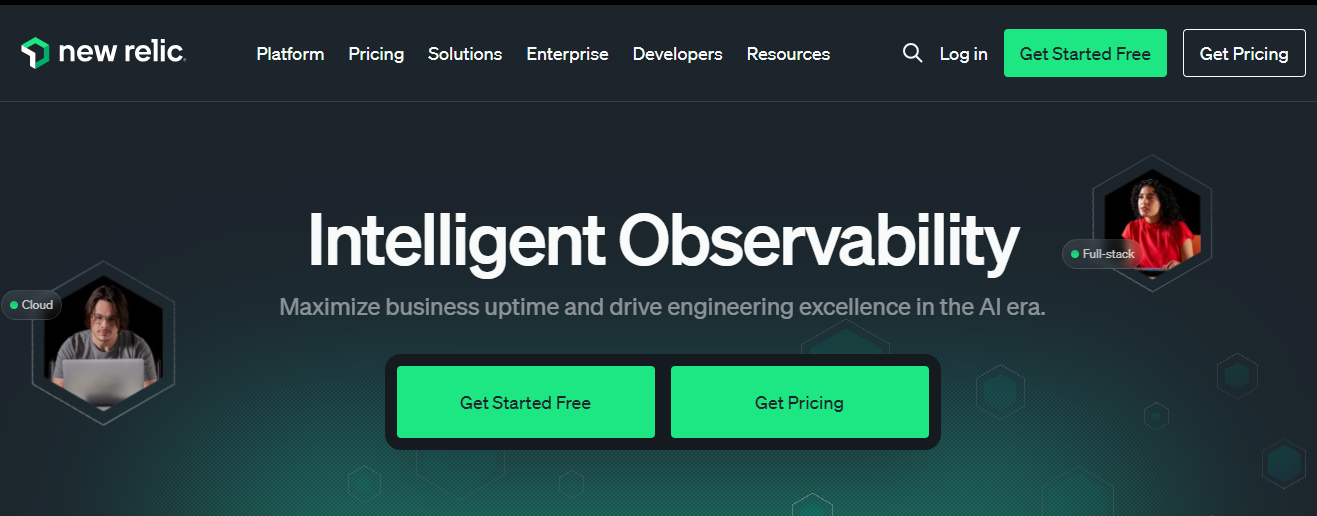
New Relic is a pioneer in the APM space, now evolved into a full-stack observability platform covering applications, infrastructure, logs, and browser performance. It’s popular among DevOps and engineering teams seeking an all-in-one view of microservices, APIs, and end-user experience. With strong data visualization and detailed transaction tracing, New Relic provides granular insight into every part of a distributed, cloud-native stack.
Cloud-Native Apps Monitoring Features
- Auto-instrumentation for Kubernetes, Docker, and serverless runtimes.
- Distributed tracing with context propagation across microservices.
- Kubernetes cluster explorer with pod and node health insights.
- Unified telemetry ingestion (metrics, logs, traces, events).
- AIOps-driven anomaly detection and performance baselining.
- Real-time application topology and service dependency mapping.
- Error profiles and slow-query analysis for APIs and databases.
Key Features
- Single-agent setup for full-stack observability.
- Correlates application, infrastructure, and user experience data.
- Query builder (NRQL) for ad-hoc metric and trace analysis.
- AI-assisted alerting and anomaly detection via New Relic Grok.
- Support for OpenTelemetry and custom spans.
- Integrations with AWS Lambda, Azure Functions, and GCP Cloud Run.
- Role-based access controls and usage dashboards for governance.
Pros
- All-in-one monitoring platform with strong visual analytics.
- Deep tracing and transaction breakdowns.
- Built-in AIOps and anomaly detection.
- Unified interface across metrics, logs, and traces.
Cons
- Cost can grow steeply with ingest volume and user count.
- Retention tiers and usage caps may limit flexibility.
- NRQL query performance can lag for large datasets.
- Requires tuning for high-cardinality telemetry data.
Pricing
New Relic uses a data-based pricing model, charging $0.30 per GB of data ingested plus per-user access fees.
- Free Tier: 100GB/month of data ingested
- Data ingest (standard): $0.40 per GB after 100 GB free/month
- Full-platform users: $349 per user/month
New Relic Cloud-Native App Monitoring Pricing at Scale
A mid-sized SaaS company ingesting 45TB (~45,000 GB) of telemetry data per month and with 10 full users, the cost would come around ~$25,990/month.
Tech Fit
New Relic suits mid-to-large engineering organizations seeking deep transaction analysis and unified visibility across applications, databases, and user experience. It’s ideal for teams modernizing legacy systems or bridging hybrid infrastructure to cloud-native microservices. However, for Kubernetes-intensive, high-volume workloads, its per-GB pricing can make long-term observability expensive, prompting many teams to explore more predictable, ingestion-based alternatives such as CubeAPM.
8. SigNoz
Known For
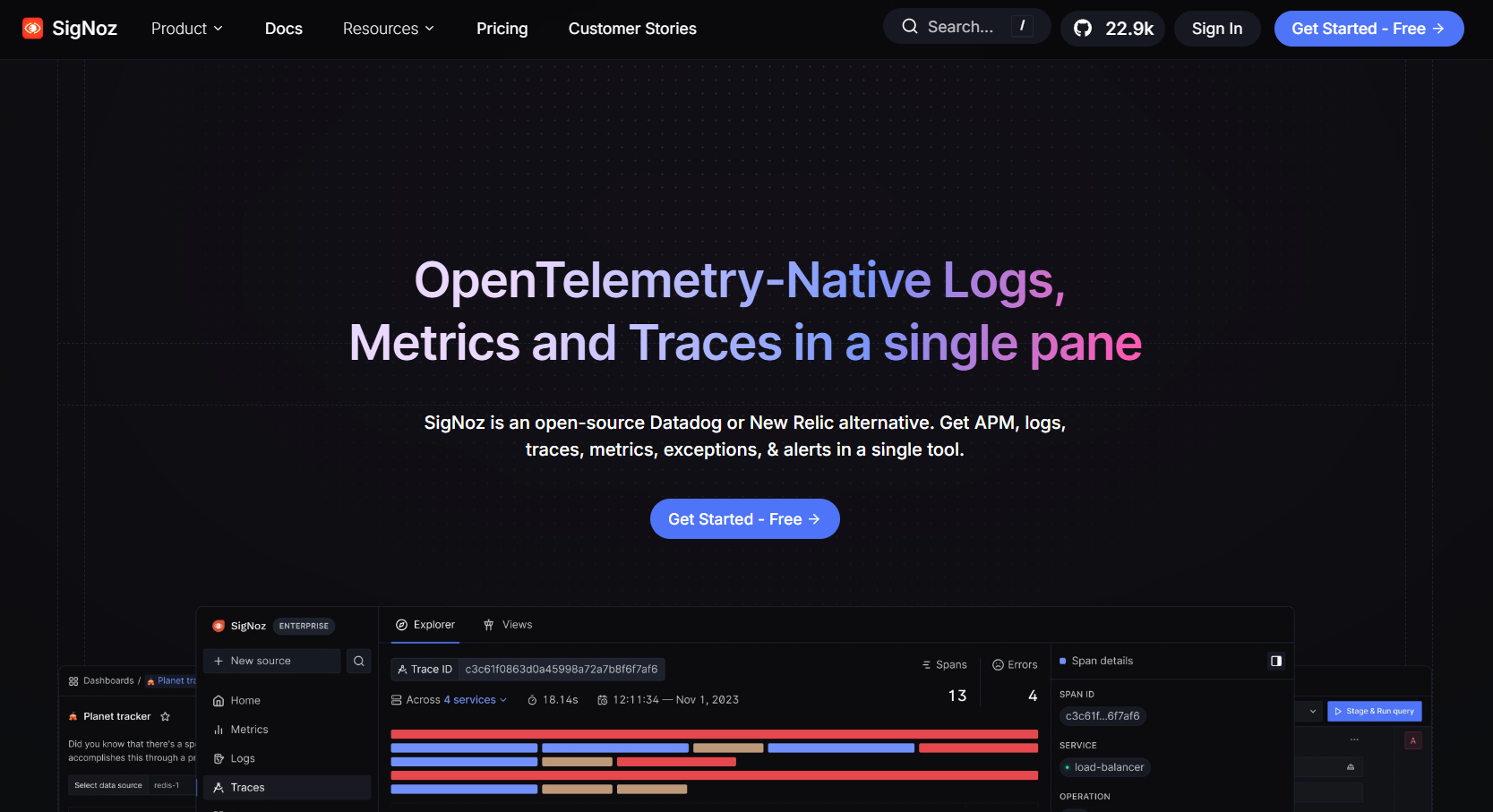
SigNoz is an open-source, OpenTelemetry-native observability platform built to provide complete visibility into cloud-native applications. It offers real-time performance monitoring, distributed tracing, and log analytics—all without relying on proprietary agents or vendor lock-in. Known for its self-hosted flexibility, SigNoz enables teams to manage observability pipelines on their own infrastructure while staying fully OTEL-compliant.
Cloud-Native Apps Monitoring Features
- Auto-instrumentation for Kubernetes, containers, and microservices.
- Full OpenTelemetry support for metrics, logs, and traces.
- Real-time flamegraphs and span latency analysis.
- Service maps showing dependencies between pods and APIs.
- Ingest pipelines for Prometheus metrics and OTLP exporters.
- Kubernetes dashboards with node and pod health metrics.
- Query builder for ad-hoc trace and log analysis.
Key Features
- Open-source and self-hosted (on-prem or cloud).
- Unified observability across metrics, traces, and logs.
- Prometheus compatibility for metric ingestion.
- Built-in alerting using ClickHouse and Alertmanager.
- Custom dashboards and query visualization (based on PromQL).
- Cost-efficient data retention using columnar storage.
- Seamless OpenTelemetry instrumentation setup.
Pros
- 100% open-source with strong community support.
- Full OpenTelemetry compliance (no vendor lock-in).
- Ideal for self-hosted and BYOC environments.
- Transparent cost structure and flexible deployment.
- Lightweight and easily scalable for Kubernetes clusters.
Cons
- Requires manual maintenance and scaling for large deployments.
- Fewer enterprise integrations compared to commercial tools.
- No native RUM or synthetic monitoring modules.
- Lacks AI-based anomaly detection found in premium platforms.
Pricing
SigNoz offers both self-hosted (open source) and SigNoz Cloud editions.
- Community Edition: Free, open-source, self-hosted
- Teams Plan: $49/month starter
- Traces: $0.30 per GB
- Logs: $0.30 per GB
- Metrics: $0.10 per million samples
SigNoz Cloud-Native App Monitoring Pricing at Scale
For a mid-sized SaaS company that ingests 25,000GB of data by APM hosts, 10,000GB of data by infrastructure hosts, 10,000GB of data by log hosts, and 45,000GB of observability data (charged by the cloud provider), the cost would be approximately $16,000.
Tech Fit
SigNoz is best suited for engineering teams adopting OpenTelemetry, self-hosted observability setups, and Kubernetes-heavy environments seeking transparency and control. It’s ideal for startups and mid-sized DevOps teams that prefer open-source flexibility and data sovereignty.
Conclusion
Modern cloud-native environments demand more than legacy APM visibility. With thousands of ephemeral pods, distributed services, and autoscaling workloads, teams need observability tools that combine performance, scalability, and cost predictability.
From enterprise platforms like Datadog and Dynatrace to open-source options like SigNoz, each tool brings its own strengths and trade-offs. The best choice depends on how your organization prioritizes data control, scalability, and pricing transparency in high-ingestion environments.
For teams running large Kubernetes or multi-cloud workloads, CubeAPM offers the right balance—OpenTelemetry-native ingestion, full MELT correlation, smart sampling, and flat $0.15/GB pricing—making observability truly scalable and predictable for the cloud-native era.
Disclaimer: The information in this article reflects the latest details available at the time of publication and may change as technologies and products evolve.