








The main difference between Sentry, Better Stack, and CubeAPM comes down to data retention limits, deployment options, and how costs scale as telemetry volume grows.
Sentry delivers full-stack observability with a strong focus on application error tracking and performance. Better Stack offers full-stack observability optimized for fast setup and lightweight SaaS monitoring, and CubeAPM delivers full-stack APM built for long-term retention, OpenTelemetry-native ingestion, and predictable cost at scale.
Below, we break down how Sentry vs Better Stack vs CubeAPM differ in retention limits, deployment flexibility, and cost behavior as observability needs grow.
Sentry vs Better Stack vs CubeAPM Comparison
| Features | CubeAPM | Sentry | Better Stack |
| Known for | OpenTelemetry-native full-stack observability + predictable pricing | Application error tracking and performance monitoring | Lightweight, all-in-one SaaS monitoring |
| Multi-Agent Support | Yes (OTel, New Relic, Datadog, Elastic) | Limited (OTel, Prometheus) | Limited (OTel, Prometheus) |
| MELT Support | Full MELT | Full MELT | Full MELT |
| Setup | Self-hosted but vendor-managed | SaaS & Self-hosted | SaaS only |
| Pricing | Ingestion-based pricing of $0.15/GB | Team: $26/month Business: $80/month | Free Tier: 10 monitors Logs & Traces: $0.15/GB |
| Sampling Strategy | Smart sampling (95% compression) | Head + Dynamic | Tail-based + Head-based + Log sampling |
| Log Retention | Infinite Retention | Developer: 90 days | Logs: 30 days Metrics: 13 months |
| Support TAT | < 10 minutes | No details | Within minutes to hours |
Sentry vs Better Stack vs CubeAPM: Feature-by-Feature Breakdown
Known for
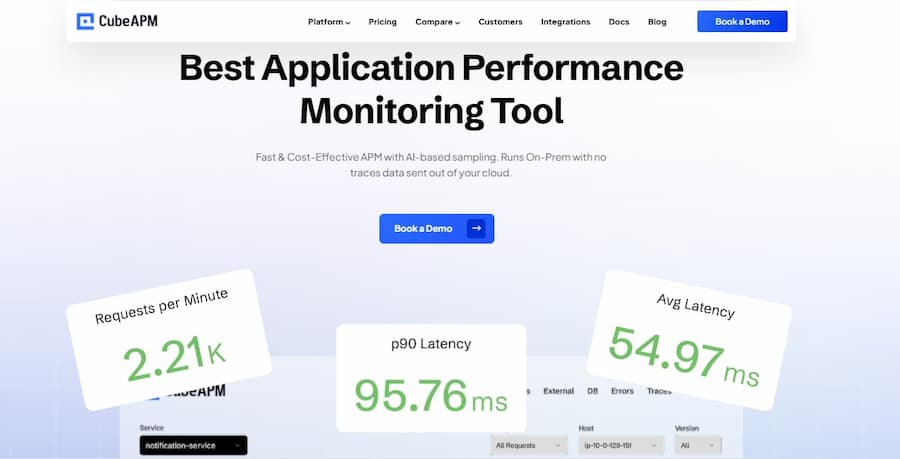
CubeAPM: Known for full-stack observability designed for long-term use at scale. It brings together application performance monitoring, infrastructure monitoring, logs, traces, error tracking, synthetic monitoring, and real user monitoring in a single OpenTelemetry-native platform.
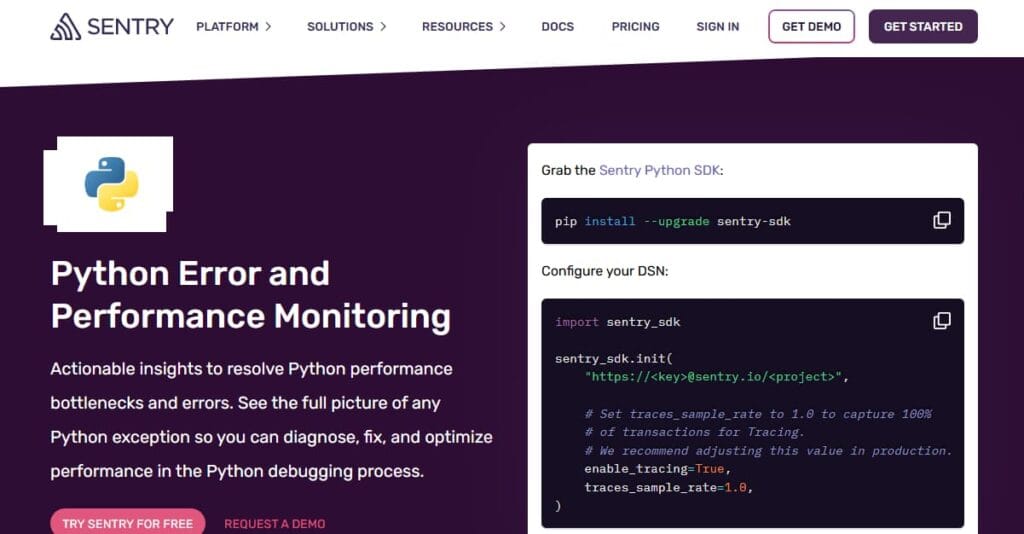
Sentry: known for developer-centric full-stack observability with a strong emphasis on error tracking and application performance. It is widely used to monitor exceptions, trace transactions, and understand performance regressions across backend, frontend, and mobile applications.
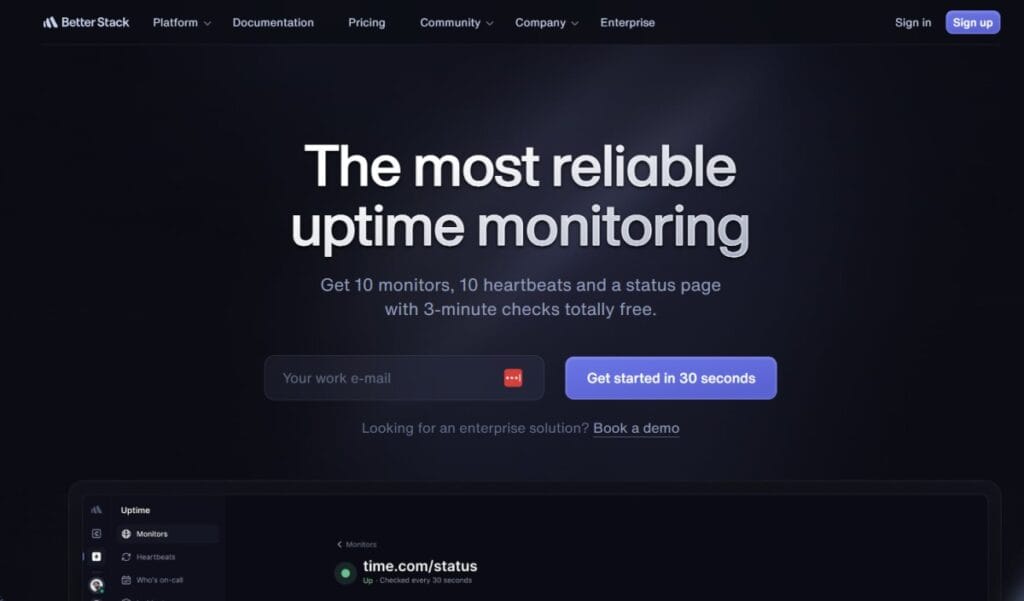
Better Stack: Known for offering full-stack observability with a focus on simplicity and fast onboarding. It combines uptime monitoring, logs, metrics, and tracing in a fully managed SaaS platform that is easy to adopt and operate, especially for small and growing teams.
Multi-Agent Support
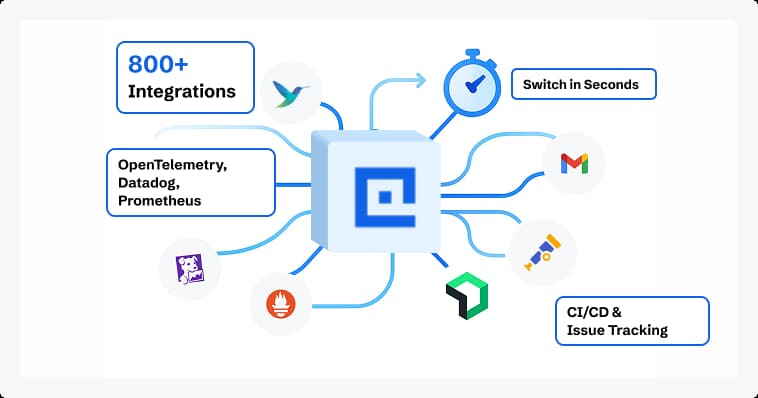
CubeAPM: Supports multi-agent ingestion out of the box. In addition to being OpenTelemetry-native, it works with existing vendor agents such as Datadog and New Relic, as well as Prometheus-based setups. This allows teams to migrate incrementally, reuse existing instrumentation, and ingest telemetry from mixed environments without forcing an agent rewrite.
Sentry: Supports OpenTelemetry for tracing through its SDKs and OpenTelemetry-compatible instrumentation. This enables teams to use OpenTelemetry to capture application traces and performance data while continuing to rely on Sentry’s error tracking and release monitoring workflows.
Better Stack: Supports OpenTelemetry through the OpenTelemetry Collector and compatible agents for logs, metrics, and traces. The integration is designed to simplify ingestion and reduce setup complexity, making it practical for teams adopting OpenTelemetry without operating a custom backend.
MELT Support (Metrics, Events, Logs, Traces)
CubeAPM: Provides native MELT support across metrics, events, logs, and traces in a single backend. All signals are ingested through OpenTelemetry and correlated by default, allowing teams to move from a metric anomaly to related traces and logs without switching tools. This unified model is commonly used by SRE and platform teams that need consistent visibility across applications, infrastructure, and user-facing services.
Sentry: Supports full MELT signals with a strong emphasis on traces and events derived from application errors and performance data. Metrics and logs are available in the context of application monitoring, enabling developers to connect errors and transactions with relevant telemetry during debugging and release analysis.
Better Stack: Supports full MELT signals by combining logs, metrics, traces, and uptime data within a single SaaS platform. The integration is designed to keep observability workflows simple, offering sufficient coverage for end-to-end monitoring while prioritizing ease of use over advanced signal correlation.
Deployment Options
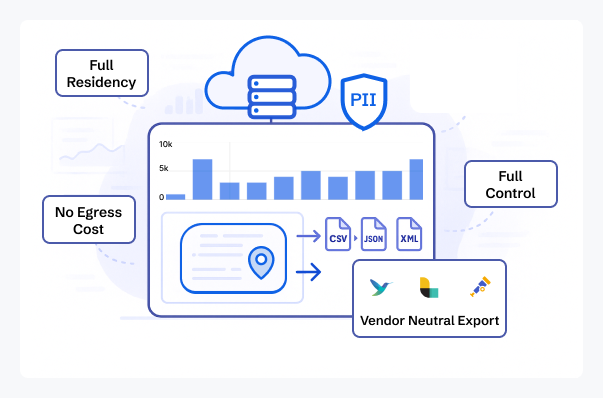
CubeAPM: Deployed inside the customer’s own cloud or VPC and operated in a managed, SaaS-like manner. This allows teams to keep all telemetry data within their infrastructure, enforcing privacy and security while avoiding the operational overhead of fully self-managed observability stacks. It is commonly used by teams with data residency, security, or compliance requirements that still want a streamlined operational experience.
Sentry: Delivers both SaaS and self-hosted options. The cloud option prioritizes ease of use and rapid onboarding, while the self-hosted option provides greater control over data location, with teams responsible for scaling, upgrades, and maintenance.
Better Stack: Delivered as a fully managed SaaS platform. Telemetry data is sent from the customer’s cloud to Better Stack–managed infrastructure, which simplifies setup and operations. However, because data leaves the customer’s cloud environment, teams may still incur outbound data transfer costs charged by their cloud provider, such as AWS, depending on telemetry volume.
Pricing: Approximate Cost for Small, Mid-Sized & Large Teams
*All pricing comparisons are calculated using standardized Small/Medium/Large team profiles defined in our internal benchmarking sheet, based on fixed log, metrics, trace, and retention assumptions. Actual pricing may vary by usage, region, and plan structure. Please confirm current pricing with each vendor.
*An APM host is a host that is actively generating trace data, and an Infra host is any physical or virtual OS instance that you monitor with any observability tool.
Below is a cost comparison for small, mid-sized, and large teams.
| Approx. Cost for Teams | Small (~30 APM Hosts) | Mid-sized (~125 APM Hosts) | Large (~250 APM Hosts) |
| CubeAPM | $2,080 | $7,200 | $15,200 |
| Sentry | $3,560 | $12,100 | $32,400 |
| Better Stack | $5,723 | $20,550 | $43,350 |
Based on these estimates, mid-sized teams using CubeAPM see approximately 40% lower costs compared to Sentry and around 65% lower costs compared to Better Stack, assuming similar telemetry volume and retention requirements.
CubeAPM: Cost for Small, Medium, and Large Teams
CubeAPM prices observability based on how much telemetry data your systems generate, rather than charging per user, per host, or per feature. This approach ties cost directly to real system activity and avoids sudden pricing jumps as teams add services, environments, or engineers.
The pricing model is straightforward:
- $0.15 per GB of telemetry ingested across logs, metrics, and traces
Because pricing is tied to ingestion volume, teams can scale monitoring coverage without renegotiating plans or unlocking higher tiers.
Using comparable workloads as a baseline, estimated monthly costs are:
- Small teams (~30 APM hosts): $2,080
- Mid-sized teams (~125 APM hosts): $7,200
- Large teams (~250 APM hosts): $15,200
These estimates assume similar telemetry volume and retention needs across environments. Actual costs may vary based on ingestion patterns, traffic levels, and system architecture.
Sentry: Cost for Small, Medium, and Large Teams
Sentry pricing is based on tiered plans with bundled usage allowances, with costs increasing as event volume, traces, and performance data grow beyond included limits.
Sentry’s paid plans start at:
- Team plan: $26 per month
- Business plan: $80 per month
Using comparable workloads as a baseline, estimated monthly costs are:
- Small teams (~30 APM hosts): $3,560
- Mid-sized teams (~125 APM hosts): $12,100
- Large teams (~250 APM hosts): $32,400
These estimates assume production workloads that exceed base plan allowances and require additional event and trace capacity. Actual pricing may vary based on usage patterns, plan tier, and retention lookback settings.
Better Stack: Cost for Small, Medium, and Large Teams
Better Stack pricing is built around a SaaS-based model with bundled plans and usage-based charges for logs, traces, and metrics. The platform offers a free tier for personal projects, followed by paid plans that unlock broader monitoring capabilities, incident management, and higher telemetry limits.
Paid plans start at a fixed monthly base price, with telemetry usage charged separately:
- Entry-paid plans start at $29 per month
- Logs and traces: $0.10 per GB ingestion and $0.05 per GB per month retention
Using comparable workloads as a baseline, estimated monthly costs are
- Small teams (~30 APM hosts): $5,723
- Mid-sized teams (~125 APM hosts): $20,550
- Large teams (~250 APM hosts): $43,350
These estimates assume production workloads that exceed free and base plan allowances and require additional log ingestion and retention. Actual costs may vary based on telemetry volume, retention configuration, selected plans, and potential cloud data egress charges when sending data outside the customer’s cloud environment.
Sampling Strategy
CubeAPM: Uses context-aware smart sampling that evaluates traces after sufficient runtime context is available. Sampling decisions prioritize errors, high latency, and anomalous behavior while aggressively reducing low-value, repetitive traffic. This allows teams to retain critical traces during incidents while keeping ingestion volume predictable as systems scale.
Sentry: Uses head-based sampling with dynamic sampling rules. Sampling decisions are made at ingest time, but sampling rates can be dynamically adjusted based on attributes such as environment, transaction name, release, or service. This allows teams to control volume early while prioritizing higher-value application traces.
Better Stack: Supports multiple sampling approaches depending on the telemetry type and setup. For logs, Better Stack provides configurable log sampling to reduce ingestion volume by filtering or sampling events before storage. For traces, Better Stack supports both head-based and tail-based sampling through OpenTelemetry, allowing teams to choose between early sampling for cost control or tail-based sampling for higher-fidelity traces based on execution outcomes.
Data Retention

CubeAPM: Offers unlimited data retention across logs, metrics, and traces. Telemetry data is stored within the customer’s own cloud or VPC, allowing teams to retain historical data for audits, long-term trend analysis, incident reviews, and compliance needs without additional retention-based charges.
Sentry: Applies data retention limits based on plan tier and data type. Retention periods vary across errors, logs, transactions, session replays, and other telemetry, with typical limits ranging from 30 to 90 days depending on the plan. Longer-term access may be available in sampled or aggregated form, but full-fidelity data retention is constrained by plan-defined windows.
Better Stack: Offers limited data retention by default. All bundles include 30 days of log retention and up to 13 months of metrics retention, with shorter retention windows applied at lower tiers. Extended retention is available through higher plans or add-ons. Better Stack also offers a 60-day money-back guarantee on paid plans.
Support Channels and Response Time (TAT)
CubeAPM: Provides direct support through Slack, email, and in-app communication. Based on CubeAPM support commitments and customer experience, response times are typically under 10 minutes, allowing teams to get real-time help during active incidents and troubleshooting scenarios.
Sentry: Offers support primarily through email-based ticketing, along with community support via Discord and GitHub. While Sentry provides extensive documentation and active community channels, it does not publicly document guaranteed response times for support tickets, and response speed may vary.
Better Stack: Provides support through email and Slack, alongside detailed documentation and community resources. Better Stack does not publicly specify response time guarantees in its documentation, and support responsiveness may depend on the selected plan and support tier.
How Teams Evaluate These Platforms at Scale
When teams compare tools like Sentry, Better Stack, and CubeAPM, the evaluation usually shifts as systems grow. Early decisions are often driven by ease of setup and immediate visibility, while later-stage evaluations prioritize cost predictability, retention requirements, and operational control.
In practice, teams managing higher telemetry volumes tend to focus on how pricing scales with ingestion, whether retention can be adjusted without cost spikes, and how much control they retain over observability pipelines. Platforms designed around predictable ingestion-based pricing and flexible deployment models are often favored in these scenarios, particularly when observability spend becomes a recurring governance concern rather than a one-time tooling decision.
Sentry vs Better Stack vs CubeAPM: Use Cases
Choose CubeAPM if
- You want full-stack observability with predictable costs as telemetry volume grows
- You need unlimited or long-term data retention for audits, trend analysis, or post-incident reviews
- You require observability deployed inside your own cloud or VPC for data residency or compliance
- You are standardizing on OpenTelemetry for logs, metrics, and traces across services
- You operate Kubernetes, microservices, or distributed systems and need strong signal correlation to reduce MTTR
Choose Sentry if
- Your primary focus is application error tracking and performance debugging
- You want deep visibility into exceptions, transactions, and release regressions
- You are a developer-heavy team working on backend, frontend, or mobile applications
- You prefer SDK-based instrumentation tightly integrated with development workflows
- You are comfortable with plan-based retention limits and usage-based scaling
Choose Better Stack if
- You want a SaaS-based observability platform with fast setup
- You are a startup or small team prioritizing ease of use over deep customization
- You need full-stack monitoring, uptime checks, and incident alerts in one tool
- You prefer bundled plans with predefined retention and usage limits
Choosing the Right Platform Based on Scope and Scale
Each of these platforms serves a distinct purpose. Sentry remains well-suited for teams focused on application error tracking and developer debugging. Better Stack fits teams prioritizing uptime monitoring and lightweight observability with minimal setup. CubeAPM is typically evaluated by teams looking to consolidate full-stack observability—across logs, metrics, traces, and retention while maintaining predictable costs and greater control as telemetry volume grows.
The right choice depends less on feature checklists and more on how observability requirements evolve over time. Teams assessing long-term cost behavior, retention needs, and operational ownership should evaluate platforms based on how well they align with scale, architecture, and governance expectations.
Disclaimer: The information in this article reflects the latest details available at the time of publication and may change as technologies and products evolve.
FAQs
1. What is the main difference between Sentry, Better Stack, and CubeAPM?
The main difference lies in data retention, deployment flexibility, and cost behavior at scale. Sentry focuses on application error tracking and performance. Better Stack emphasizes simple SaaS-based monitoring with limited retention and SaaS-only deployment, while CubeAPM is built for full-stack observability with unlimited retention and predictable pricing as telemetry grows.
2. Which tool is best for full-stack observability?
All three tools support full-stack observability, but they approach it differently. Sentry is strongest at the application layer, Better Stack provides lightweight end-to-end monitoring, and CubeAPM is designed for deep correlation across applications, infrastructure, logs, metrics, and traces in a single platform.
3. How do Sentry, Better Stack, and CubeAPM compare on pricing?
Sentry and Better Stack use plan-based pricing with usage limits, which can increase as data volume and teams grow. CubeAPM uses ingestion-based pricing across all telemetry types, making costs more predictable as observability usage scales.
4. Can Sentry, Better Stack, and CubeAPM be used with OpenTelemetry?
Yes. Sentry supports OpenTelemetry for tracing through its SDKs, Better Stack supports OpenTelemetry via the OpenTelemetry Collector, and CubeAPM is OpenTelemetry-native, ingesting logs, metrics, and traces through a unified OpenTelemetry pipeline.
5. Which tool is better for teams with compliance or data residency requirements?
CubeAPM is generally better suited for teams with strict compliance or data residency needs because it can be deployed inside the customer’s own cloud or VPC with unlimited retention. Sentry offers self-hosting as an option, while Better Stack is SaaS-only and stores data in vendor-managed infrastructure.