









The main difference between Grafana, Sentry, and CubeAPM is scope and simplicity. Grafana focuses on visualization and dashboarding, Sentry specializes in error and performance tracking, while CubeAPM delivers complete MELT observability and predictable pricing.
As systems become more distributed, teams using Grafana or Sentry often need to operate multiple purpose-built backends, and cost models that can become harder to manage as usage grows.
CubeAPM solves these challenges with an OpenTelemetry-based, self-hostable observability stack that ensures end-to-end visibility, unlimited retention, and strict data localization compliance. It combines APM, logs, infra, RUM, and synthetic monitoring in one lightweight platform.
Grafana vs Sentry vs CubeAPM — Comparison Table
| Features | CubeAPM | Grafana | Sentry |
| Known For | Unified OpenTelemetry-native full-stack observability platform. | Modular observability platform centered on visualization. | Developer-focused platform for error tracking and APM. |
| Multi-Agent Support | Yes (OTel, New Relic, Datadog, Elastic) | Partial(Not full multi-agent) | Limited (Only OTel via SDKs) |
| MELT Support | Full MELT coverage | Full MELT coverage | Full MELT coverage |
| Setup | Self-hosted but vendor-managed | SaaS & Self-hosted | SaaS & Self-hosted |
| Pricing | Ingestion-based: $0.15/GB | Pro Plan: $19/month Logs: $0.50/GB Traces: $0.50/GB APM: $0.04/host/hour | Team: $26/month Business: $80/month |
| Sampling Strategy | Smart sampling | Tail + Head-based sampling | Head-based sampling |
| Log Retention | Infinite Retention (no extra cost) | Free Plan: 15-day Pro Plan: 30-day | Developer: 30 days Team: 30 days Business: 90 days |
| Support TAT | Within minutes | 2hrs–6hrs | hrs to days |
Grafana vs Sentry vs CubeAPM: Feature-by-Feature Breakdown
Multi-Agent Support
CubeAPM: Supports multiple agents out of the box, including OpenTelemetry, Datadog, New Relic, Elastic, and Prometheus. For logs, it works with common collectors and processors such as Logstash, Fluentd/Fluent Bit, and Filebeat, making it suitable for hybrid setups and gradual migrations to an OpenTelemetry-native stack.
Grafana: Supports multi-agent ingestion through Grafana Agent and Grafana Alloy, both built on the OpenTelemetry Collector. They can receive telemetry from multiple formats and protocols (for example, OTLP, Prometheus, Jaeger, and Zipkin), allowing teams to standardize collection across diverse environments.
Sentry: Sentry supports multiple SDKs across languages and frameworks, enabling parallel instrumentation across services. It also supports ingesting OpenTelemetry data, which helps teams combine native Sentry SDKs with OpenTelemetry-based instrumentation during transitions.
MELT Support (Metrics, Events, Logs, Traces)
CubeAPM: CubeAPM delivers complete MELT coverage natively—metrics, logs, traces, and events unified in one backend. Based on our sales data, customers achieve up to 40 % faster MTTR through cross-correlated telemetry views. Perfect for full-stack observability and hybrid-cloud workloads.
Grafana: Grafana supports MELT only when combined with Loki, Tempo, and Mimir, which increases management overhead. It works best for teams already invested in open-source observability components wanting to visualize all data in Grafana dashboards.
Sentry: Sentry focuses primarily on errors, traces, and release health, offering only limited metric and log correlation. It’s better for frontend or backend app teams to debug performance and exceptions, not for full observability.
Deployment(Self-hosted/On-Prem)
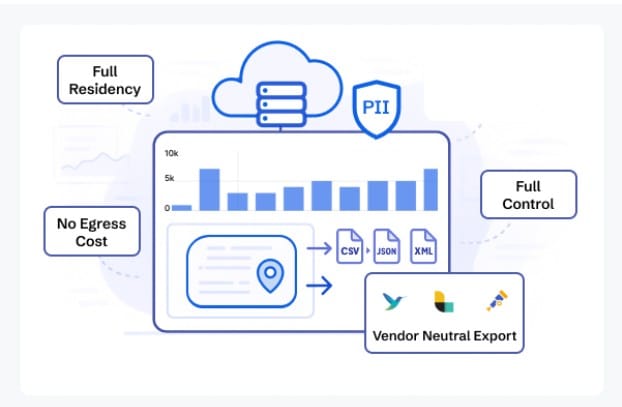
CubeAPM: Runs self-hosted inside your VPC or on-prem, giving teams complete data control while being managed like SaaS — no Day-2 maintenance, scaling, or upgrade overhead. It delivers unlimited retention and predictable pricing, making it ideal for compliance-driven or data-sensitive industries.
Grafana: Offers both cloud and self-hosted LGTM (Loki, Grafana, Tempo, Mimir) setups. While self-hosting keeps telemetry local, it introduces significant operational overhead and limited enterprise support. The cloud version simplifies setup but transfers data custody to Grafana’s infrastructure.
Sentry: Offers both a cloud-based SaaS deployment and a self-hosted option. The SaaS version is designed for quick setup and minimal operational effort, while the self-hosted deployment gives teams more control over their data but requires managing infrastructure, upgrades, and ongoing maintenance
Pricing: Approximate Cost for Small, Medium & Large teams
*Disclaimer: Pricing comparisons are based on standardized Small/Medium/Large team profiles defined in our internal benchmarking sheet. Actual costs may vary by usage, region, and plan. Please verify current pricing with each vendor.
An APM host is a host that is actively generating trace data, and an Infra host is any physical or virtual OS instance that you monitor with any observability tool.
Cost for Small Teams (~30):
- CubeAPM: $2,080
- Grafana: $3,870
- Sentry: $3,560
Cost for Mid-Sized Teams (~125):
- CubeAPM: $7,200
- Grafana: $11,875
- Sentry: $12,100
Cost for Large Teams (~250):
- CubeAPM: $15,200
- Grafana: $26,750
- Sentry: $32,400
CubeAPM: Cost for Small, Medium, and Large Teams
Based on verified vendor pricing data, CubeAPM operates on a simple, all-inclusive model of $0.15 per GB of data ingested — with no extra costs for infrastructure, retention, or user licenses. Whether monitoring logs, metrics, or traces, CubeAPM’s unified pricing ensures predictability and transparency across all telemetry types. Here is a breakdown for large, medium, and small teams:
- Small teams (~ 30): $2,080
- Mid-sized teams (~ 125): $7,200
- Large teams (~250): $15,200
It’s ideal for startups, SaaS platforms, and large enterprises managing multi-terabyte ingestion each month.
Grafana Cloud: Cost for Small, Medium, and Large Teams
Grafana Modular pricing:
- Pro: $19/month
- Logs:$0.50/GB ingested
- Traces: $0.50/GB ingested
Grafana’s modular model provides flexibility for teams running smaller workloads, but costs rise sharply once data volumes grow. It’s most effective for organizations prioritizing visualization, intuitive dashboards, and alerting.
Here is a breakdown of the cost for small, medium, and large teams:
- Small teams (~ 30): $3,870
- Mid-sized teams (~ 125): $11,875
- Large teams (~250): $26,750
Sentry: Cost for Small, Medium, and Large Teams
Sentry uses a tiered pricing
- Free: Developer Plan for Solo Devs with limited features
- Paid: Starts at $26/month, depending on event volume
Sentry’s tiered structure is ideal for developer-centric teams monitoring application errors and release health, but its per-user and per-GB billing makes it expensive at scale compared to CubeAPM’s flat model. Here is a cost breakdown for small, medium, and large teams:
- Small teams (~ 30): $3,560
- Mid-sized teams (~ 125): $12,100
- Large teams (~250): $32,400
Sampling Strategy
CubeAPM: CubeAPM uses Smart Sampling (95 % compression + context-based retention), keeping critical latency/error traces while reducing volume by up to 70 %. Ideal for high-traffic systems or microservices with massive telemetry streams.
Grafana: Supports both head-based and tail-based sampling through the OpenTelemetry Collector (or Grafana Alloy). Head-based sampling makes decisions at the start of a request, while tail-based sampling evaluates complete traces using policies such as errors, latency, or specific attributes before deciding what to retain.
Sentry: Primarily uses head-based sampling, where sampling decisions are made at the start of a request before a full trace is collected. This approach reduces ingestion volume and overhead, but it means traces are selected without full visibility into outcomes such as errors or latency that occur later in the request lifecycle.
Data Retention

CubeAPM: CubeAPM provides unlimited log retention with data stored in the customer’s own cloud—ensuring compliance and eliminating egress cost. Based on our research, long-term retention supports security audits and SLA analytics.
Grafana: Grafana Cloud’s data retention varies by plan. The Free tier includes 14 days of retention for metrics, logs, traces, and profiles, while the Pro plan extends retention to 13 months for metrics and 30 days for logs, traces, profiles, and k6 test data. Enterprise customers can negotiate custom retention periods based on compliance and operational needs.
Sentry: Default data retention depends on the plan and data type. Most data, including logs, spans, profiles, and crons, is retained for 30 days by default, while errors, session replays, uptime data, and attachments can be retained for up to 90 days on higher plans such as Business Plan.
Support TAT
CubeAPM: CubeAPM provides Slack and WhatsApp access to core engineers with response times measured in minutes (based on support logs). Perfect for SRE teams managing mission-critical production workloads.
Grafana: Grafana Cloud support varies by plan. Free users have no SLA, while paid plans offer 24/7 support with response targets such as P1 issues within 2 business hours and P2 within 4 business hours. Enterprise plans provide faster SLAs, with P1 responses as low as 30 minutes and optional live troubleshooting.
Sentry: Sentry offers ticket and email-based support, with higher tiers getting faster responses. Adequate for developer teams resolving exceptions rather than live outages. Sentry typically responds within hours.
Known For
CubeAPM: Known for OpenTelemetry-native full-stack observability, predictable $0.15 / GB pricing, unlimited retention, and BYOC/self-host flexibility. Best for compliance-focused enterprises and cost-conscious DevOps teams.
Grafana: Known for flexible dashboards, strong visualization, and a large open-source observability ecosystem.
Sentry: Known for error tracking and release performance insights across apps and mobile SDKs. Perfect for development teams needing visibility into application health and regressions.
Which Tool Is Best for You? Why Brands Choose CubeAPM
Benefits of Choosing CubeAPM
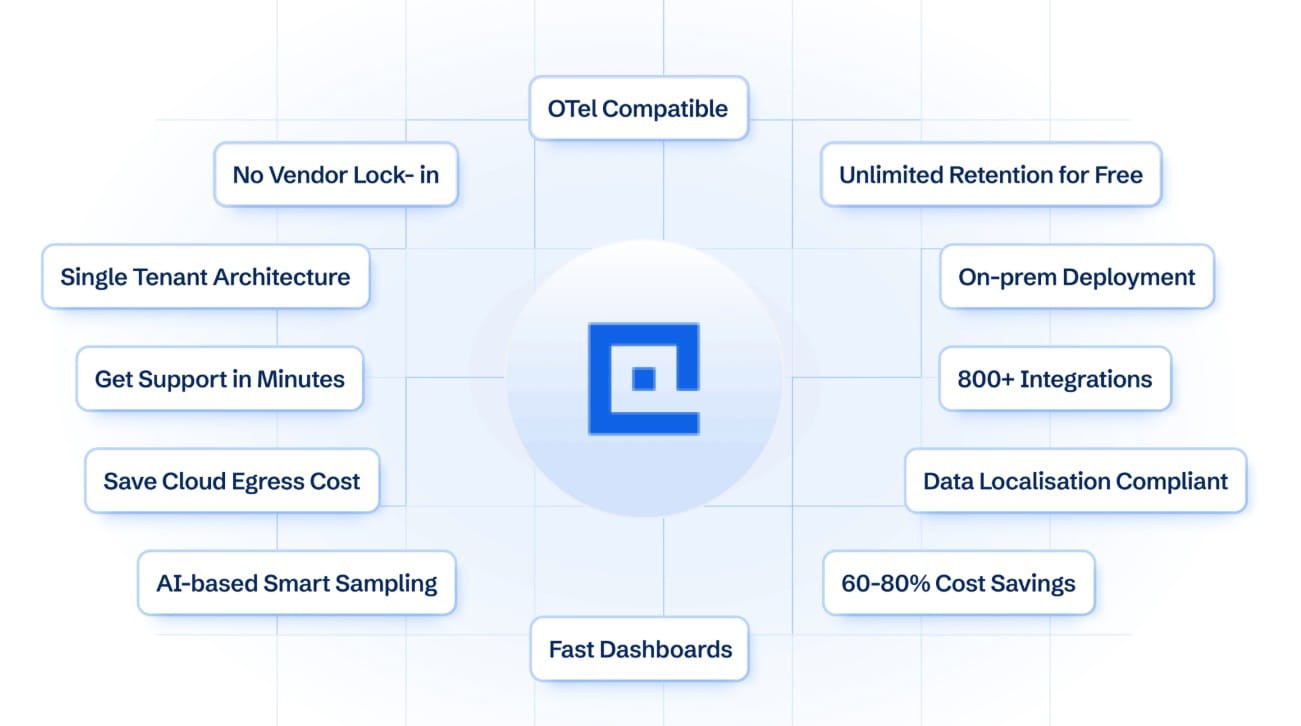
- Full Data Sovereignty: All telemetry stays within your cloud for complete compliance with, and regional data-residency laws.
- Unified MELT Visibility: One backend for Metrics, Events, Logs, and Traces, eliminating tool sprawl and context switching.
- Predictable Price: Flat ingestion pricing across all telemetry types—no per-user or per-feature licensing.
- Unlimited Retention: Keep historical logs and traces forever without paying per-GB storage premiums.
- Smart Sampling Efficiency: 95 % compression while retaining critical anomaly data—optimized performance with lower cost.
- Multi-agent compatibility: Natively compatible with OpenTelemetry, Prometheus, Datadog, and New Relic agents, which makes migration from existing tools to CubeAPM super easy.
- API access: Access all your data via APIs without any additional cost.
- Real-Time Support: Slack and WhatsApp access to core engineers with minute-level response times.
CubeAPM is best for teams that need unified observability without hidden costs or vendor lock-in.
It delivers end-to-end MELT coverage — Metrics, Events, Logs, and Traces — with OpenTelemetry-native ingestion, unlimited retention, and BYOC/self-hosting for compliance. SRE and DevOps teams use it to monitor cloud, Kubernetes, and microservices workloads while reducing total observability spend by up to 80 %.
Grafana vs Sentry vs CubeAPM: Use Cases
Choose CubeAPM if
- You want full-stack observability across metrics, logs, events, and traces
- OpenTelemetry-native ingestion is a core requirement
- Predictable, ingestion-based pricing matters as you scale
- You want a unified platform instead of managing multiple tools
- Ease of setup and low operational overhead are important
Choose Grafana if
- You need advanced, customizable dashboards and visualizations
- You prefer an open-source–first observability ecosystem
- You want flexibility to mix self-hosted and cloud components
- Your team is comfortable managing multiple observability services
- Visualization and data exploration are higher priorities
Choose Sentry if
- Error tracking is your primary observability requirement
- You want fast issue detection and developer-friendly debugging
- Application performance insights matter more than infrastructure metrics
- You prefer a SaaS-first experience with optional self-hosting
- Your focus is on improving code quality and release stability
Conclusion
Grafana and Sentry each serve distinct roles in the observability stack — Grafana for visualization and dashboards, Sentry for error tracking and application performance.
CubeAPM, on the other hand, provides a complete MELT (Metrics, Events, Logs, Traces) observability platform built on OpenTelemetry with self-host or BYOC deployment, unlimited retention, and predictable $0.15/GB pricing. Teams migrating from Grafana Cloud and Sentry typically cut observability while gaining faster MTTR, unified data correlation, and compliance-ready hosting.
If your goal is full-stack observability, compliance adherence, and transparent cost scaling, CubeAPM stands out as the most complete and future-proof choice for startups and enterprises alike.
Disclaimer: The information in this article reflects the latest details available at the time of publication and may change as technologies and products evolve.
FAQs
1. Which tool offers full-stack observability — Grafana, Sentry, or CubeAPM?
CubeAPM delivers full MELT observability in a single platform. Grafana requires Loki, Tempo, and Mimir for similar coverage. Sentry also provides full MELT coverage, with telemetry tightly tied to application errors.
2. What’s the key pricing difference between Grafana, Sentry, and CubeAPM?
Based on verified vendor pricing data, CubeAPM charges $0.15/GB with no per-user or host costs. Grafana Cloud tiers start at $19/user/month and charge separately for logs, metrics, and traces. Sentry begins at $26/user/month plus $0.50/GB for logs, which can scale quickly.
3. Can these tools be self-hosted?
CubeAPM offers BYOC/self-host options but vendor-managed, removing the operational overhead and ensuring full data localization. Grafana can be self-hosted using open-source components, but requires complex management. Sentry self-hosting is possible but adds operational overhead.
4. Which is better for developers — Grafana or Sentry?
Sentry is better for developers tracking exceptions, crashes, and app-level performance, while Grafana is better for DevOps teams visualizing metrics and infrastructure data.
5. Why do enterprises choose CubeAPM over Grafana or Sentry?
Enterprises prefer CubeAPM for its OpenTelemetry-native ingestion, unlimited retention, data localization compliance, and minute-level Slack/WhatsApp support. It unifies all observability layers under one transparent cost model.