










Checkly is well-known for its monitoring-as-code model, offering synthetic API and browser checks, Playwright/Puppeteer scripting, and global uptime coverage. However, users have raised concerns over the steep learning curve and rigid pricing model.
CubeAPM is the best alternative to Checkly. It features full MELT (Metrics, Events, Logs, Traces), OpenTelemetry-native ingestion, and smart sampling that cuts data costs without losing critical insights. tools.
In this guide, we’ll break down why teams move away from Checkly, the criteria for picking an alternative, and a detailed look at top options.
Top 7 Checkly Alternatives in 2025
- CubeAPM
- Datadog
- Netdata
- Coralogix
- Atatus
- Dynatrace
- New Relic
Why Look for Checkly Alternatives?
1. Pricing Rigidity as Usage Grows
Checkly’s pricing tiers work well for small teams, but some users find them rigid as monitoring needs expand. As check frequency, locations, or synthetic coverage increase, teams may feel constrained by plan boundaries rather than paying purely for what they use.
“The pricing tiers can feel a bit rigid—especially for growing teams that fall between the limits of Starter and Team plans” (G2 Review)
2. Steep Learning Curve for Monitoring-as-code
Checkly’s Playwright-based approach is powerful, but it requires teams to be comfortable writing and maintaining tests in code. For teams new to JavaScript, TypeScript, or test automation, this can slow adoption and increase setup time compared to more UI-driven tools.
“Also, while the Playwright integration is great, the learning curve can be steep for teams new to writing tests in code” (G2 Review)
3. Limited Depth in Advanced Documentation
While Checkly’s documentation covers core use cases well, some advanced features lack detailed explanations or real-world examples. Areas such as complex alerting logic can feel under-documented, requiring additional experimentation or support to implement correctly.
“Some advanced features could use more in-depth documentation or examples.” (G2 Review)
Criteria for Suggesting Checkly Alternatives
When evaluating which tools make strong alternatives to Checkly, we focused on criteria that matter most to engineering and SRE teams scaling modern applications.
1. Full MELT Support
A true alternative should include APM, distributed tracing, logs, metrics, and infrastructure monitoring. This ensures that once issues are detected, teams can drill into root causes without juggling multiple tools.
2. OpenTelemetry (OTEL) Support
As OTEL becomes the industry standard, a viable alternative should be OpenTelemetry-native, ensuring vendor neutrality, future-proof instrumentation, and seamless data collection across diverse workloads.
3. Integration Ecosystem
With more than 800+ common services and frameworks in use across modern stacks, a viable alternative must integrate seamlessly with cloud platforms (AWS, GCP, Azure), container environments (Kubernetes, Docker), databases, CI/CD pipelines, and collaboration tools. This reduces friction and avoids vendor lock-in.
4. Support and Time to Resolution
Fast, reliable support is critical when outages occur. Alternatives with real-time support channels (Slack, WhatsApp, etc.) and engineering-level response times provide greater assurance compared to traditional ticketing queues.
Checkly Overview
Known For
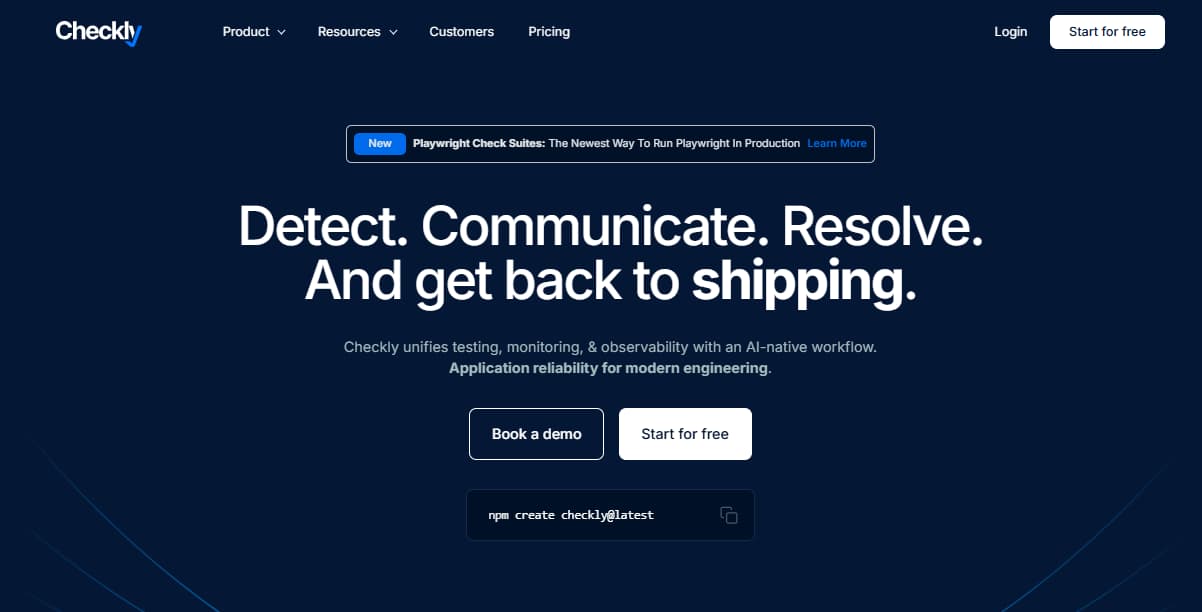
A developer-friendly synthetic monitoring and uptime platform—popular for its monitoring-as-code model, browser and API checks powered by Playwright/Puppeteer, and global test locations that help teams validate reliability across regions.
Standout Features
- Monitoring-as-Code for versioning checks in CI/CD workflows
- Scripted browser and API checks with retries and multi-region coverage
- Private locations for secure, behind-firewall monitoring
- Flexible uptime monitors with configurable intervals as low as 30 seconds on higher tiers
Key Features
- Browser and API checks with transparent overage pricing
- Global monitoring locations with parallel or round-robin scheduling
- Configurable retry logic to reduce false alarms
- Retention tiers with a longer history on enterprise plans
- CI/CD pipeline integration to block deployments on failed checks
Pros
- Easy to set up and intuitive for synthetic monitoring
- Strong developer experience with monitoring-as-code
- Global coverage with reliable uptime checks
Cons
- Costs scale sharply with retries, frequency, and multi-region runs
- Users have reported pricing rigidity
- Steep learning curve to use advanced features
Best For
Engineering teams, startups, and SaaS providers that primarily need synthetic and API/browser monitoring with strong developer workflows, but not full APM or infrastructure observability.
Pricing & Customer Reviews
- Hobby: $0, includes 10 uptime monitors, 1k browser runs, 10k API runs
- Starter: $24/month, 1-minute frequency, more monitors and runs
- Team: $64/month, 30-second checks, 22 locations, 12k browser + 100k API runs included
- Enterprise: Custom pricing with private locations and advanced support
- Rating: 4.5/5 on G2.
- Praised for its ease of use, developer-first design, and reliable synthetics, but criticized for rapid cost growth at scale.
Top 7 Checkly Alternatives
1. CubeAPM
Known For
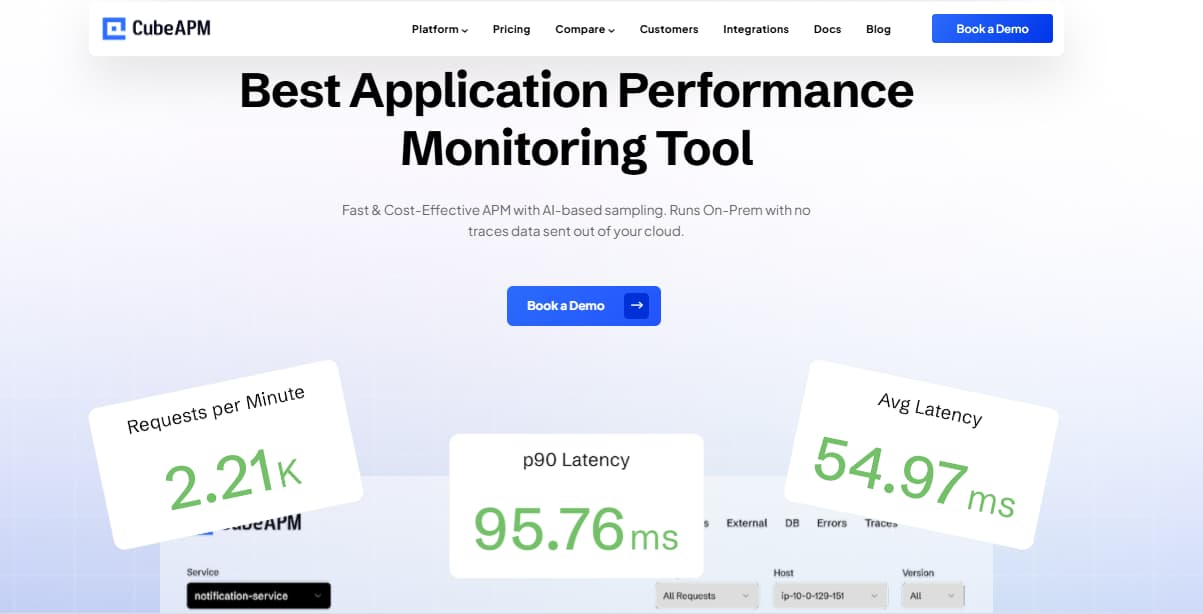
CubeAPM is known as a modern OpenTelemetry-native observability platform that delivers full MELT (Metrics, Events, Logs, Traces) coverage. It unifies application performance monitoring, infrastructure visibility, and user experience insights in one solution.
Key Features
- Full MELT stack, error tracking, and synthetics in a single platform
- Smart sampling that preserves anomalies while reducing storage costs
- Data localization for compliance
- 800+ Integrations
Standout Features
- Unlimited retention at no extra cost
- Real-time Slack/WhatsApp support with sub-5-minute response times
- Compatibility with Prometheus, Datadog, and New Relic agents
Pros
- Predictable, transparent pricing
- OTel-native and vendor-neutral
- Self-hosting and BYOC options for compliance
- Wide integration ecosystem
Cons
- Not suited for teams looking for off-prem solutions
- Strictly an observability platform and does not support cloud security management
Best For
Mid-sized to large organizations that want affordable, compliance-ready full observability with predictable costs and enterprise-grade support.
Pricing & Customer Reviews
- Pricing: Flat pricing of $0.15/GB ingestion
- Reviews: 4.8/5(Based on end-user feedback on slack)
CubeAPM vs Checkly
Checkly excels at synthetic monitoring and monitoring-as-code, making it a strong choice for teams that want to proactively test APIs and user journeys using Playwright. CubeAPM, in contrast, focuses on full-stack observability across metrics, logs, and traces with OpenTelemetry-native ingestion and predictable usage-based pricing. This makes CubeAPM best for teams looking to monitor, troubleshoot, and scale production systems without being constrained by test-centric workflows.
2. Datadog
Known For
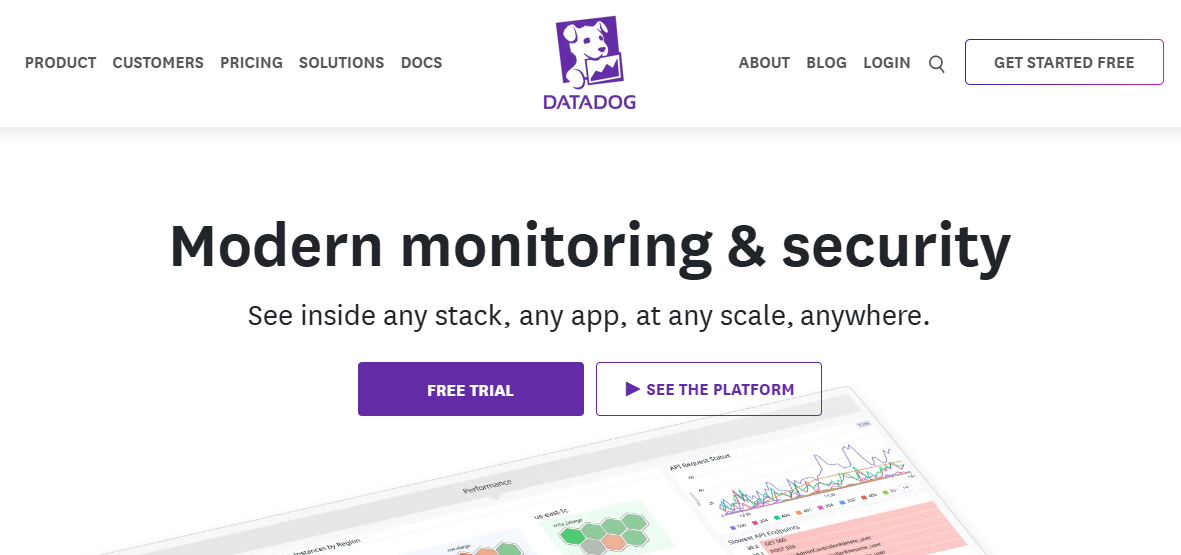
Datadog is known as a comprehensive SaaS observability and security platform used globally by enterprises to monitor applications, infrastructure, logs, and user experience. It offers one of the broadest feature sets in the market, spanning APM, infrastructure monitoring, RUM, synthetics, and cloud security.
Key Features
- Infrastructure monitoring, metrics, logs, APM, synthetics, RUM, and security in one platform
- 900+ integrations across cloud, CI/CD, and DevOps stacks
- Machine learning–powered anomaly detection and forecasting
- Custom dashboards and advanced visualization options
Standout Features
- Deep APM and distributed tracing with service maps
- End-to-end SaaS model with global scale
- Large ecosystem of integrations and extensions
Pros
- Comprehensive all-in-one observability stack
- Scales to complex, enterprise-grade environments
- Strong visualization and alerting capabilities
Cons
- High cost at scale due to host-based and usage-based billing
- Steeper learning curve for small to mid-sized teams
- Overwhelming UI for new users
Best For
Enterprises that need a feature-rich, cloud-based observability solution and can absorb higher costs for its breadth of coverage.
Pricing & Customer Reviews
- APM (Pro Plan): starting at $35/host/month
- Infra Monitoring (Pro Plan): starting at $15/host/month
- Rating: 4.4/5 on G2; praised for its broad capabilities but often criticized for expensive, unpredictable billing
Datadog vs Checkly
Datadog offers a broad observability platform that covers infrastructure monitoring, APM, logs, and real user monitoring, making it suitable for teams that need end-to-end visibility into production systems. Checkly, by comparison, focuses on synthetic monitoring and code-driven API and browser checks.
3. Netdata
Known For
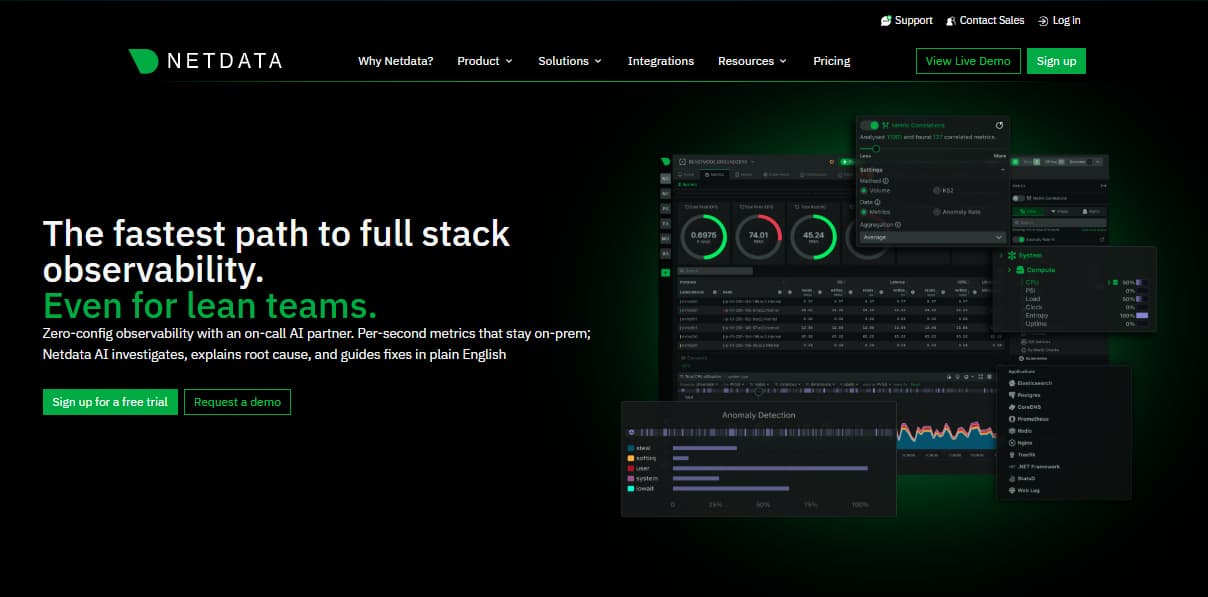
Netdata is known as a real-time, open-source monitoring platform optimized for high-resolution metrics and anomaly detection. It is widely used for system and infrastructure monitoring due to its lightweight agents and out-of-the-box dashboards. Developers and sysadmins value it for its speed and visual depth, though it lacks full APM and synthetic testing.
Key Features
- Per-second metrics collection with automatic anomaly detection
- Preconfigured dashboards for servers, containers, and applications
- Thousands of prebuilt integrations for databases and OS-level metrics
- Lightweight agent deployable across clusters
Standout Features
- Real-time, high-granularity metrics at scale
- No additional cost for open-source deployments
- Designed for minimal resource usage
Pros
- Free and open-source for most use cases
- Lightweight and efficient
- Excellent for infrastructure and system metrics
Cons
- Limited monitoring capabilities and integrations for Windows environments
- Limited historical data retention, hindering long-term analysis
- Steep learning curve, especially for beginners
- Users have raised concerns over higher resource usage that requires powerful Linux systems
Best For
Organizations seeking real-time infrastructure monitoring with low overhead, especially for Linux servers and containerized workloads.
Pricing & Customer Reviews
- Community: Free tier
- Homelab: $90/year per space — unlimited metrics & dashboards; limited to non-professional use
- Business: $4.50 per node/month — includes logs, metrics, alerts, dashboards, config management
- Enterprise (On-Premise): Starts at 200 node licenses — custom support & SLA, data isolation
- Rating: 4.5/5 on G2; praised for speed and visibility, though some cite a steep learning curve
Netdata vs Checkly
Netdata specializes in real-time infrastructure and application performance monitoring with fine-grained metrics and visualizations, helping teams detect performance issues across servers, containers, and services. Checkly, by contrast, focuses on synthetic monitoring and code-driven uptime/API/browser checks to validate application reliability from the outside in. While Netdata is often chosen for deep metrics and real-time performance insights, Checkly is centered on proactive testing of APIs and user journeys.
4. Coralogix
Known For
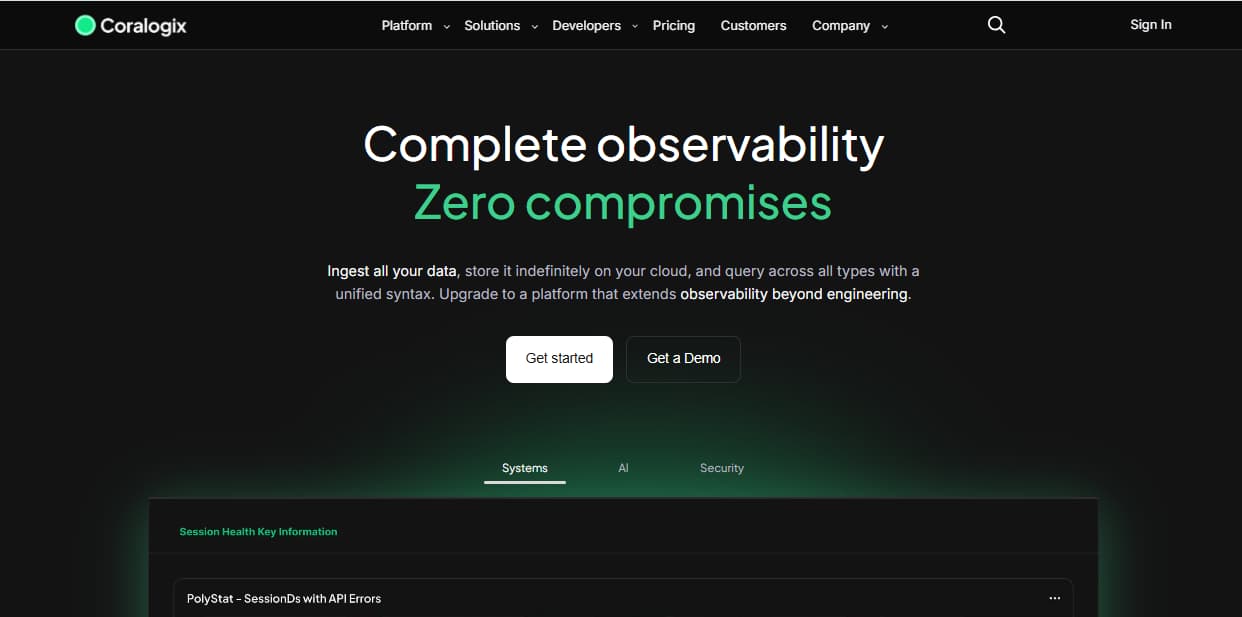
Coralogix is known as a full-stack observability platform that optimizes telemetry storage and costs through its unique Streama architecture. It is adopted by teams seeking cost control for logs, metrics, and traces without sacrificing search and alerting.
Key Features
- Logs, metrics, and traces unified in one platform
- Streama architecture for prioritizing log storage (high, medium, low)
- Events2Metrics to turn log events into time-series metrics
- Archive telemetry to customer-owned cloud storage
Standout Features
- Cost reduction of 40–70% with Streama tiering
- BYOC archival that minimizes SaaS storage costs
- In-stream alerting before indexing for faster detection
Pros
- Strong log analytics with optimization for cost
- Flexible storage and retention models
- Powerful anomaly detection and clustering
Cons
- Steep learning curve
- Overwhelming UI that makes navigation a challenge
Best For
Enterprises needing cost-optimized log analytics and observability with flexible storage strategies.
Pricing & Customer Reviews
- Logs: $0.42/GB
- Traces: $0.16/GB
- Metrics: $0.05/GB
- AI: $1.5 per 1M tokens
- Rating: 4.6/5 on G2; praised for cost savings and log analysis features, with some concerns about setup complexity
Coralogix vs Checkly
Coralogix delivers a scalable observability platform focused on logs, metrics, and traces with advanced analytics and automated insights, helping teams understand and troubleshoot complex production issues. Checkly, in contrast, emphasizes synthetic monitoring and code-based uptime/API/browser checks to validate application reliability. While Coralogix is typically chosen for deep observability and data-driven investigation across systems, Checkly is centered on proactive testing of endpoints and user flows.
5. Atatus
Known For
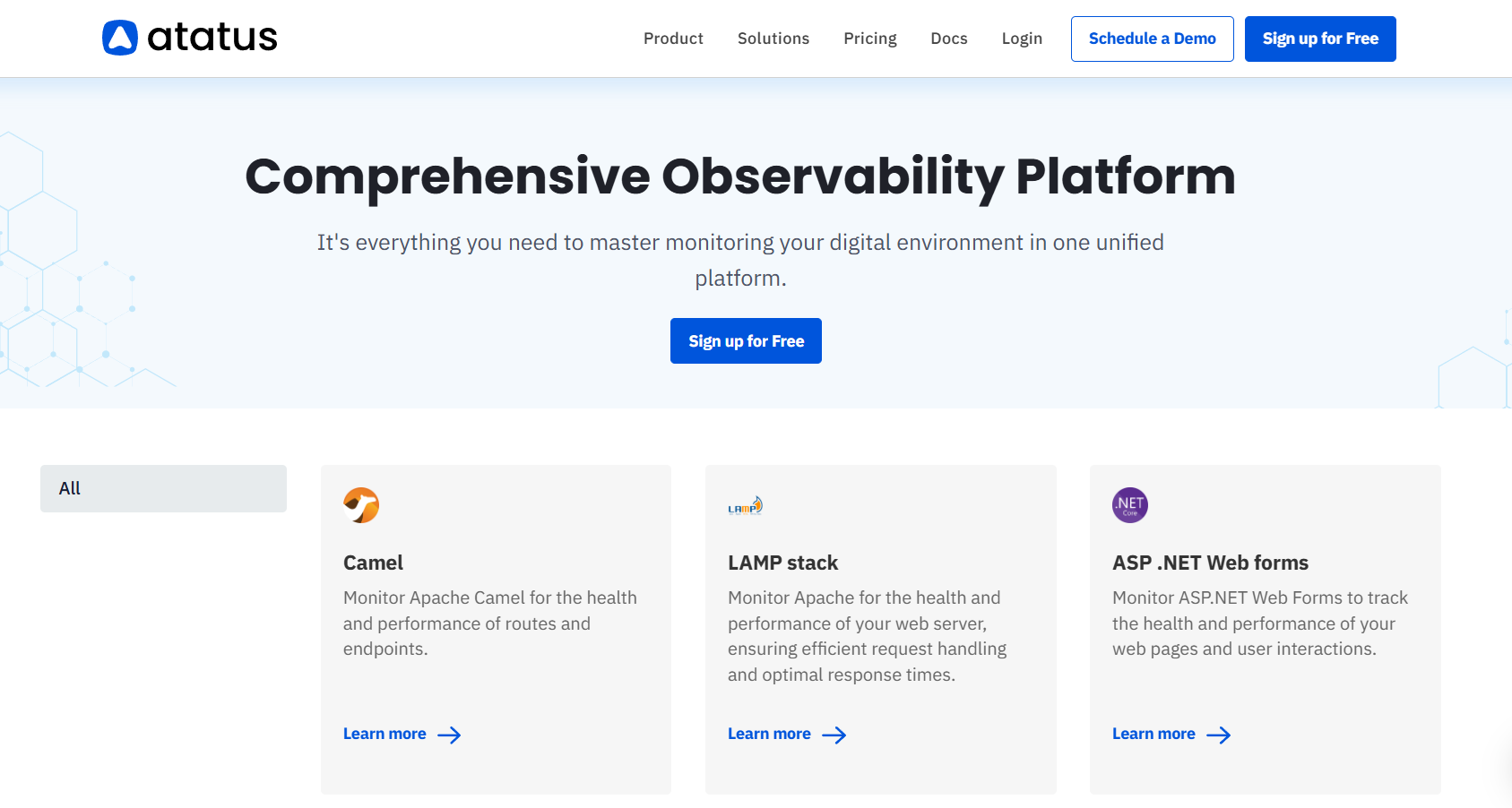
Atatus is known as an all-in-one monitoring solution that covers APM, logs, infrastructure, RUM, and synthetics. It is popular with mid-market companies looking for simpler pricing and dashboards than legacy providers. Atatus positions itself as a developer-friendly platform with straightforward onboarding.
Key Features
- Application performance monitoring and distributed tracing
- Log management with search and alerting
- Real user monitoring for frontend performance
- Infrastructure monitoring and uptime checks
Standout Features
- Unified dashboard across APM, logs, and RUM
- Lightweight setup and agent-based deployment
- Competitive pricing compared to incumbents
Pros
- Affordable and simpler pricing than larger vendors
- Covers most observability needs in one platform
- Good usability for smaller engineering teams
Cons
- Less scalable than top-tier enterprise platforms
- Smaller ecosystem of integrations
- Limited advanced features compared to Datadog or Dynatrace
Best For
Small to mid-sized businesses seeking affordable, full-stack observability without the overhead of heavy enterprise tools.
Pricing & Customer Reviews
- APM (Application Performance Monitoring): $0.07 per host hour/month
- RUM (Real User Monitoring): $1.96 per 10K views/month
- Infrastructure Monitoring: $0.021 per host hour/month
- Rating: 4.7/5 on G2; praised for affordability and ease of use, with some noting fewer enterprise features
Atatus vs Checkly
Checkly is purpose-built for synthetic monitoring, excelling in scripted browser and API checks with developer-friendly workflows. Atatus, on the other hand, provides a broader observability platform that includes APM, log management, real user monitoring, infrastructure metrics, and uptime checks. This makes Atatus more suitable for teams that want a unified view of application performance alongside user experience and backend health.
6. Dynatrace
Known For
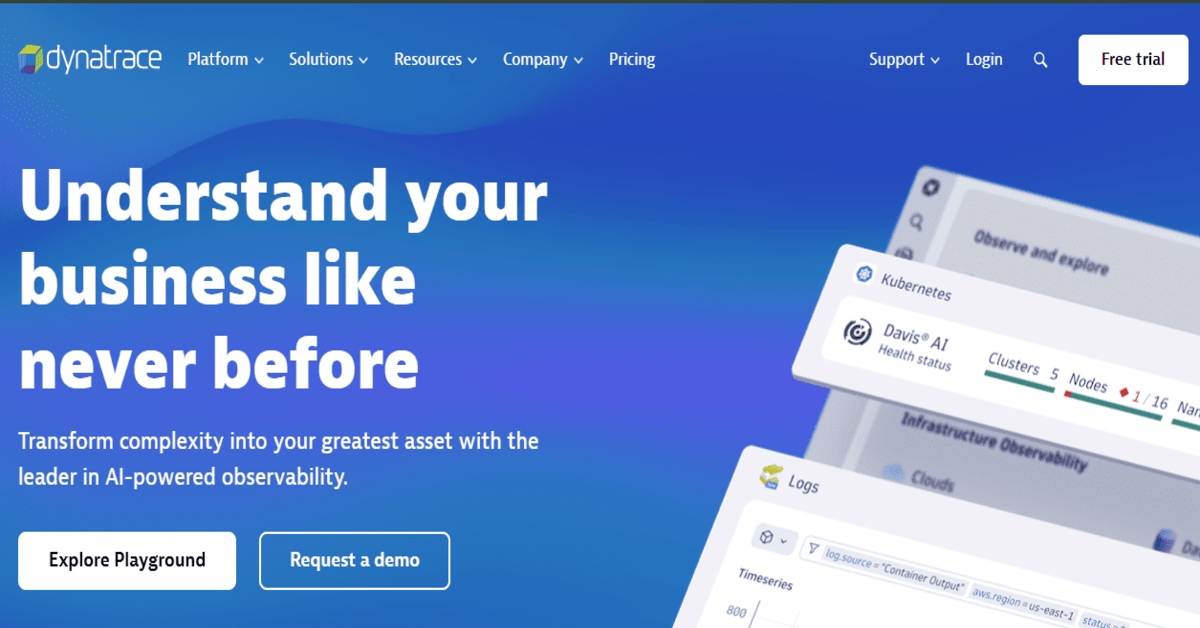
Dynatrace is known as a high-end enterprise observability and security platform with AI-driven insights. It delivers APM, infrastructure monitoring, logs, synthetics, and business analytics at massive scale. Enterprises adopt Dynatrace for its automation and AI-driven root cause analysis.
Key Features
- OneAgent for automatic instrumentation across environments
- AI-powered Davis engine for root cause analysis
- Full-stack observability (APM, logs, infrastructure, synthetics)
- Cloud, Kubernetes, and hybrid monitoring
Standout Features
- Market-leading automation and AI capabilities
- End-to-end coverage across IT and business metrics
- Scalability for very large deployments
Pros
- Extremely powerful at enterprise scale
- Strong AI-driven insights
- Broad coverage across IT and business
Cons
- Very expensive compared to mid-market tools
- Complex to set up and manage
Best For
Large enterprises with complex hybrid or multi-cloud environments that need AI-driven observability and can afford premium pricing.
Pricing & Customer Reviews
- Infrastructure Monitoring: $29/month per host
- Full-Stack Monitoring: $58/month per 8 GiB host
- Rating: 4.5/5 on G2; praised for its AI and automation, with cost and complexity often cited as drawbacks
Dynatrace vs Checkly
Dynatrace is an enterprise observability platform that provides full-stack monitoring across applications, infrastructure, user experience, and logs, with automated analysis designed for large and complex environments. Checkly, in contrast, focuses on synthetic monitoring and code-driven API and browser checks to proactively validate application reliability. While Dynatrace is commonly used for broad, automated observability at scale, Checkly is centered on test-based monitoring workflows.
7. New Relic
Known For
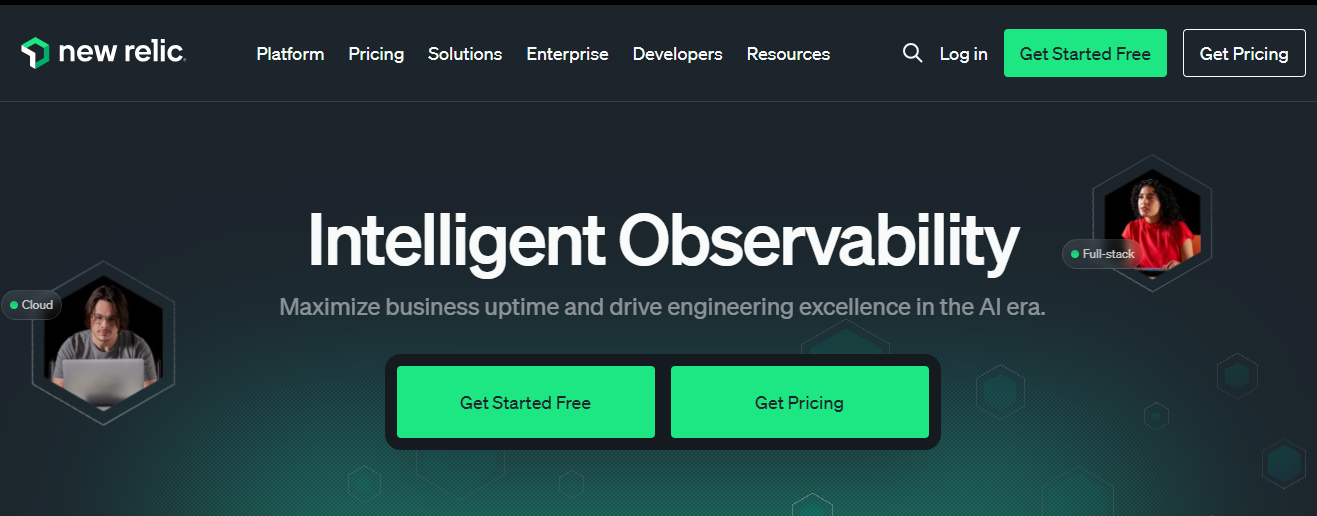
New Relic is known as a cloud-based observability platform offering APM, logs, infrastructure, synthetics, and RUM. It has long been one of the leaders in the space, favored by teams for its polished UI and broad coverage, though costs often rise with usage.
Key Features
- APM and distributed tracing with service maps
- Log management and query engine
- Real user monitoring and synthetic checks
- Infrastructure metrics and alerts
Standout Features
- Polished and user-friendly dashboards
- Strong APM features with code-level visibility
- Wide range of observability signals unified in one platform
Pros
- Mature product with strong reputation
- Covers most observability needs in one place
- User-friendly for developers and SREs
Cons
- Usage-based pricing can scale up quickly with large data volumes
- Premium licenses are costly—full access starts at $349 per user/month
- UI can be overwhelming, especially for beginners
Best For
Organizations wanting mature observability with polished APM and dashboards, particularly mid-market to enterprise teams.
Pricing & Customer Reviews
- Free: 100GB/month of data ingested
- Standard: $0.40/GB of data ingested;
- User costs for Full Platform Users: $400/month
- Rating: 4.3/5 on G2; praised for APM and dashboards, but criticized for pricing structure
New Relic vs Checkly
New Relic offers a comprehensive observability platform that includes application performance monitoring, infrastructure metrics, logs, and real user monitoring to help teams gain end-to-end visibility across systems. Checkly, by contrast, focuses on synthetic monitoring and code-driven API and browser checks to proactively validate uptime and critical user flows.
Conclusion
While Checkly excels at synthetic monitoring and monitoring-as-code workflows, it is limited compared to full observability platforms. Teams choose alternatives like CubeAPM, Datadog, Netdata, Coralogix, Atatus, Dynatrace, and New Relic when they need broader APM, logs, tracing, and cost predictability. CubeAPM stands out as the best alternative, combining synthetics with full MELT, flat pricing, 800+ integrations, and self-hosting options that directly address Checkly’s gaps.
Disclaimer: The information in this article reflects the latest details available at the time of publication and may change as technologies and products evolve