










Cloud databases power everything from e-commerce checkouts to real-time analytics pipelines. When a query slows down or a connection pool fills up, you need to know instantly. The right monitoring tool gives you that visibility.
This guide covers the nine best monitoring tools for cloud databases in 2026. For each tool, you will find a clear description of what it does, who it is best suited for, verified pricing, and a look at its database monitoring capabilities.
🔑 Key Takeaways
- CubeAPM offers the most cost-effective self-hosted cloud database monitoring at a flat $0.15/GB with full OpenTelemetry support.
- Datadog and Dynatrace lead on enterprise features but carry the highest per-host costs.
- SigNoz and Grafana are strong open-source alternatives, though both require more setup effort.
- The most important metrics to track are query latency, connection count, replication lag, error rates, and throughput.
- OpenTelemetry-native tools avoid vendor lock-in and reduce instrumentation overhead.
At a Glance: Cloud Database Monitoring in 2026
Top platforms for cloud database monitoring: CubeAPM, Datadog, Dynatrace, New Relic, Grafana, SigNoz, and more.
What Is Cloud Database Monitoring?
Cloud database monitoring is the practice of continuously tracking the health, performance, and availability of database instances running in cloud environments such as AWS RDS, Google Cloud SQL, Azure Database, or self-managed databases on cloud VMs. It involves collecting metrics like query execution times, connection pool usage, replication lag, disk I/O, cache hit ratios, and error rates, then surfacing that data through dashboards and alerts so engineering teams can act before users notice a problem.
Effective monitoring covers three areas: performance monitoring (query latency, slow queries, throughput), availability monitoring (uptime, failover status, replication health), and resource monitoring (CPU, memory, disk, connection counts). Good tools correlate these signals with application traces so you can trace a slow API call all the way down to the offending database query.
Key Metrics to Monitor in Cloud Databases
Before choosing a tool, it helps to know what you need to measure. The most important database metrics are:
- Query latency and slow query logs – average and P95/P99 execution times reveal performance regressions before users complain.
- Connection pool utilization – a near-full pool is one of the most common causes of application timeouts.
- Replication lag – critical for read replicas; measures how far behind the replica is from the primary.
- Throughput (reads and writes) – helps capacity-plan and detect unexpected spikes.
- Cache hit ratio – for MySQL InnoDB buffer pool, PostgreSQL shared buffers, or Redis: a low ratio means excessive disk reads.
- Disk I/O and storage growth – disk saturation is a leading indicator of degraded write performance.
- Error rates and deadlocks – frequent deadlocks indicate application-level transaction issues.
Quick Comparison: Best Monitoring Tools for Cloud Databases
The table below compares the nine tools covered in this article across deployment model, OpenTelemetry support, pricing, and open-source availability.
| Tool | Deployment | OTel Support | Pricing |
|---|---|---|---|
| CubeAPM | Self-hosted | OpenTelemetry-native | $0.15/GB flat |
| Datadog | SaaS | Yes | $31/host/mo (APM) |
| Dynatrace | SaaS | Yes | $58/mo per 8 GiB host |
| New Relic | SaaS | Yes | $0.40/GB ingest |
| Grafana Cloud | SaaS/Self | Yes | Free tier; pay-as-you-go |
| SigNoz | Self-hosted | Yes (native) | $49/mo (cloud) |
| Checkmk | Self/SaaS | Partial | Free (Raw); paid enterprise |
| Netdata | SaaS/Self | Partial | Free tier available |
Best Monitoring Tools for Cloud Databases
1. CubeAPM
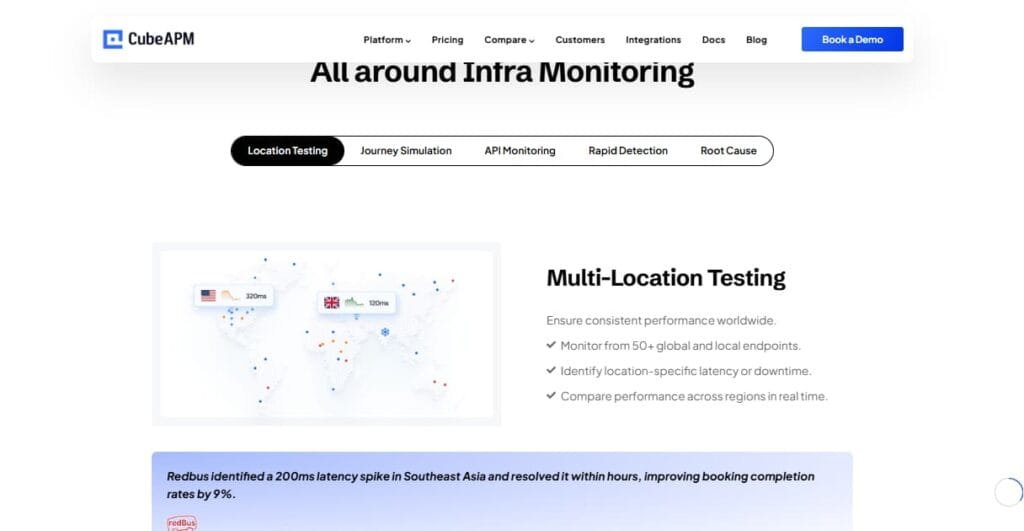
Best for: Teams that want cost-effective, self-hosted, OpenTelemetry-native database and application monitoring without per-host or per-user fees.
CubeAPM is a self-hosted APM and observability platform built natively on OpenTelemetry. It monitors databases including PostgreSQL, MySQL, MongoDB, Redis, and Elasticsearch alongside application traces and infrastructure metrics. Because it is deployed on your own infrastructure, all telemetry data stays within your environment, which is important for teams with data residency or compliance requirements.
CubeAPM collects database spans automatically through OpenTelemetry SDKs, giving you per-query latency, error rates, and throughput without any additional agents. You can correlate slow database calls with the upstream service traces that triggered them, which makes root-cause analysis significantly faster.
Pricing: CubeAPM charges a flat $0.15/GB of ingested telemetry data with no per-host, per-user, or per-metric-series fees.
Key capabilities for cloud database monitoring:
- Automatic database query tracing via OpenTelemetry
- Slow query detection with full query text and call stack context
- Cross-service trace correlation linking API calls to DB operations
- Supports PostgreSQL, MySQL, MongoDB, Redis, Cassandra, and more via OTel semantic conventions
- Self-hosted deployment on Kubernetes or Docker; no SaaS dependency
2. Datadog
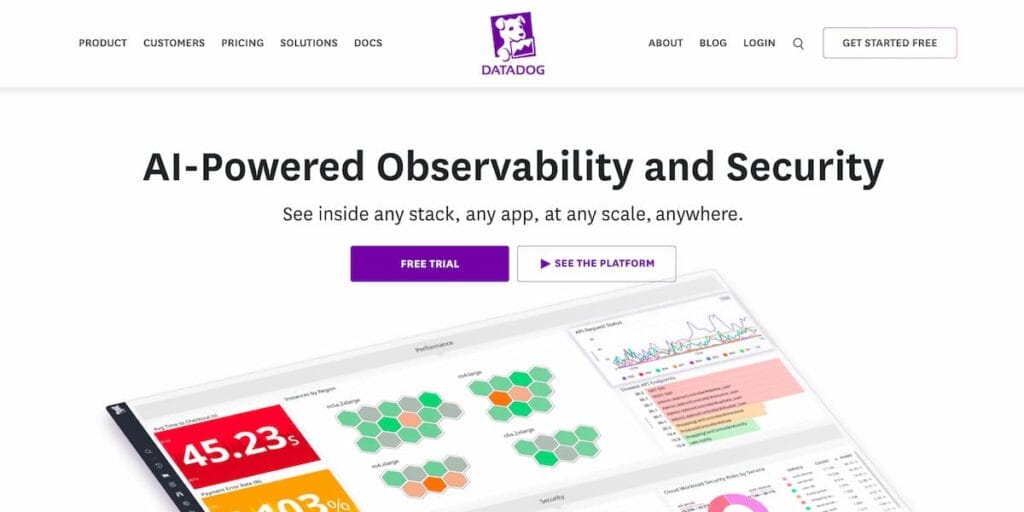
Best for: Large engineering teams that need a single-pane-of-glass platform covering APM, infrastructure, logs, and database monitoring with minimal integration work.
Datadog is one of the most widely used SaaS observability platforms. Its Database Monitoring product (DBM) supports PostgreSQL, MySQL, SQL Server, Oracle, and MongoDB. DBM provides query-level metrics, explain plans, connection pool stats, and wait event analysis without requiring manual instrumentation. Datadog’s agent collects this data out of the box once you point it at your database credentials.
Pricing: Datadog APM costs $31/host/month (billed annually, bundled with infrastructure monitoring). Database Monitoring is an add-on priced separately at approximately $70/host/month for database hosts. Log ingestion is charged at $0.10/GB. Costs scale quickly for teams with many database instances.
Key capabilities for cloud database monitoring:
- Query-level performance metrics with full normalized query text
- Automatic explain plan collection for slow queries (PostgreSQL, MySQL)
- Wait event analysis to identify blocking queries
- Connection pool monitoring and thread activity
- Integrates with 700+ services including all major cloud providers
3. Dynatrace
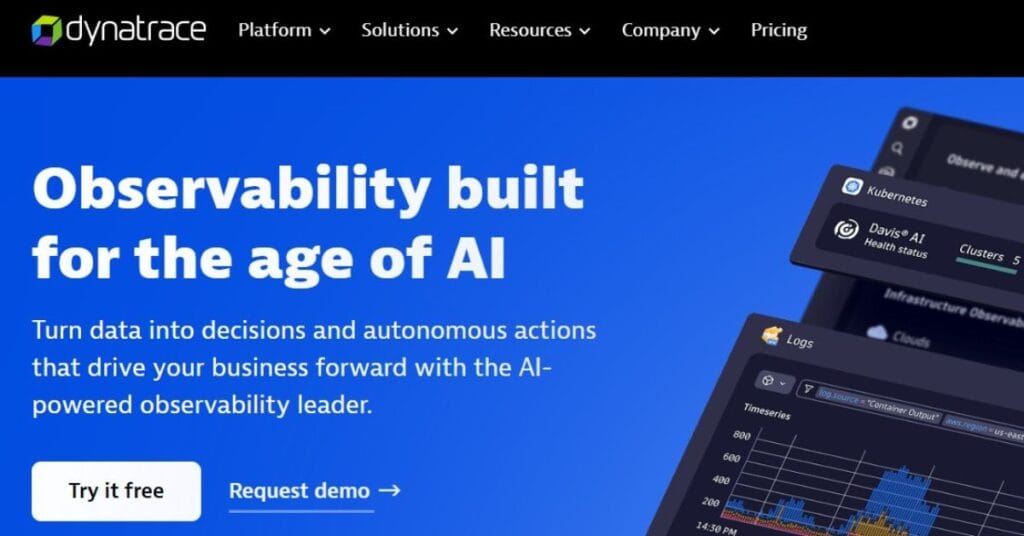
Best for: Enterprises that want AI-assisted root cause analysis and full-stack observability with minimal manual configuration.
Dynatrace uses its proprietary Davis AI engine to automatically baseline database performance and detect anomalies without manual threshold configuration. It supports database monitoring across SQL Server, Oracle, MySQL, PostgreSQL, and several NoSQL databases. OneAgent, Dynatrace’s data collector, auto-discovers database connections in instrumented services and captures transaction traces end-to-end.
Pricing: Dynatrace uses a Data Processing Subscription (DPS) model. Full-Stack Monitoring is priced at approximately $58/month per 8 GiB host unit. For database-specific monitoring, pricing depends on the specific modules enabled. Costs can be significant at scale.
Key capabilities for cloud database monitoring:
- Davis AI automated anomaly detection with no manual thresholds
- Automatic baselining of query response times and error rates
- End-to-end distributed tracing from frontend to database
- Supports Oracle, SQL Server, PostgreSQL, MySQL, MongoDB, Cassandra
- Automated root cause identification for database-related slowdowns
4. New Relic
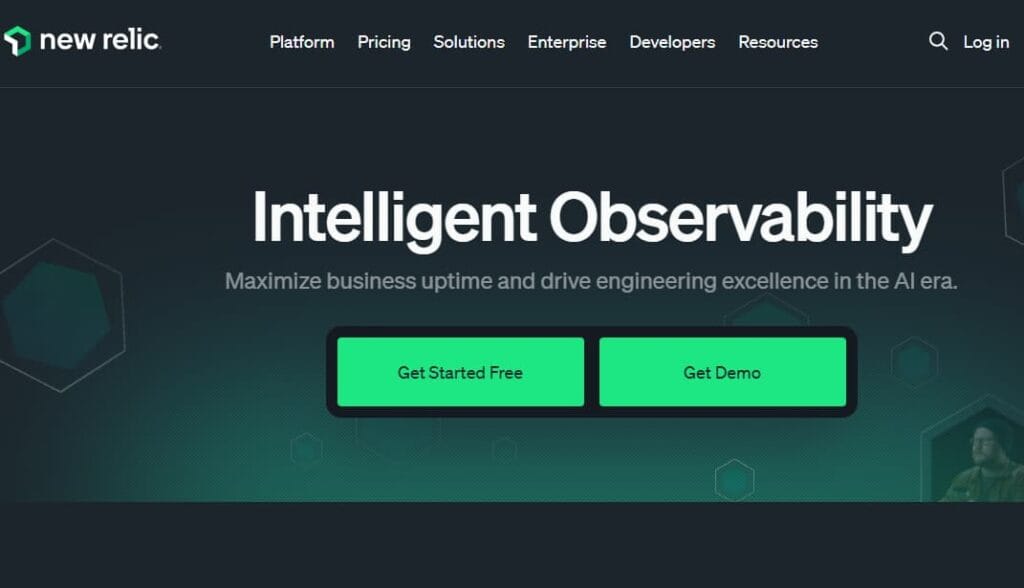
Best for: Cloud-native teams that want a flexible, unified observability platform with strong query performance analysis and a generous free tier.
New Relic offers database monitoring as part of its unified observability platform. It supports MySQL, PostgreSQL, MongoDB, Redis, Memcached, and others. New Relic’s database dashboards show slow queries, throughput, and error rates. Its query correlation with distributed tracing helps you understand which services are generating the heaviest database load.
Pricing: New Relic charges $0.40/GB for data ingested beyond the 100 GB free monthly allowance. User-based pricing applies on top of data costs depending on the plan. The free tier covers 100 GB/month and one full-platform user.
Key capabilities for cloud database monitoring:
- Slow query traces with normalized query text
- Database instance metrics and connection count monitoring
- NRQL query language for custom database dashboards
- Correlation of database performance with APM traces
- Supports AWS RDS, Aurora, Google Cloud SQL, and Azure Database
5. Grafana
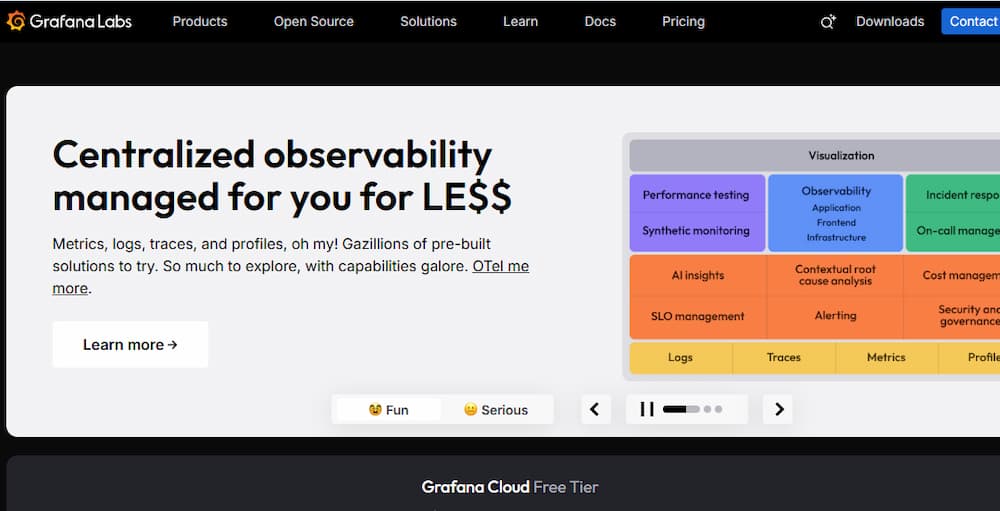
Best for: Teams already using Prometheus or OpenTelemetry that want a flexible, open-source dashboarding layer with community-maintained database exporters.
Grafana is an open-source data visualization and observability platform. For database monitoring, it pairs with Prometheus exporters (e.g., postgres_exporter, mysqld_exporter, mongodb_exporter) to collect and visualize database metrics. Grafana Cloud offers a managed SaaS option. The core Grafana platform and its companion components (Loki, Tempo, Mimir) are licensed under AGPLv3.
Pricing: Grafana Cloud has a free tier. Paid plans scale on data volume and feature access. The open-source self-hosted version is free.
Key capabilities for cloud database monitoring:
- Rich dashboarding with community-built database dashboard templates
- Pairs with Prometheus exporters for PostgreSQL, MySQL, MongoDB, Redis
- Loki for database log aggregation; Tempo for distributed tracing
- Grafana Cloud offers managed hosting with alerting built in
- Highly customizable for teams with existing Prometheus infrastructure
6. SigNoz
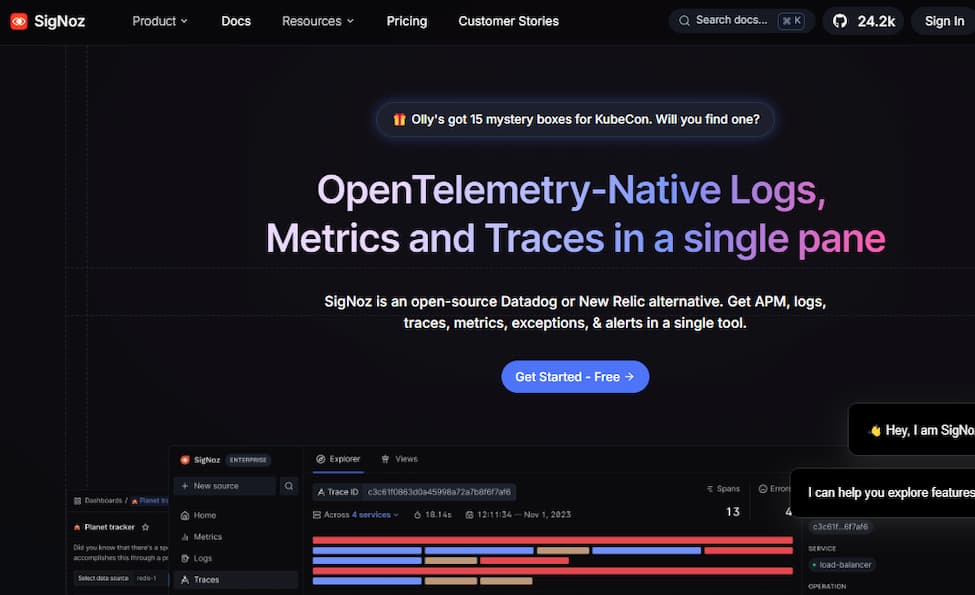
Best for: Teams that want a fully open-source, OpenTelemetry-native alternative to Datadog with built-in traces, metrics, and logs in one platform.
SigNoz is an open-source APM and observability tool built natively on OpenTelemetry. It captures database spans automatically from OpenTelemetry-instrumented services and displays per-query latency, error rates, and call counts. SigNoz uses ClickHouse as its storage backend, which gives it strong query performance at scale. The community edition is MIT Expat licensed.
Pricing: SigNoz Community edition is free and self-hosted. SigNoz Cloud starts at $49/month. Enterprise pricing is available for larger deployments.
Key capabilities for cloud database monitoring:
- OpenTelemetry-native database span collection with no additional agents
- Slow query identification with service-level trace correlation
- Unified traces, metrics, and logs in a single interface
- Supports PostgreSQL, MySQL, MongoDB, Redis via OTel SDKs
- Self-hosted with ClickHouse backend for high-performance querying
7. Checkmk
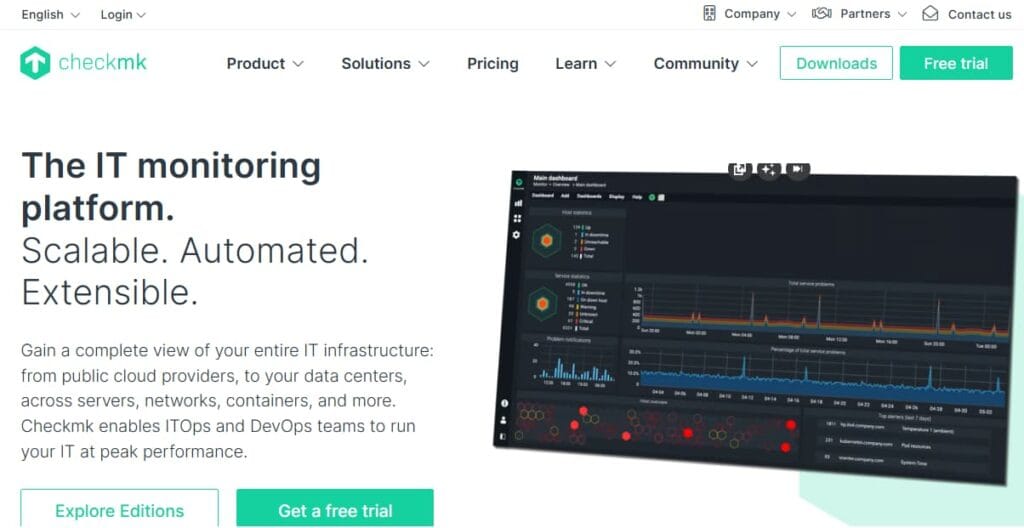
Best for: IT operations teams monitoring mixed hybrid environments that include traditional databases alongside modern cloud services.
Checkmk is an infrastructure and application monitoring platform with strong database monitoring capabilities. It supports MySQL, PostgreSQL, Oracle, SQL Server, and MongoDB through native check plugins. Checkmk’s agent-based architecture collects detailed database metrics including tablespace usage, session counts, query throughput, and replication status. It is well-suited for teams managing both on-premises and cloud database instances.
Pricing: Checkmk Raw Edition (open source) is free. The Cloud and Enterprise editions have paid licensing based on the number of services monitored.
Key capabilities for cloud database monitoring:
- Native check plugins for MySQL, PostgreSQL, Oracle, SQL Server, MongoDB
- Tablespace usage, session monitoring, and replication lag checks
- Hybrid monitoring across on-premises and cloud databases
- Built-in alerting with escalation rules and notification channels
- Dashboard and reporting capabilities out of the box
8. Netdata
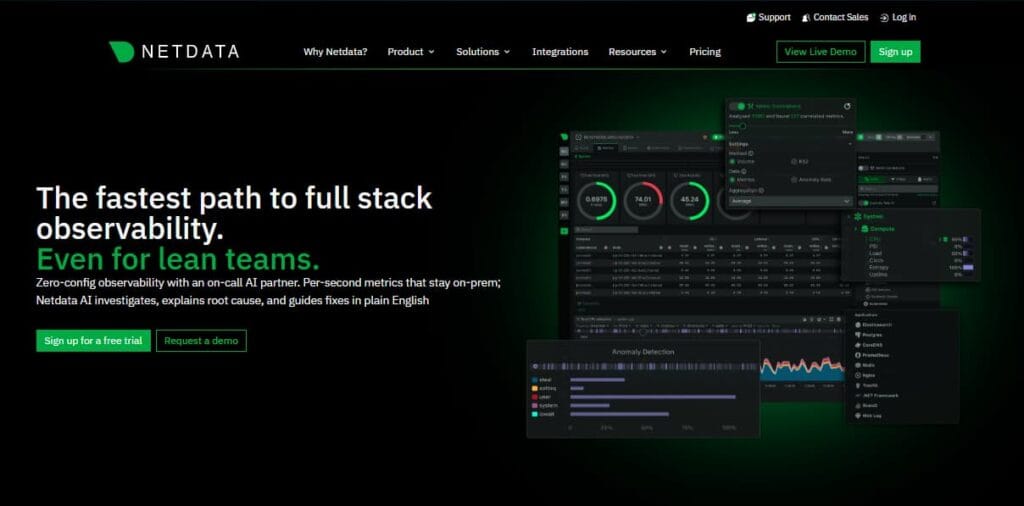
Best for: Individual developers and small teams that need real-time, per-second database and system metrics with zero configuration.
Netdata is an open-source monitoring agent designed for per-second, real-time metric collection with near-zero overhead. It supports database monitoring for MySQL, PostgreSQL, MongoDB, Redis, and Elasticsearch through its built-in collectors. Netdata ships with pre-built dashboards and alerts, requiring minimal setup. It works well for teams that need fast visibility without investing time in dashboard configuration.
Pricing: Netdata Agent is free and open source. Netdata Cloud has a free tier and paid plans for advanced features and longer retention.
Key capabilities for cloud database monitoring:
- Per-second metric resolution for MySQL, PostgreSQL, MongoDB, Redis
- 800+ built-in collectors with zero-configuration auto-detection
- Machine learning-based anomaly detection built into the agent
- Low resource footprint: approximately 5% CPU, 150 MB RAM
- Pre-built database dashboards and alert thresholds out of the box
9. Site24x7
Best for: Small to mid-sized teams that need an all-in-one monitoring platform covering databases, web applications, and cloud infrastructure at a competitive price.
Site24x7 is a SaaS monitoring platform from Zoho that covers web performance, infrastructure, and database monitoring in a single product. It supports MySQL, PostgreSQL, Oracle, SQL Server, and MongoDB. Site24x7 monitors query performance, connection counts, tablespace usage, and error rates. It integrates natively with AWS CloudWatch, Azure Monitor, and Google Cloud Monitoring.
Pricing: Site24x7 plans start at $9/month, making it one of the most affordable options for teams that want broad database and infrastructure monitoring without managing self-hosted infrastructure.
Key capabilities for cloud database monitoring:
- Monitors MySQL, PostgreSQL, Oracle, SQL Server, MongoDB out of the box
- Integration with AWS RDS, Azure Database, and Cloud SQL
- Query performance monitoring with slow query logs
- Resource metrics: CPU, memory, disk, connections
- Affordable pricing suitable for startups and SMBs
How to Choose the Right Cloud Database Monitoring Tool
With so many options, the right tool depends on your specific constraints. Here are the factors that matter most:
SaaS tools like Datadog, Dynatrace, New Relic, and Site24x7 require no infrastructure management but send your telemetry data to a third party. Self-hosted tools like CubeAPM and SigNoz keep data within your environment, which matters for compliance, data residency, or cost control at high data volumes.
Per-host pricing (Datadog, Dynatrace) can become expensive as you scale. Per-GB pricing (New Relic, CubeAPM) is more predictable for high-cardinality environments. Verify pricing directly on each vendor’s current pricing page before budgeting.
If you are already instrumenting with OpenTelemetry, tools that accept OTLP natively (CubeAPM, SigNoz, Grafana) reduce integration overhead and avoid vendor lock-in. Tools with only partial OTel support may require additional agents or proprietary SDKs.
Most tools cover MySQL, PostgreSQL, and MongoDB well. For Oracle, SQL Server, or less common databases, verify support before committing. Tools with native check plugins (Checkmk) tend to have deeper coverage for traditional relational databases.
Tools like Netdata and Site24x7 need minimal configuration and suit smaller teams. Grafana with custom exporters and SigNoz offer more flexibility but require more setup time. Enterprise tools like Dynatrace and Datadog have rich auto-discovery but carry a higher cost.
📌 Stop Overpaying for Cloud Database Monitoring
CubeAPM is a self-hosted, OpenTelemetry-native APM platform that monitors databases, services, and infrastructure at a flat $0.15/GB with no per-host, per-user, or per-series fees. Get end-to-end visibility into your PostgreSQL, MySQL, MongoDB, and other cloud databases without the SaaS bill shock.
→ Book a demo today
Conclusion
Choosing the best monitoring tool for cloud databases comes down to balancing cost, deployment preference, and the depth of database visibility you need. CubeAPM stands out for teams that need self-hosted, OpenTelemetry-native monitoring at a flat and predictable cost. Datadog and Dynatrace are strong enterprise options if budget is less of a constraint. SigNoz and Grafana are excellent for teams invested in open-source tooling. Netdata and Site24x7 make sense for smaller teams that want fast time to value.
Regardless of which platform you choose, prioritize a tool that surfaces query-level data, integrates with your existing stack, and scales cleanly with your data volume. The nine tools covered in this guide represent the strongest options currently available for cloud database observability.
⚠️ Disclaimer: Pricing figures and feature details in this article are sourced directly from vendor documentation and official pricing pages as of June 2026. Pricing models change frequently. Always verify current pricing on each vendor’s official website before making a purchasing decision. This article reflects the editorial perspective of the CubeAPM team and is intended for informational purposes only.
FAQs
1. What is the best free tool for monitoring cloud databases?
Netdata and Grafana (with Prometheus exporters) are the strongest free options for cloud database monitoring. Both are open source. SigNoz Community edition is also free and provides OpenTelemetry-native traces, metrics, and logs in one interface. CubeAPM offers a free trial for self-hosted deployments.
2. Does Datadog support cloud database monitoring?
Yes. Datadog has a dedicated Database Monitoring (DBM) product that supports PostgreSQL, MySQL, Oracle, SQL Server, and MongoDB. It provides query-level metrics, explain plans, and wait event analysis. DBM is an add-on to the base Datadog platform and carries its own per-host pricing.
3. What metrics should I monitor for cloud databases?
The most important metrics are query latency (average and P99), slow query rate, connection pool utilization, replication lag, throughput (reads and writes per second), cache hit ratio, disk I/O, storage growth, and error and deadlock rates. A good monitoring tool will surface all of these with alerting thresholds.
4. Is OpenTelemetry suitable for database monitoring?
Yes. OpenTelemetry’s database semantic conventions automatically capture key span attributes for database calls including the query statement, database type, target host, and execution status. Tools like CubeAPM and SigNoz use these spans to deliver per-query monitoring without additional proprietary agents.
5. What is the difference between database monitoring and APM?
Application Performance Monitoring (APM) tracks end-to-end request traces across services and identifies latency bottlenecks at the code level. Database monitoring focuses specifically on the health and performance of database instances, including query execution, resource usage, and replication. The most effective observability setups combine both so you can trace a slow API request all the way to the specific database query causing the delay.