









The main difference between Sumo Logic, New Relic, and CubeAPM lies in their architectural approach to observability.
Sumo Logic is a cloud-native log analytics platform extended into observability, New Relic is a fully managed SaaS observability suite built for fast adoption, and CubeAPM is a self-hosted, OpenTelemetry-native observability platform designed for predictable cost and data control.
When choosing an observability platform, teams now look for cost predictability, data residency, sampling behavior, and long-term retention as telemetry volumes grow and compliance requirements tighten.
This article compares Sumo Logic vs New Relic vs CubeAPM across architecture, pricing, deployment, and real-world use cases to help teams make an informed decision.
Sumo Logic vs New Relic vs CubeAPM Comparison
Teams usually start comparing platforms like Sumo Logic and New Relic after production scale when telemetry volume grows faster than traffic, costs fluctuate month to month, and incident investigations depend on whether sampling or retention hides critical context.
| Feature | CubeAPM | Sumo Logic | New Relic |
| Known for | Unified MELT, native OTEL, self-hosting, cost predictability | Cloud-native log, strong correlation, & security analytics | Full-stack APM with advanced analytics and service maps |
| Multi-Agent Support | Yes (OTel, New Relic, Datadog, Elastic, etc.) | Yes (native collectors; OTEL) | Yes ( New Relic Agent, OTel, Prometheus) |
| MELT Support | Full MELT coverage | Full MELT | Full MELT coverage |
| Deployment | Self-hosted with vendor-managed | SaaS-only | SaaS-only |
| Pricing | Ingestion-based: $0.15/GB | Starts $3.14–$3.77 per TB scanned (based on location) | Free 100 GB/month; beyond: $0.40/GB, per-user license: $49-$349 |
| Sampling Strategy | Smart sampling, automated, context-aware | Tail-based, probabilistic, and pattern-based | Adaptive head-based & tail-based |
| Data Retention | Unlimited Retention (no extra cost) | 7d (free plan); 365d (Enterprise) | 30d for logs/events, 120d in Data Plus |
| Support Channel & TAT | Slack, WhatsApp; response in minutes | Essentials: Standard (8×5); Enterprise: (P1 24×7) | Community, docs, ticket; TAT: 2d to 2 hrs, 1 hr (priority) |
Sumo Logic vs New Relic vs CubeAPM: Feature breakdown
This section explains how each platform is positioned in practice and what teams typically associate it with once they start using it in real environments.
Known for
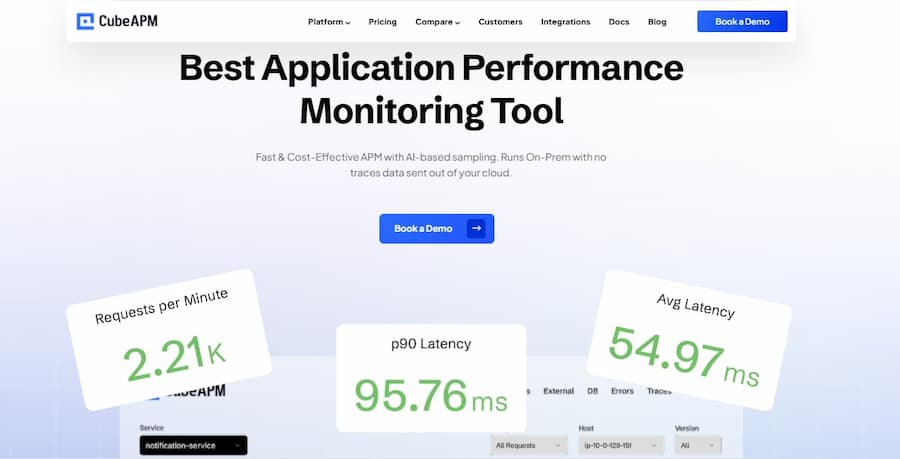
CubeAPM is known for treating observability as owned infrastructure rather than a pure SaaS service. It is positioned as a self-hosted, OpenTelemetry-native platform that unifies logs, metrics, events, and traces while keeping data inside the customer’s cloud or VPC. CubeAPM offers predictable ingestion-based pricing, unlimited data retention, and deep trace context, especially in microservices-heavy or compliance-sensitive environments.
Sumo Logic is best known for cloud-native log analytics that later expanded into observability and security use cases. Many teams adopt Sumo Logic first for large-scale log search, correlation, and SIEM-style workflows, then extend it to metrics and traces. In practice, it is often associated with strong log-driven investigations, security analytics, and centralized visibility across distributed systems, particularly for organizations already comfortable with SaaS-only deployments.
New Relic is widely known as a full-stack SaaS observability platform with strong application performance monitoring roots. Teams often choose New Relic for fast onboarding, rich dashboards, service maps, and broad ecosystem coverage across APM, infrastructure, browser monitoring, and synthetics. Based on public documentation and user adoption patterns, New Relic is commonly associated with ease of adoption and wide feature coverage, especially for teams that prefer minimal infrastructure ownership.
Multi-Agent Support
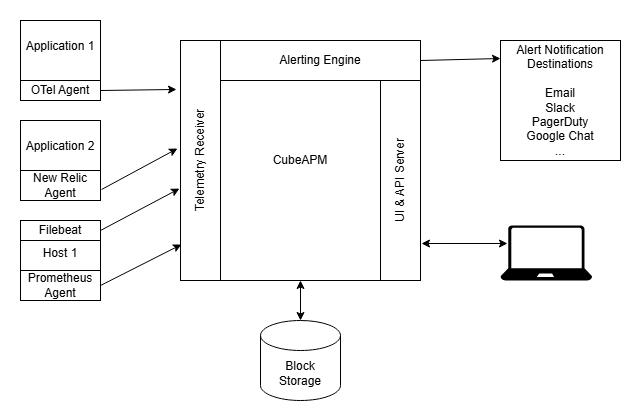
CubeAPM supports multiple agents, including OpenTelemetry, Prometheus, Datadog, New Relic, and Elastic, so teams can plug in existing instrumentation when migrating or standardizing without re-instrumenting applications. Many teams appreciate this flexibility because it lets them move to CubeAPM while continuing to use the agents they already have deployed, lowering migration risk and effort.
Sumo Logic supports OpenTelemetry collector ingestion, including a Sumo Logic distribution of the OpenTelemetry Collector that can send logs, metrics, and traces to the Sumo platform. This unified agent approach simplifies data collection across environments by using a consistent, scalable agent for all telemetry types.
New Relic provides native agents and OpenTelemetry support, enabling teams to use its own language-specific agents alongside OpenTelemetry SDKs and collectors. This gives flexibility in how telemetry is collected, though teams often start with New Relic’s own agents for quick setup before extending with OpenTelemetry where needed.
MELT Support (Metrics, Events, Logs, Traces)
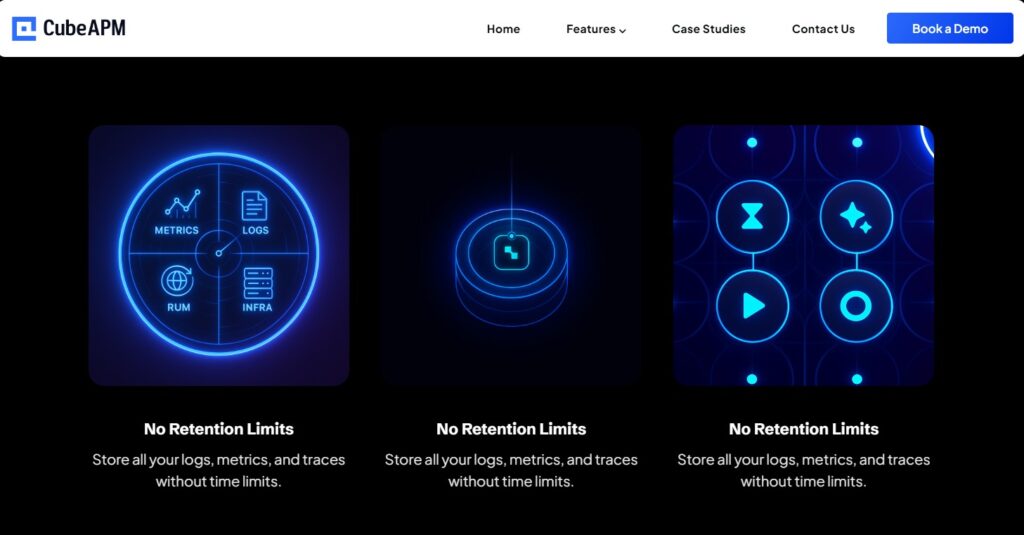
CubeAPM treats metrics, events, logs, and traces as first-class telemetry signals and correlates them without siloed processing. Because it is OpenTelemetry-native, CubeAPM stitches together high-cardinality events with trace spans and logs, helping teams maintain rich context during incident investigation and performance debugging. This unified MELT model supports deep analysis without repeatedly switching tools or panes, making it easier to explore relationships between anomalies and root causes.
Sumo Logic supports full MELT coverage through its integrated log analytics and observability suite. Logs, metrics, and traces can be brought into Sumo Logic, where correlation and analytics layers help surface insights across all signal types. The platform’s log search and trace explorer features enable teams to pivot from metric alerts into related logs and traces.
New Relic also supports metrics, events, logs, and traces with rich visualization and analytic tools. Through New Relic’s telemetry data platform, teams can explore performance trends, drill down into trace details, and correlate logs with trace spans. This broad MELT support helps teams monitor application health and performance from multiple angles.
Deployment
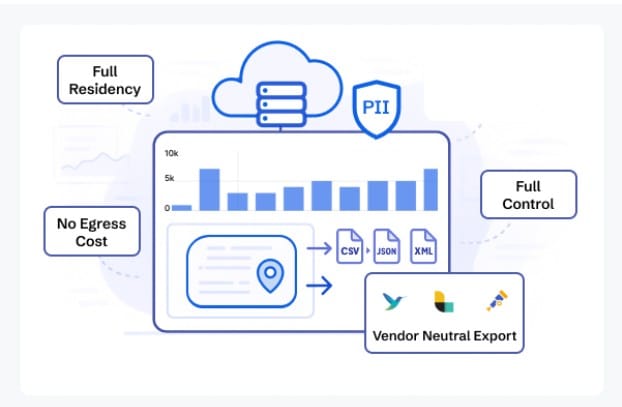
CubeAPM supports self-hosted deployment in your own cloud or on-prem infrastructure, giving teams full control over where telemetry data lives. This is especially important for organizations with strict data residency, compliance, or security requirements, since telemetry stays inside the customer’s environment rather than leaving to an external service.
Sumo Logic is a SaaS-only observability and analytics platform, which means all logs, metrics, and traces are ingested and processed in Sumo Logic’s managed cloud. This approach simplifies onboarding and reduces operational burden, but telemetry cannot be hosted within your own infrastructure.
New Relic also operates as a SaaS-only observability platform, offering low-touch setup and a unified interface without requiring customers to manage backend infrastructure. While this lowers the operational overhead, teams must accept that data is stored and processed in New Relic’s cloud and is subject to the provider’s retention and access policies.
Pricing for Small, Mid, and Large Teams
To summarize the pricing:
*All pricing comparisons are calculated using standardized Small/Medium/Large team profiles defined in our internal benchmarking sheet, based on fixed log, metrics, trace, and retention assumptions. Actual pricing may vary by usage, region, and plan structure. Please confirm current pricing with each vendor.
| Approx. cost for teams (size) | Small (~30) | Mid-Sized (~125) | Large (~250) |
| CubeAPM | $2,080 | $7,200 | $15,200 |
| New Relic | $7,896 | $25,990 | $57,970 |
| Sumo Logic | $4,641 | $16,065 | $33,915 |
CubeAPM Costs in Detail
CubeAPM uses ingestion-based pricing where costs are directly tied to the volume of telemetry ingested. Based on the comparison table, CubeAPM’s pricing example is $0.15 per GB of data ingested. This simple consumption model avoids per-host, per-user, or per-feature fees and provides predictable billing as telemetry scales, helping teams forecast costs in environments with variable traffic volumes. Costs for different teams:
- Small teams (~ 30): $2,080
- Mid-sized teams (~ 125): $7,200
- Large teams (~250): $15,200
New Relic Cost in Detail
New Relic offers a free 100 GB per month data allowance, and beyond that it charges approximately $0.40 per GB scanned under standard pricing, coupled with optional user-based licensing ($49–$349 per user). This gives smaller teams a low entry point, but as telemetry grows, costs can accumulate through combined ingestion and user fees, especially if extended data retention or platform add-ons are enabled. Cost for different teams:
- Small teams: $7,896
- Mid-size teams: $25,990
- Large teams: $57,970
Sumo Logic Cost in Detail
Sumo Logic’s pricing in the table is shown as “Starts $3.14–$3.77 per TB scanned” based on location. That is a practical starting point for teams focused on log analytics and usage scanning costs. In this credit- or scan-based model, pricing varies by data volume, region, and plan tier, with larger enterprise contracts often involving negotiated rates. Cost for different teams:
- Small teams: $4,641
- Mid-size teams: $16,065
- Large teams: $33,915
Teams typically start noticing these cost differences once telemetry volume increases beyond early-stage usage. In environments with sustained traffic, high-cardinality logs, or many microservices, observability spend often transitions from a relatively fixed tooling cost to a variable expense that requires monitoring and forecasting. Understanding exact pricing per GB, per TB scanned, and any user-based licensing helps teams project budgets and choose the model that scales with their usage without unpleasant surprises.
Sampling Strategy

CubeAPM applies smart sampling that actively prioritizes high-value telemetry such as slow traces, errors, and spans with high latency while reducing noise and redundant data. This context-aware sampling helps maintain trace fidelity where it matters most and keeps overall telemetry costs predictable without overwhelming storage or analysis pipelines.
Sumo Logic supports a multi-stage sampling and shaping mechanism via its OpenTelemetry collector configuration. At output, Sumo Logic’s collector can apply pattern filtering (to exclude unwanted traces based on rules), probabilistic sampling (randomly selecting traces to keep a representative subset), and tail-based filtering (to retain traces that meet criteria such as long duration or errors). This cascading approach gives teams fine-grained control over data.
New Relic supports multiple sampling strategies, including head-based sampling and tail-based sampling with its Infinite Tracing feature. Head-based sampling makes decisions at the start of a trace based on configured rules, while tail-based sampling allows New Relic to decide after full trace collection whether a trace should be stored based on latency or error patterns. These sampling strategies help balance trace analysis with manageable ingestion volumes.
Data Retention
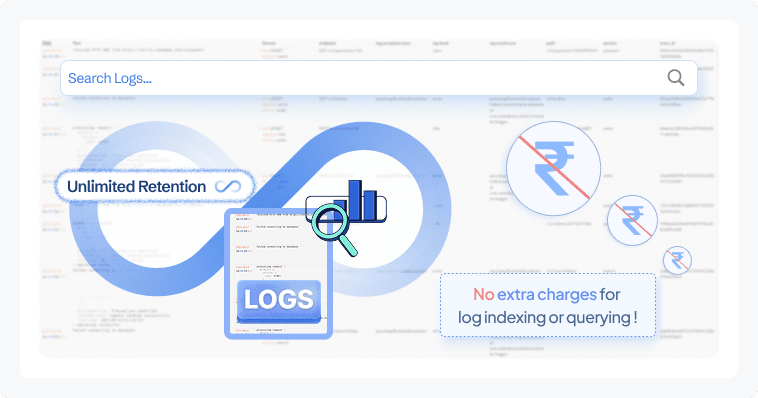
CubeAPM provides unlimited data retention at no extra cost under its core pricing model. This means that logs, metrics, traces, and event data can be stored indefinitely without additional billing tiers or hidden fees, making it easier for teams to retain full historical context for compliance, audits, or long-range trend analysis. Source: CubeAPM documentation and product overview.
Sumo Logic provides configurable retention that varies by data type and subscription. Free accounts retain logs for 7 days, while trial accounts typically retain data for 30 days. In paid plans, log retention can be configured per partition, with defaults around 30 days and the ability to extend significantly depending on the plan. Raw metrics are retained for 30 days before rolling up, and Cloud SIEM data has separate retention rules, with signals viewable up to 1 year or longer when attached to insights.
New Relic’s retention defaults are tied to plan and data types, with standard retention generally around 30 days for logs and other signals, and extended retention available under Data Plus or higher plans. New Relic documentation shows that default retention varies by telemetry type (often 8-30 days) but can be extended (for example, up to ~120 days or more) through paid retention upgrades across metrics, events, logs, and traces.
Support Channel & TAT
CubeAPM provides direct support access through Slack and WhatsApp, with response times typically in minutes. This support model gives teams immediate access to engineers, which is especially useful during production incidents, onboarding, or migration to a self-hosted setup.
Sumo Logic follows a tiered support model with clearly defined coverage based on subscription level. According to the comparison table and Sumo Logic documentation, Essentials plans receive standard business-hours support (8×5). Enterprise plans include 24×7 support for Priority 1 incidents, while premium support options are available at additional cost. Response times vary by severity and tier, with faster handling for critical incidents under higher plans.
New Relic provides support through community forums, documentation, and ticket-based support, with response times tied to plan level. Based on the comparison table, standard ticket response times range from approximately 2 days down to 2 hours, depending on severity, while priority support can offer responses in about 1 hour for critical cases. These response times apply to paid plans, with faster TAT available on higher tiers.
How Teams Typically Decide Between Sumo Logic, New Relic, and Self-Hosted Observability
Teams comparing Sumo Logic, New Relic, and self-hosted platforms typically weigh trade-offs around deployment control, cost predictability, and how observability behaves at scale rather than feature checklists alone.
These decisions almost never sit with one person.
- Engineering usually starts the conversation because they feel the pain during incidents.
- Finance joins once observability bills start creeping up.
- Security and compliance get involved when questions come up about where telemetry data lives and how long it is kept.
What slows teams down are not missing features, but unanswered practical questions. Teams want clarity on where data is stored, how costs change when traffic and logs grow, and whether sampling will hide the exact traces they need during an outage. Retention also becomes a sticking point when audits or long-running investigations are part of the picture.
This is why side-by-side feature comparison only gets teams so far. Most modern platforms can do logs, metrics, and traces. The real differences show up at scale, when data volume is constant, incidents are messy, and cost, control, and reliability start to matter more than dashboards.
Sumo Logic vs New Relic vs CubeAPM: Use Cases
This section translates the comparison into practical scenarios teams commonly evaluate, based on demos, sales conversations, documentation, and real-world usage patterns.
Choose CubeAPM if:
CubeAPM fits teams that want observability to behave like owned infrastructure rather than a metered SaaS service.
- You need a self-hosted or VPC-controlled observability platform for strict data residency, security, or compliance requirements, based on CubeAPM deployment documentation and customer demos.
- You want predictable, ingestion-based pricing and unlimited data retention, especially once telemetry grows beyond early-stage usage, based on CubeAPM sales and demo data.
- You rely on OpenTelemetry and want an OpenTelemetry-native backend that also works with existing New Relic, Datadog, Prometheus, or Elastic agents, reducing migration effort.
- You operate microservices or distributed systems and need end-to-end tracing without aggressive sampling dropping critical spans during incidents.
- You want to reduce mean time to resolution (MTTR) using context-aware sampling that prioritizes error-heavy and high-latency traces.
- You run Java-heavy stacks such as Spring Boot, JVM-based microservices, or large monolith-to-microservice migrations and need deep JVM visibility, transaction tracing, and predictable costs as service count grows, based on CubeAPM Java monitoring demos.
- You need full-stack observability including logs, metrics, traces, RUM, synthetics, and error tracking in a single platform without per-feature licensing.
Choose Sumo Logic if:
Sumo Logic is a strong fit for teams that are log-centric and security-focused.
- You primarily need large-scale log analytics with strong correlation across logs, metrics, and traces, especially for troubleshooting and security investigations.
- You use Cloud SIEM or security analytics heavily and want observability and security data in a single SaaS platform, based on Sumo Logic product documentation.
- You are comfortable with SaaS-only deployment and centralized log ingestion into a managed cloud service.
- You want flexible log retention by partition and are willing to manage retention, scanning, and cost controls actively as usage grows.
- You operate in environments where log search, dashboards, and alerting drive most operational workflows rather than deep trace-first debugging.
Choose New Relic if:
New Relic works well for teams prioritizing fast onboarding and broad SaaS coverage.
- You want a fully managed, SaaS-first observability platform with minimal setup and quick time to value, based on New Relic documentation and onboarding flows.
- You prefer an all-in-one experience covering APM, infrastructure monitoring, browser monitoring, synthetics, and logs under a single UI.
- You are early-stage or mid-scale and can benefit from the free ingestion tier before telemetry volumes grow significantly.
- You are comfortable with usage-based pricing combined with user licensing and add-ons as your observability needs expand.
- You want mature dashboards, service maps, and analytics without managing observability infrastructure yourself.
Conclusion
Sumo Logic and New Relic are both widely adopted observability platforms, each aligned with different operating models. Sumo Logic is often favored for log-centric analytics and security-driven workflows, while New Relic appeals to teams seeking fast onboarding and a comprehensive SaaS observability experience.
As telemetry volumes grow, however, differences in pricing models, retention policies, and deployment control become more visible. Teams evaluating observability platforms at scale increasingly focus on how costs behave under sustained load, how transparently sampling is applied during incidents, and where telemetry data ultimately resides.
Understanding these structural trade-offs, rather than relying solely on feature comparisons, helps organizations choose an observability approach that aligns with long-term cost, compliance, and reliability goals.
Disclaimer: The information in this article reflects the latest details available at the time of publication and may change as technologies and products evolve.
FAQs
1. Is CubeAPM suitable for teams that already use OpenTelemetry extensively?
Yes. CubeAPM is OpenTelemetry-native and is designed to work directly with OpenTelemetry SDKs and collectors. Based on product documentation and demos, teams using OpenTelemetry can send traces, metrics, and logs without relying on proprietary agents, while still maintaining compatibility with existing New Relic, Datadog, or Prometheus instrumentation.
2. Can Sumo Logic and New Relic be used together with a self-hosted observability platform?
Yes. Some teams use Sumo Logic or New Relic alongside a self-hosted platform for specific use cases, such as security analytics or SaaS APM during transitions. However, this often increases operational complexity and cost, which is why teams typically consolidate once observability requirements mature.
3. How do these tools compare for compliance and data residency requirements?
CubeAPM supports self-hosted or VPC-controlled deployment, allowing telemetry data to remain within the customer’s cloud environment. Sumo Logic and New Relic operate as SaaS platforms, so data residency depends on the vendor’s regional infrastructure and contractual controls, which may or may not meet stricter regulatory requirements.
4. Which platform is easier to standardize across multiple teams and services?
New Relic is often easier to roll out quickly across teams due to its SaaS-first model and unified UI. CubeAPM can be easier to standardize long term for organizations aligning on OpenTelemetry and shared infrastructure practices. Sumo Logic is typically standardized in environments where log analytics and security workflows are central.
5. How do these platforms behave as telemetry volume grows significantly?
As telemetry volume increases, pricing models and retention policies become more important than feature sets. CubeAPM’s predictable, ingestion-based pricing and unlimited retention simplify forecasting at scale. Sumo Logic and New Relic require closer monitoring of usage, retention, and plan limits as data volume and service count grow.