








The main difference between Amazon CloudWatch, Azure Monitor, and CubeAPM is that CloudWatch and Azure Monitor are cloud-native monitoring services tightly coupled to their respective ecosystems, while CubeAPM is an OpenTelemetry-native observability platform designed for predictable costs and consistent visibility across environments.
CloudWatch works best when teams are fully invested in AWS and want fast, native access to metrics, logs, and alarms with minimal setup. Azure Monitor fills a similar role inside Microsoft Azure, integrating deeply with Azure services, resource graphs, and the Azure control plane. CubeAPM focuses on application-level observability using OpenTelemetry, with an emphasis on consistent data models across environments.
In this article, we compare Amazon CloudWatch vs Azure Monitor vs CubeAPM across observability architecture, feature coverage, sampling strategies, data retention, support response times, and cost behavior at production scale.
Amazon CloudWatch vs Azure Monitor vs CubeAPM: Feature Comparison
The comparison below is based on publicly available documentation and typical production usage patterns. Actual pricing, sampling, and retention behavior may vary depending on workload characteristics and system configuration.
| Features | CubeAPM | Amazon CloudWatch | Azure Monitor |
| Known for | OpenTelemetry-native observability with predictable costs | Native AWS monitoring for metrics, logs, alarms, and events | Native Azure monitoring and diagnostics |
| Multi-Agent Support | Yes (OTel, New Relic, Datadog, Elastic) | Limited (CloudWatch Agent, AWS SDKs, OpenTelemetry, AWS X-Ray) | Limited to Azure ecosystem (Azure Monitor Agent, Application Insights SDKs, OTEL exporters) |
| MELT Support | Full MELT | Full MELT | Full MELT |
| Setup | Self-hosted but vendor-managed | SaaS (Fully managed AWS service) | SaaS (Fully managed Azure service) |
| Pricing | Ingestion-based pricing of $0.15/GB | Logs: $0.50/GB Traces: $0.15/GB | Basic Logs: $0.50/GB Metrics: $0.16/10 million samples ingested |
| Sampling Strategy | Smart sampling (95% compression) | Tail-based + Adaptive | Fixed-percentage Rate-limited sampling |
| Log Retention | Unlimited Retention | Logs: Indefinite retention | Basic Logs: 30 days Custom Metrics: 90 days |
| Support TAT | < 10 minutes | Business Plan: 15 minutes | ProDirect: < 1 hour Standard: < 1 hour |
Amazon CloudWatch vs Azure Monitor vs CubeAPM: Feature-by-Feature Breakdown
Known for
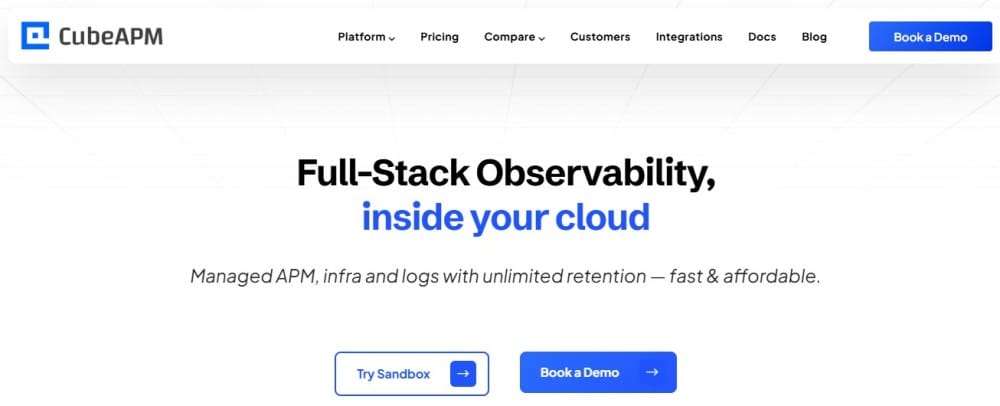
CubeAPM: Known for being OpenTelemetry-native by design. It is built to observe modern distributed systems without tying observability to a specific cloud provider. CubeAPM focuses on consistent telemetry semantics, context-aware smart sampling, and predictable cost as systems scale.
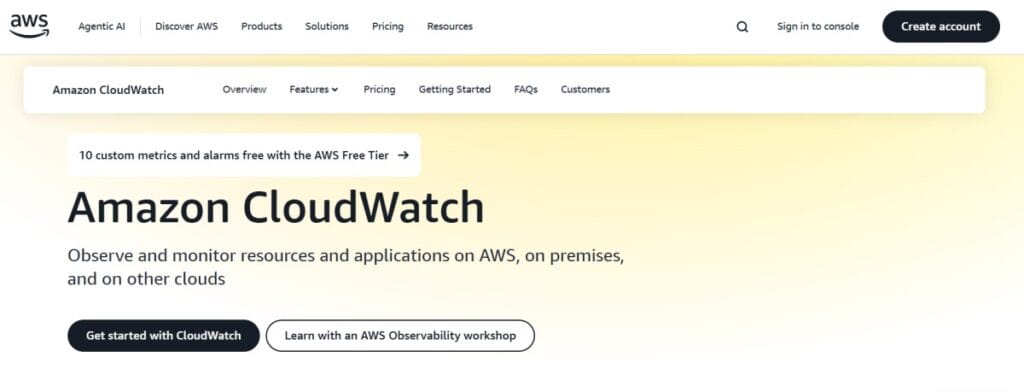
Amazon CloudWatch: Known as the native monitoring service for AWS. It provides metrics, logs, alarms, and events for AWS-managed services and infrastructure. CloudWatch is optimized for teams operating primarily inside the AWS ecosystem and integrates deeply with AWS service workflows.
Azure Monitor: Serves as the native monitoring and diagnostics layer for Microsoft Azure. It aggregates metrics, logs, and traces from Azure resources and services and is tightly integrated with Azure Resource Manager and the Azure control plane.
Multi-Agent Support
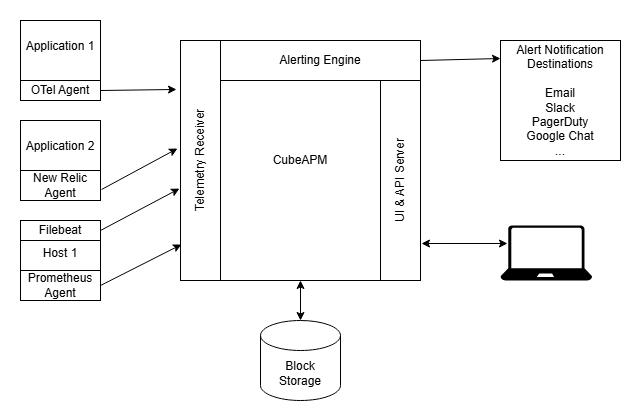
CubeAPM: Designed to support broad, heterogeneous agent strategies. OpenTelemetry collectors and language SDKs are first-class citizens, allowing teams to standardize telemetry collection across cloud, hybrid, and on-prem environments. In addition to OpenTelemetry, CubeAPM can ingest telemetry from existing vendor agents such as Datadog, New Relic, and Elastic. This allows teams to migrate incrementally without rewriting instrumentation or running parallel observability stacks during transition.
Amazon CloudWatch: Supports telemetry collection through AWS-native mechanisms. Data is collected using the CloudWatch Agent, AWS SDKs, managed service integrations, and the AWS Distro for OpenTelemetry. Distributed tracing is provided via AWS X-Ray, which integrates with CloudWatch metrics and logs. This model is optimized for workloads running on Amazon Web Services and aligns closely with AWS service telemetry.
Azure Monitor: Supports telemetry collection using the Azure Monitor Agent and Application Insights SDKs, with OpenTelemetry exporters available for metrics, logs, and traces. Telemetry from Azure services is automatically integrated into Azure Monitor, enabling consistent data collection within Azure environments and Azure-managed workloads.
MELT Coverage and Signal Correlation
CubeAPM: Supports metrics, events, logs, and traces on top of a single OpenTelemetry data model. All signals share consistent resource and service attributes, which allows teams to move from high-level symptoms to detailed request-level analysis without switching tools or data models. Correlation is based on OpenTelemetry context propagation rather than cloud-specific resource hierarchies.
Amazon CloudWatch: Provides native support for metrics, logs, and events emitted by AWS services. Alarms and events are tightly integrated with AWS operational workflows. Distributed tracing is handled through AWS X-Ray, which operates as a separate service but can be used alongside CloudWatch metrics and logs. Signal correlation is primarily oriented around AWS service identifiers and resource metadata.
Azure Monitor: Supports metrics, logs, and traces through Azure Metrics, Log Analytics, and Application Insights. These components integrate within Azure Monitor workspaces and rely on Azure resource context for correlation. Signal workflows are designed to align with Azure resource management and diagnostics.
Deployment Model

CubeAPM: Deployed as self-hosted or BYOC with vendor-managed operations. Telemetry processing and storage remain under the team’s control, while operational responsibilities such as upgrades and platform maintenance are handled by the vendor. This model is designed for teams that need portability and control without running observability infrastructure entirely on their own.
Amazon CloudWatch: Delivered as a fully managed SaaS within AWS. Most AWS services emit telemetry automatically, and additional setup is minimal. Configuration and access are managed through AWS APIs and consoles.
Azure Monitor: Fully managed SaaS within Microsoft Azure. Telemetry collection, configuration, and access are handled through Azure-native agents, services, and portals. Observability workflows are integrated with Azure Resource Manager and Azure governance tooling.
Pricing: Approximate Cost for Small, Mid-Sized & Large Teams
*All pricing comparisons are calculated using standardized Small/Medium/Large team profiles defined in our internal benchmarking sheet, based on fixed log, metrics, trace, and retention assumptions. Actual pricing may vary by usage, region, and plan structure. Please confirm current pricing with each vendor.
*An APM host is a host that is actively generating trace data, and an Infra host is any physical or virtual OS instance that you monitor with any observability tool.
Below is a cost comparison for small, mid-sized, and large teams.
| Approx. Cost for Teams | Small (~30 APM Hosts) | Mid-sized (~125 APM Hosts) | Large (~250 APM Hosts) |
| CubeAPM | $2,080 | $7,200 | $15,200 |
| Amazon CloudWatch | $5,344 | $15,637 | $30,018 |
| Azure Monitor | $2,064 | $5,232 | $13,227 |
Teams usually begin to notice meaningful cost differences between CubeAPM, Amazon CloudWatch, and Azure Monitor once observability usage extends beyond basic monitoring into sustained production workloads. As environments grow, telemetry volume increases due to steady traffic, higher log verbosity, distributed tracing, and a rising number of services. At this point, observability spend becomes less about host count and more about how telemetry is ingested, sampled, and retained across the platform.
At this stage, costs are no longer driven by short-term experimentation but by day-to-day operational behavior. Incident frequency, investigation depth, and high-cardinality telemetry directly influence ingestion and storage usage. For many teams, observability shifts from a relatively predictable line item to a variable cost that requires deliberate controls around sampling, retention, and forecasting to maintain budget stability across CubeAPM, Amazon CloudWatch, and Azure Monitor deployments.
What This Comparison Reveals at Scale
At small team sizes, the cost differences between CubeAPM, Amazon CloudWatch, and Azure Monitor are relatively narrow. Telemetry volume is limited, service topologies are simpler, and observability is often focused on basic metrics, logs, and alerting. At this stage, pricing rarely drives platform choice on its own, and teams tend to prioritize ease of setup and native integrations.
At large scale, data volumes drive cost consistently. Sustained traffic, frequent investigations, and high-cardinality telemetry compound over time. Observability spend becomes increasingly sensitive to retention policies, sampling strategies, and how efficiently data is processed during incidents. At this stage, teams typically evaluate platforms based on cost predictability and control under continuous production load, rather than on initial entry cost or feature availability.
In practice, this comparison highlights that observability decisions made early can have long-term cost implications. As systems grow in complexity, teams tend to reassess platforms based on how they behave under sustained operational pressure, not just how they perform during onboarding or early growth.
CubeAPM: Cost for Small, Medium, and Large Teams
CubeAPM follows an ingest-based pricing model where observability spend is tied directly to the volume of telemetry processed. Costs scale with actual system activity rather than with user seats, enabled features, or infrastructure units. This approach is intended to keep pricing aligned with real workload behavior as environments grow in traffic and architectural complexity.
Pricing highlights:
- Predictable ingestion-based pricing of $0.15 per GB
Using comparable production workloads and consistent assumptions across environments, typical monthly costs fall into the following ranges:
- Small teams (~30 APM hosts): $2,080
- Mid-sized teams (~125 APM hosts): $7,200
- Large teams (~250 APM hosts): $15,200
Amazon CloudWatch: Cost for Small, Medium, and Large Teams
Amazon CloudWatch uses an ingestion-based pricing model where charges are driven by metrics collected, log ingestion and storage, API requests, and related service usage. Observability costs increase as telemetry volume grows, particularly as teams expand logging racing coverage across more services.
- Logs: $0.50 per GB
- Application Observability (Traces): $0.15/GB
Based on comparable production workloads, approximate monthly costs are:
- Small teams (~30 APM hosts): $5,344
- Mid-sized teams (~125 APM hosts): $15,637
- Large teams (~250 APM hosts): $30,018
At larger scales, CloudWatch spend becomes increasingly sensitive to telemetry configuration choices, especially log verbosity and trace collection depth.
Azure Monitor: Cost for Small, Medium, and Large Teams
Azure Monitor also uses an ingestion-based pricing model where costs are primarily determined by telemetry ingestion and retention across metrics, logs, and traces. Pricing scales as observability coverage expands across services and environments within Azure.
Pricing:
- Basic Logs: $0.50/GB
- Metrics: $0.16/10 million samples ingested
Using the same workload assumptions, typical monthly costs are:
- Small teams (~30 APM hosts): $2,063.84
- Mid-sized teams (~125 APM hosts): $5,231.36
- Large teams (~250 APM hosts): $13,227.2
Sampling Strategy
CubeAPM: Uses smart sampling to control trace volume while preserving meaningful request-level visibility. Sampling decisions are made with awareness of request behavior and system context, allowing teams to retain higher-value traces without relying on fixed rates. This approach is designed to keep observability costs predictable while maintaining useful trace coverage as traffic increases.
Amazon CloudWatch: Supports both tail-based sampling and adaptive sampling through AWS X-Ray and the AWS Distro for OpenTelemetry. Tail-based sampling allows sampling decisions to be made after a trace is completed, enabling selection based on full request characteristics. Adaptive sampling dynamically adjusts sampling rates based on traffic patterns to balance visibility and cost.
Azure Monitor: Supports fixed-percentage sampling and rate-limited sampling for application tracing. Sampling is configured at the SDK or OpenTelemetry exporter level and is applied during telemetry ingestion. Fixed-percentage sampling retains a defined portion of traces, while rate-limited sampling caps the number of traces collected per second to manage volume.
Data Retention

CubeAPM: Offers unlimited data retention, allowing teams to retain telemetry based on operational, investigative, or compliance requirements rather than predefined vendor limits. Retention policies are controlled by the team and are not constrained by fixed time windows for logs, metrics, or traces. This supports long-term analysis and historical investigations without requiring external archival workflows.
Amazon CloudWatch: Applies different retention behavior across logs and metrics. Log retention is configured at the log group level and can be set to predefined periods ranging from 1 day up to 10 years or left unset for indefinite storage. Retention policies can be adjusted at any time, and log data older than the configured period is automatically deleted.
Azure Monitor: Enforces retention based on data type and configuration. Basic logs are retained for 30 days by default, while custom metrics are retained for 90 days. Retention behavior is defined by Azure Monitor’s data model and associated pricing tiers, with longer retention typically requiring data export or additional storage services.
Support Channels and Response Time (TAT)
CubeAPM: Provides direct support through email and Slack. Support requests are handled by the engineering team, with typical response times under 10 minutes for active issues. This model is designed to support teams running production systems where fast feedback during incidents is critical, without requiring separate paid support tiers.
Amazon CloudWatch: Support is delivered through AWS Support plans rather than as a CloudWatch-specific service. Support is available via web cases, chat, and phone depending on the plan. For critical production issues, AWS Enterprise Support targets response times as low as 15 minutes, while Business Support targets responses within approximately 1 hour. Less severe issues have longer response windows, and response targets vary by severity and plan.
Azure Monitor: Support is provided through Microsoft support plans. Under Standard support, critical severity cases typically receive initial responses within about 1 hour. Enterprise-level support, delivered through Microsoft Unified plans, offers faster response targets for high-severity issues, with response times for critical cases commonly cited at 15 minutes. As with AWS, response expectations depend on severity level and selected support tier.
How Teams Evaluate These Platforms at Scale
As teams grow, evaluation criteria shift away from surface-level features and toward how observability systems behave under sustained production load. At scale, the question is less about whether a platform can collect metrics or logs and more about how reliably it supports investigations during incidents, audits, and long-running operational work.
For teams using CubeAPM, evaluation tends to focus on cost predictability, sampling control, and long-term visibility. As telemetry volume increases, teams assess whether sampling decisions preserve the traces that matter, whether retention policies support historical analysis, and whether costs remain aligned with actual system behavior rather than with infrastructure size or vendor-specific units.
Teams evaluating Amazon CloudWatch often prioritize how well native integrations scale with AWS environments. At larger sizes, attention shifts to how metrics, logs, and traces are correlated across services, how retention policies are managed across many log groups, and how observability costs behave as logging and tracing coverage expand across regions and accounts.
For organizations using Azure Monitor, evaluation at scale typically centers on workspace design, retention configuration, and data ingestion patterns. As environments grow, teams look closely at how telemetry is organized across subscriptions, how long data is retained for investigations, and how support response times align with operational requirements during high-severity incidents.
Across all three platforms, mature teams tend to converge on the same core questions. How easy is it to investigate complex failures that span many services. How predictable are observability costs during incidents. How much operational effort is required to manage retention, sampling, and access control over time. At scale, these considerations usually outweigh initial setup convenience and drive long-term platform decisions.
Amazon CloudWatch vs Azure Monitor vs CubeAPM: Use Cases
Choose CubeAPM if:
- You need predictable observability costs that scale with telemetry volume rather than infrastructure units.
- You want centralized control over sampling and retention without fixed vendor-imposed limits.
- You run services across cloud, hybrid, or on-prem environments and want consistent telemetry semantics.
- You need to migrate incrementally from existing observability tools without rewriting instrumentation.
Choose Amazon CloudWatch if:
- Your workloads run primarily on AWS and you want native visibility with minimal setup.
- You rely heavily on AWS service metrics, logs, and alarms for day-to-day operations.
- You want observability tightly integrated with AWS IAM, regions, and operational workflows.
- You prefer a fully managed monitoring service without deploying separate observability infrastructure.
Choose Azure Monitor if:
- Your applications and infrastructure run mainly on Microsoft Azure.
- You want built-in diagnostics and monitoring aligned with Azure Resource Manager.
- You use Application Insights and Azure-native tooling for application visibility.
- You prefer observability integrated directly into Azure subscriptions and workspaces.
Conclusion
Amazon CloudWatch, Azure Monitor, and CubeAPM address observability from different architectural starting points. CloudWatch and Azure Monitor are designed as native monitoring services within AWS and Azure, emphasizing integration with their respective cloud platforms and operational tooling. CubeAPM is built around OpenTelemetry and focuses on application-level observability across environments.
Across all three platforms, differences become clearer as systems scale. Factors such as how telemetry is collected, sampled, retained, and supported in production tend to matter more than feature availability alone. Cost behavior, retention policies, and support response models increasingly influence how teams operate observability over time.
In practice, teams evaluate these platforms based on where their workloads run, how complex their systems are, and how observability fits into ongoing operational workflows. At scale, the choice is usually driven by long-term behavior under sustained production load rather than initial setup or short-term convenience.
Disclaimer: The information in this article reflects the latest details available at the time of publication and may change as technologies and products evolve.
FAQs
1. What is the main difference between Amazon CloudWatch, Azure Monitor, and CubeAPM?
Amazon CloudWatch and Azure Monitor are native monitoring services designed for AWS and Azure environments, respectively. CubeAPM is an OpenTelemetry-based observability platform designed to collect and analyze telemetry across environments. The primary difference lies in how tightly each tool is coupled to a specific cloud platform versus a cloud-agnostic data model.
2. Do Amazon CloudWatch and Azure Monitor support distributed tracing?
Yes. Amazon CloudWatch supports distributed tracing through AWS X-Ray, while Azure Monitor supports tracing through Application Insights and OpenTelemetry exporters.
3. Can these tools be used in multi-cloud or hybrid environments?
Amazon CloudWatch and Azure Monitor are optimized for their respective cloud platforms, though telemetry can be ingested from external sources with additional configuration. CubeAPM is designed to collect telemetry across cloud, hybrid, and on-prem environments using OpenTelemetry and compatible agents.
4. How do these platforms differ in data retention?
Data retention policies differ by platform and signal type. Amazon CloudWatch allows configurable log retention, Azure Monitor applies default retention periods based on data type, and CubeAPM allows teams unlimited retention policies without fixed time limits. Retention behavior often impacts long-term analysis and cost planning.
5. How is observability pricing typically calculated for these tools?
Amazon CloudWatch and Azure Monitor use ingestion-based pricing models driven by telemetry ingestion, storage, and related service usage. CubeAPM pricing is based on telemetry ingestion volume. Actual costs depend on traffic patterns, logging levels, and tracing adoption.