










The main difference between SigNoz, Sentry, and CubeAPM is how each platform structures observability data, from raw telemetry and traces to events, correlation, and analysis.
SigNoz is built around OpenTelemetry pipelines and treats observability data as queryable telemetry stored in ClickHouse. Sentry is built around event ingestion and issue grouping, with a strong focus on developer debugging workflows. CubeAPM is designed as a unified observability backend that ingests logs, metrics, traces, and user data into a single system.
Teams usually notice cost differences once telemetry volume moves beyond early-stage usage, especially in environments with sustained traffic, high-cardinality logs, or multiple microservices. At this point, observability spend often shifts from a simple tooling cost to a variable expense that requires closer tracking and forecasting.
In this article, we compare SigNoz vs Sentry vs CubeAPM to help teams choose the right observability platform.
SigNoz vs Sentry vs CubeAPM: Feature Comparison
When discussing pricing behavior, sampling outcomes, or retention trade-offs, observations are based on publicly available documentation, standardized usage modeling, and observed customer deployments. Individual results may vary depending on workload, configuration, and scale.
| Features | CubeAPM | SigNoz | Sentry |
| Known for | Unified OpenTelemetry-native observability with predictable pricing | OpenTelemetry-first, open-source observability | Error tracking and application performance |
| Multi-Agent Support | Yes (OTel, New Relic, Datadog, Elastic) | Limited (OTel) | Limited (OTel) |
| MELT Support | Full MELT | Full MELT | Full MELT |
| Setup | Self-hosted but vendor-managed | SaaS & Self-hosted | SaaS & Self-hosted |
| Pricing | Ingestion-based pricing of $0.15/GB | Logs: $0.3/GB Traces: $0.3/GB Metrics: $0.1/mil samples | Team: $26/month Business: $80/month |
| Sampling Strategy | Smart sampling | Head + Tail-based | Head + Dynamic |
| Log Retention | Infinite Retention | 15 days | Developer: 90 days |
| Support TAT | < 10 minutes | No details | No details |
SigNoz vs Sentry vs CubeAPM: Feature-by-feature breakdown
Known for
CubeAPM: Known for delivering unified MELT observability in a single platform. It brings together application performance monitoring, infrastructure monitoring, logs, user monitoring, and synthetics under one backend, rather than splitting these across multiple tools. CubeAPM is also recognized for its self-hosted and BYOC deployment model, predictable ingestion-based pricing, and support for long-term data retention.
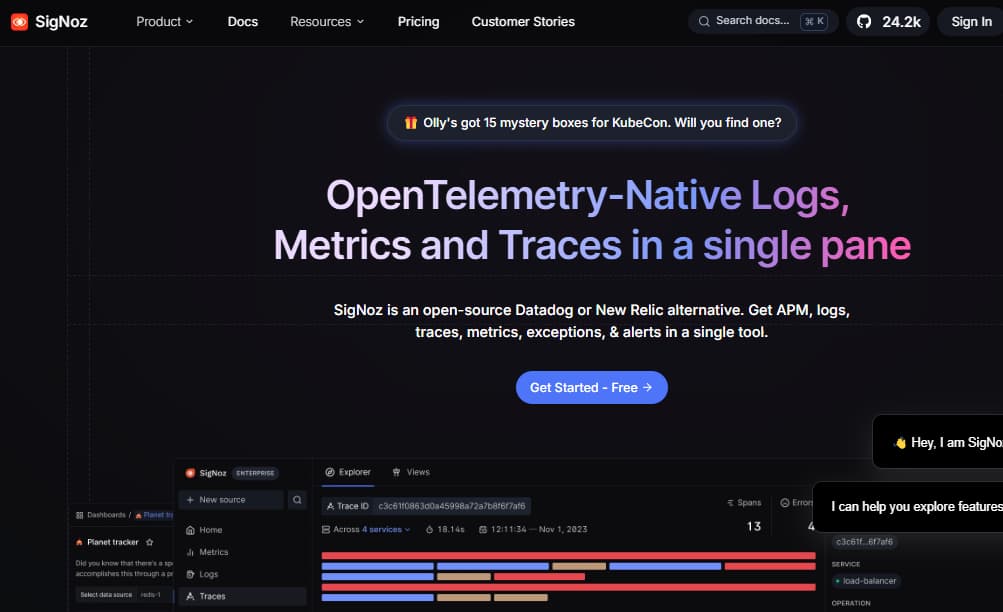
SigNoz: known for being an OpenTelemetry-native observability platform built on open-source components. It treats telemetry as queryable data and is commonly associated with ClickHouse-backed storage for logs, metrics, and traces. SigNoz is often adopted by teams that want strong OpenTelemetry alignment.
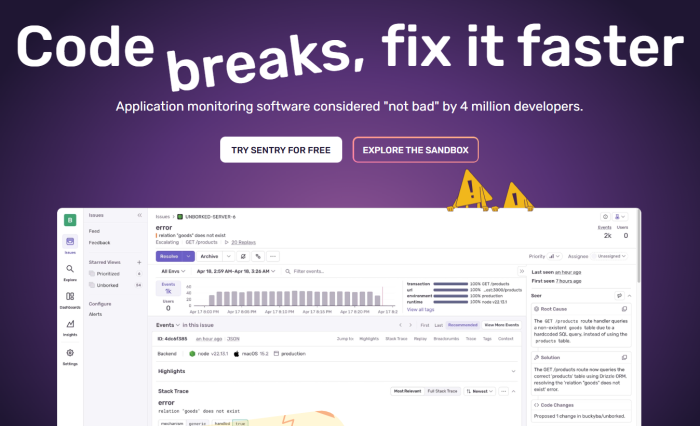
Sentry: Known for developer-centric error tracking and application performance monitoring. Its core strength lies in ingesting events and grouping them into issues, making it effective for triage, debugging, and identifying regressions. Sentry is widely used by development teams focused on application reliability.
Multi-Agent Support
CubeAPM: Supports true multi-agent ingestion. It can ingest telemetry from OpenTelemetry as well as from existing vendor agents such as Datadog, New Relic, and Elastic. This allows teams to migrate without rewriting instrumentation or running parallel observability stacks. Multi-agent support in CubeAPM is designed for real production environments where multiple agents already exist across services and teams.
SigNoz: Limited multi-agent support. It is designed to work with OpenTelemetry instrumentation and relies on the OpenTelemetry Collector as the primary ingestion path. However, there is no public documentation indicating support for parallel ingestion from multiple vendor-specific agent ecosystems like New Relic or Datadog.
Sentry: Provides limited multi-agent support. Supports OpenTelemetry tracing by allowing its SDKs to capture OpenTelemetry spans and send them to the Sentry backend. This makes it easier for teams to adopt vendor-neutral instrumentation and avoid vendor lock-in.
Deployment Options
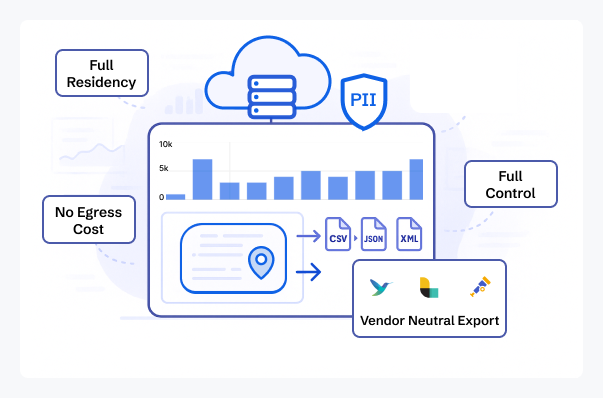
CubeAPM: Deployed inside the customer’s own infrastructure, either on-prem or on a VPC (Virtual Private Cloud). While the software runs within the customer’s network boundary, the platform is operated and maintained by the vendor, including upgrades and ongoing management. Typically chosen by teams that need full control over data location without taking on the operational burden of running observability tooling themselves.
SigNoz: Supports both self-hosted and SaaS options. In self-hosted setups, teams are responsible for operating the full observability stack, including OpenTelemetry collectors, storage, and the ClickHouse backend used for querying telemetry data. Managing ClickHouse adds operational complexity around scaling, performance tuning, and retention policies.
Sentry: Offers both SaaS and self-hosted deployment options. The SaaS version is designed for fast adoption with minimal operational effort. The self-hosted version enables running Sentry inside your own environment; it requires setting up and configuring the services and dependencies listed in Sentry’s self-hosted deployment guide.
Pricing: Approximate Cost for Small, Mid-Sized & Large Teams
*All pricing comparisons are calculated using standardised small/medium/large team profiles defined in our internal benchmarking sheet, based on fixed log, metrics, trace, and retention assumptions. Actual pricing may vary by usage, region, and plan structure. Please confirm current pricing with each vendor.
*An APM host is a host that is actively generating trace data, and an Infra host is any physical or virtual OS instance that you monitor with any observability tool.
Below is a cost comparison for small, mid-sized, and large teams.
| Approx. Cost for Teams | Small (~30 APM Hosts) | Mid-sized (~125 APM Hosts) | Large (~250 APM Hosts) |
| CubeAPM | $2,080 | $7,200 | $15,200 |
| SigNoz | $4,600 | $16,000 | $34,000 |
| Sentry | $3,560 | $12,100 | $32,400 |
Teams switching to CubeAPM save roughly 55% compared to SigNoz and about 40% compared to Sentry for mid-sized environments.
What This Comparison Reveals at Scale
As observability systems mature, tools stop behaving like interchangeable SaaS products and start behaving like infrastructure. Pricing models, retention limits, sampling behavior, and deployment choices directly shape how teams debug incidents, forecast costs, and meet compliance requirements. Teams that evaluate observability through architecture and ownership lenses tend to make more durable decisions than those comparing features alone.
CubeAPM: Cost for Small, Medium, and Large Teams
CubeAPM prices observability based on the amount of telemetry data ingested, rather than the number of users, services, or features enabled. This model is designed to maintain spending alignment with actual system activity, particularly as environments expand in size and complexity.
Pricing:
- Predictable pricing of $0.15/GB
Using comparable workloads as a baseline, typical monthly costs look like this:
- Small teams (~30 APM hosts): $2,080
- Mid-sized teams (~125 APM hosts): $7,200
- Large teams (~250 APM hosts): $15,200
Since CubeAPM runs in a self-hosted or BYOC setup, all observability data stays within the customer’s own environment. This setup enables teams to enhance retention and expand coverage without incurring additional charges associated with storage duration or access limits.
SigNoz: Cost for Small, Medium, and Large Teams
SigNoz follows a usage-driven pricing approach where costs are primarily determined by the volume of telemetry data sent to the platform. Pricing is broken down by signal type, which means logs, traces, and metrics are billed separately rather than under a single unified rate.
Pricing:
- Logs: $0.3/GB
- Traces: $0.3/GB
- Metrics: $0.1/mil samples
Using comparable production environments as a reference point, estimated monthly costs are:
- Small teams (~30 APM hosts): $4,600
- Mid-sized teams (~125 APM hosts): $16,000
- Large teams (~250 APM hosts): $34,000
For teams running SigNoz in a self-hosted setup, the overall cost is not limited to subscription fees. Operating the OpenTelemetry pipeline and managing the ClickHouse storage layer introduces additional infrastructure and maintenance overhead, which can become more noticeable as data volume and retention requirements grow.
Sentry: Cost for Small, Medium, and Large Teams
Sentry utilizes a plan-based pricing model, complemented by usage limits. Teams subscribe to a plan tier, and each tier includes a predefined allowance for events, errors, and performance data.
Pricing:
- Team: $26/month
- Business: $80/month
- Logs: 0.50/GB
Using comparable production workloads and published plan limits as a baseline, estimated monthly costs are:
- Small teams (~30 APM hosts): $3,560
- Mid-sized teams (~125 APM hosts): $12,100
- Large teams (~250 APM hosts): $32,400
While Sentry supports both SaaS and self-hosted deployments, pricing behavior is primarily influenced by the amount of application data generated. As request volume, error frequency, or tracing coverage increases, teams may need higher plan tiers or additional usage capacity, which can lead to higher overall costs over time.
Sampling Strategy
CubeAPM: Uses smart sampling to reduce telemetry volume while keeping high-value data. Sampling decisions are informed by context, so important traces are retained even as traffic increases, helping control cost without losing critical visibility.
SigNoz: Supports both head-based and tail-based sampling through OpenTelemetry pipelines. Head-based sampling applies rules at the source, while tail-based sampling evaluates traces after spans are collected, giving teams flexibility to balance coverage and cost.
Sentry: Supports head-based sampling at the SDK level and also dynamic sampling rules that adjust rates based on transaction attributes, environment, and other criteria. Sentry’s dynamic sampling lets teams prioritize the types of transactions they care about most while reducing noise and event volume.
In practice, teams rarely re-evaluate observability platforms because of missing features. Re-evaluation is usually triggered by cost volatility as telemetry volume increases, loss of historical context during incident reviews, or difficulty answering audit and compliance questions months after an event. These breakpoints typically appear only after observability becomes core infrastructure rather than a supporting tool.
Data Retention

CubeAPM: supports unlimited retention for logs, metrics, and traces, without tying retention to plan tiers or additional fees. Because CubeAPM runs in self-hosted deployments, retention is governed by the customer’s own storage policies rather than vendor-imposed limits. This makes unlimited retention especially valuable for audits, compliance requirements, long-term trend analysis, and post-incident investigations where historical data cannot be discarded.
SigNoz: Includes 15 days of retention by default for logs and traces, based on its published pricing. Increasing retention directly increases cost. For example, increasing log retention from 15 days to 90 days results in a price increase, from approximately $0.40 per GB to $0.60 per GB. Retention duration is therefore a direct pricing lever in SigNoz, increasing costs when data volumes grow.
Sentry: Applies fixed retention periods by data type and plan. On the Developer plan, most data types are retained for 30 days. On Team and Business plans, errors, session replays, uptime data, and attachments are retained for 90 days, while logs and spans/transactions are retained for 30 days. Business plans also include up to 13 months of sampled span data. Retention is predefined and not unlimited.
Support Channel and TAT
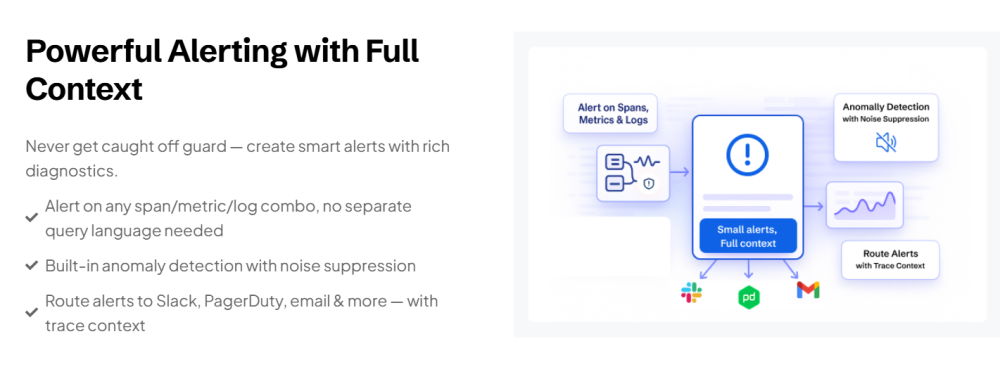
CubeAPM: Uses direct, real-time support channels to assist customers during active issues. Teams can communicate with support engineers through channels Email, Slack, and WhatsApp, which enables quick resolution. Responses are typically received in under 10 minutes, and this access is not restricted to premium-only tiers.
SigNoz: Offers support through a combination of community forums and direct channels, including email and Slack, depending on the plan in use. SigNoz does not publicly define a response-time commitment. As a result, turnaround time can vary.
Sentry: Delivers customer support primarily through ticket-based systems and email. However, Sentry does not publicly state a guaranteed response-time SLA, so expected turnaround is not explicitly defined.
How Teams Evaluate SigNoz, Sentry, and CubeAPM at Scale
When teams assess SigNoz, Sentry, and CubeAPM, the evaluation criteria change as systems mature. Early on, teams often focus on how quickly they can instrument services, see errors, or trace requests. As traffic grows and telemetry volume increases, short-term convenience gives way to questions around long-term viability.
At scale, teams pay closer attention to how observability costs evolve with ingestion, whether retention policies support historical analysis without aggressive data expiry, and how much control they have over data location and pipelines. In sustained production environments, platforms that offer predictable cost behavior, flexible deployment options, and ownership over telemetry workflows tend to be evaluated more favorably once observability becomes core infrastructure rather than a supporting tool.
SigNoz vs Sentry vs CubeAPM: Use Cases
Choose CubeAPM if:
- Your observability needs extend beyond application code and require visibility into infrastructure, services, and telemetry signals in one system.
- Data placement matters, and you cannot send logs or traces outside your own cloud or on-prem environment.
- You need to retain telemetry indefinitely to support audits, capacity planning, or long-running investigations.
- You want predictable pricing even when data volumes grow
- Your team expects immediate human support during incidents instead of waiting on ticket queues.
Choose SigNoz if:
- You want an observability platform built natively on OpenTelemetry standards across metrics, logs, and traces.
- Your team prefers open-source-first tooling and values transparency in how telemetry data is collected and processed.
- You need the ability to customize telemetry pipelines, sampling behavior, and ingestion rules using OpenTelemetry components.
- You work with distributed systems where correlating traces, logs, and metrics is important during investigations.
- You want flexibility to run observability workloads in your own environment or use a managed cloud option
Choose Sentry if:
- You want a developer-focused workflow centered around issues, stack traces, and releases.
- You need visibility into application performance through transactions, latency breakdowns, and tracing.
- Your applications generate high traffic and benefit from dynamic sampling to prioritize important requests.
- You prefer a tool that integrates naturally into development workflows for debugging, monitoring releases, and improving application reliability.
Conclusion
SigNoz, Sentry, and CubeAPM address observability from different angles. SigNoz is centered on OpenTelemetry and flexible telemetry analysis, Sentry delivers full-stack monitoring and performance insights, and CubeAPM brings multiple observability signals together in a single platform.
The right choice depends on how teams collect telemetry, where data must reside, and how observability is used in day-to-day operations. By understanding these differences, teams can select a tool that aligns with their technical architecture, workflows, and long-term observability goals.
Choosing the Right Platform as Observability Scales
SigNoz, Sentry, and CubeAPM are often evaluated differently as systems move from early adoption into sustained production use. Initial evaluations tend to focus on how quickly teams can gain visibility into applications and services. As telemetry volume grows, the criteria shift toward how well each platform supports ongoing operational needs.
At scale, teams typically examine how each tool handles increasing data ingestion, how retention policies affect historical analysis, and what level of control is available over deployment and data placement. Cost behavior over time, rather than initial pricing, becomes a key factor once observability spend is part of regular infrastructure planning.
Rather than choosing based on feature checklists alone, teams benefit from aligning their choice with how observability will be used long term. This includes understanding whether the platform supports evolving requirements around data ownership, retention, and operational governance as systems and traffic continue to grow.
Disclaimer: The information in this article reflects the latest details available at the time of publication and may change as technologies and products evolve.
FAQs
1. What is the main difference between SigNoz vs Sentry, vs CubeAPM?
The main difference is how each tool approaches observability. SigNoz focuses on OpenTelemetry-based telemetry analytics, Sentry delivers full-stack monitoring and focuses on application errors and performance events, and CubeAPM provides unified MELT observability across metrics, logs, traces, and user signals in a single platform.
2. Which is better for OpenTelemetry use cases: SigNoz vs Sentry vs CubeAPM?
SigNoz is best aligned for teams that want a fully OpenTelemetry-native observability workflow. CubeAPM also supports OpenTelemetry ingestion, combining it with broader observability capabilities. Sentry supports OpenTelemetry-style tracing mainly for application performance rather than full-stack observability.
3. How does data retention differ between SigNoz vs Sentry, vs CubeAPM?
CubeAPM supports unlimited data retention, controlled by the customer’s own storage policies. SigNoz applies default retention limits that can be extended at a higher cost. Sentry enforces fixed retention periods that vary by data type and plan.
4. How do pricing models compare for SigNoz vs Sentry vs CubeAPM?
SigNoz and Sentry utilize usage-based and plan-based pricing models, where costs can increase with the volume of telemetry, the number of events, or the retention settings. CubeAPM uses ingestion-based pricing designed to remain predictable without charging separately for users, hosts, or retention duration.
5. Which teams should choose CubeAPM over SigNoz or Sentry?
CubeAPM is a strong fit for teams that need full-stack observability, strict data residency, unlimited retention, and predictable costs. It is commonly chosen by platform, SRE, and DevOps teams running distributed systems that require long-term visibility without vendor-imposed limits.